Key Numbers
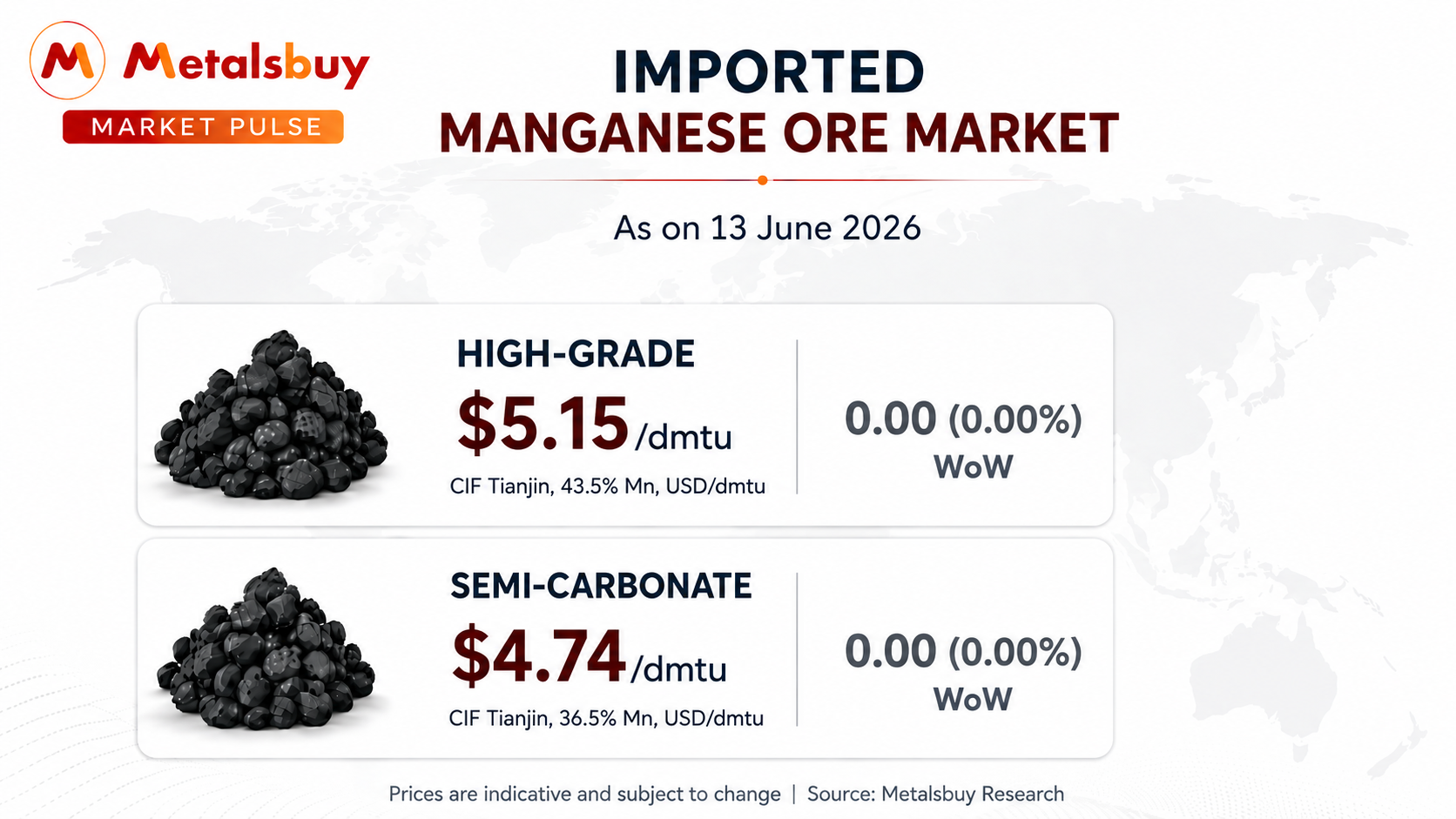
• 43.5% Mn High Grade Manganese Ore Index (CIF Tianjin): $5.15/dmtu
• 36.5% Mn Semi Carbonate Manganese Ore Index (CIF Tianjin): $4.74/dmtu
• Weekly Movement: Unchanged
• Market Direction: Stable
• Key Driver: Supply-demand balance remains fragile
• Market Sentiment: Neutral
Market Analysis
1. Imported Manganese Ore Prices Remain Stable Amid Market Uncertainty
The imported manganese ore market remained largely unchanged during the week ending June 13, 2026, with benchmark prices showing no movement despite mixed signals from downstream industries. The 43.5% Mn High Grade Manganese Ore Index (CIF Tianjin) was assessed at $5.15/dmtu, while the 36.5% Mn Semi Carbonate Index remained at $4.74/dmtu. The stability in prices suggests that the market has temporarily found equilibrium after the volatility witnessed in recent months. However, conversations across the supply chain indicate that market participants remain cautious, with neither buyers nor sellers showing strong conviction regarding the next major price direction. As a result, trading activity continues to be dominated by immediate procurement requirements rather than aggressive inventory building.
2. Weak Alloy Demand Continues to Cap Upward Momentum
Demand from manganese alloy producers remains the most significant challenge facing the imported ore market. Both Chinese and Indian alloy producers continue to operate in a cautious environment, with procurement activity largely restricted to production-linked requirements. Steel demand in several key markets has yet to show the kind of improvement necessary to trigger a meaningful increase in alloy production rates. Consequently, manganese ore consumption has remained steady rather than expanding. Market participants report that although buyers are actively present in the market, purchasing volumes remain measured and selective. This has prevented suppliers from gaining sufficient leverage to push ore prices higher despite relatively stable international supply conditions.
3. Rising Port Inventories Reduce Immediate Supply Concerns
Another important development influencing sentiment is the gradual increase in manganese ore inventories at major Chinese ports. Recent arrivals from key exporting countries have improved material availability, easing concerns that had previously supported market sentiment. While inventory levels are not yet considered excessive, the recent increase has reduced the urgency among buyers to secure cargoes. Traders indicate that comfortable port stocks are providing consumers with greater flexibility in procurement decisions, limiting the possibility of panic buying or sudden price spikes. The market is therefore shifting away from concerns regarding supply shortages and focusing more closely on downstream demand indicators.
4. Global Supply Conditions Continue to Improve
Supply-side fundamentals have become considerably more stable compared with previous years. South African exports continue to flow into Asian markets without major disruptions, while Australian shipments have largely normalized following earlier logistical challenges. Improved export availability from key producing regions has ensured adequate supply for major consuming markets, including China and India. Although freight costs and currency fluctuations remain factors to watch, they have not emerged as major price drivers during the current week. With supply risks largely under control, market participants are increasingly focusing on consumption trends and alloy sector performance to determine future market direction.
5. Indian Buyers Maintain a Wait-and-Watch Approach
Indian alloy producers continue to monitor global manganese ore trends closely, particularly developments in China, which remains the world's largest consumer of manganese ore. While domestic silico manganese production remains active, purchasing activity has not accelerated significantly enough to alter international market dynamics. Buyers appear comfortable maintaining existing procurement strategies, supported by stable prices and adequate availability. The recent removal of customs duty on high-grade manganese ore imports by the Indian government is expected to improve long-term accessibility of premium-grade ore. However, the immediate impact on import demand remains limited as alloy producers continue to prioritize cautious inventory management amid uncertain downstream demand conditions.
Industry Impact
For ferro manganese and silico manganese producers, stable imported ore prices provide a welcome degree of predictability in raw material procurement. The absence of significant price volatility allows alloy manufacturers to manage production costs more effectively while navigating uncertain market conditions. However, weak demand from the steel sector continues to restrict opportunities for alloy producers to improve margins through higher finished product prices.
Looking ahead, the imported manganese ore market appears likely to remain rangebound in the near term. Supply conditions remain comfortable, while demand indicators have yet to show convincing signs of improvement. Unless alloy production increases significantly or supply disruptions emerge in major exporting regions, imported manganese ore prices are expected to continue trading within a narrow range. Market participants will therefore closely monitor steel production trends, alloy demand, and port inventory movements for indications of the next directional shift.