Key Numbers
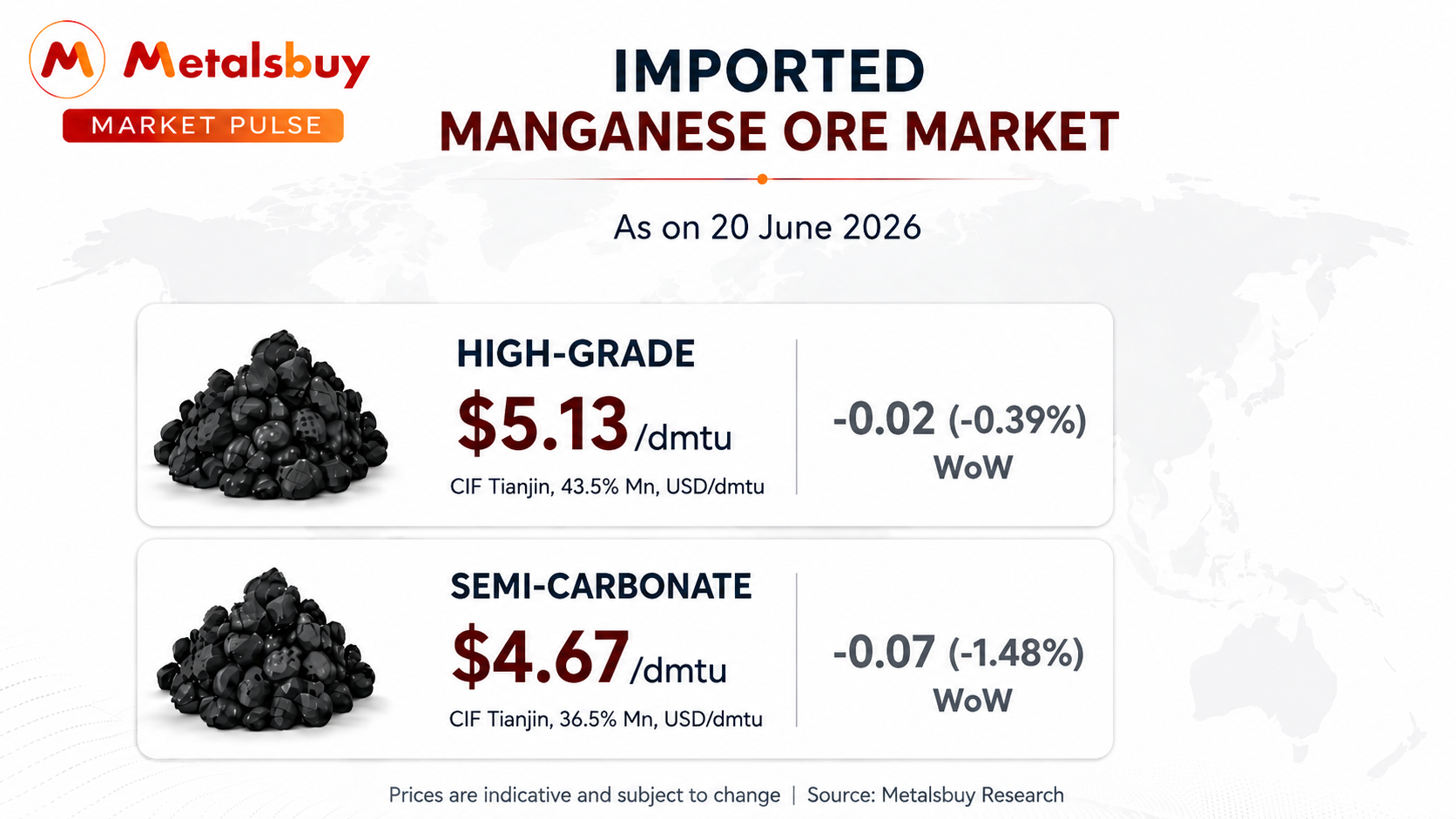
• High-Grade Manganese Ore (43.5% Mn, CIF Tianjin): $5.13/dmtu
• Weekly Change: ▼ 0.39% (-$0.02/dmtu)
• Semi-Carbonate Manganese Ore (36.5% Mn, CIF Tianjin): $4.67/dmtu
• Weekly Change: ▼ 1.48% (-$0.07/dmtu)
• Tianjin Port Inventory (April 2026): 3.56 Million Tonnes
• Chinese Port Inventories (May 2026): Near 4 Million Tonnes
• Market Sentiment: Cautious
Market Analysis
1. Imported Ore Market Continues to Lose Momentum
The imported manganese ore market remained under pressure during the week ended 20 June 2026, with both high-grade and semi-carbonate indices moving lower. High-grade ore (43.5% Mn) declined to $5.13/dmtu, while semi-carbonate ore (36.5% Mn) recorded a sharper fall to $4.67/dmtu. The latest correction follows a strong rally witnessed during the first quarter of 2026 when tight supply conditions and lower inventories supported prices. However, the market has gradually shifted into a more balanced phase as supply availability improved and buying activity became increasingly cautious. The latest index movement indicates that traders are currently prioritizing inventory management over aggressive procurement.
2. Rising Port Inventories Weigh on Buyer Sentiment
A key factor influencing market direction has been the increase in manganese ore inventories at major Chinese ports. Industry data showed Tianjin Port inventories at approximately 3.56 million tonnes during April 2026, while more recent market assessments indicate inventories across key ports have moved closer to 4 million tonnes. Higher inventory levels generally reduce urgency among buyers and provide greater flexibility in procurement decisions. As material availability improves, traders become less willing to chase higher prices, creating downward pressure on the market. The recent increase in inventories has therefore emerged as one of the primary reasons behind the softer pricing trend.
3. Semi-Carbonate Ore Underperforms High-Grade Material
The sharper decline recorded in semi-carbonate ore suggests that buyers remain more selective in the current market environment. While both segments faced downward pressure during the week, high-grade ore demonstrated relatively better resilience. Premium-grade material continues to attract interest due to its operational advantages in alloy production and improved productivity. Semi-carbonate ore, on the other hand, remains more vulnerable to shifts in market sentiment when buyers become cautious. The wider weekly decline in this segment reflects the market's preference for higher-quality raw materials during periods of uncertainty.
4. Supply Conditions Have Improved Since Early 2026
Market conditions today differ significantly from those seen earlier this year when concerns regarding supply availability contributed to a sharp increase in manganese ore prices. During the first quarter of 2026, delayed shipments and lower inventory levels supported stronger buying activity and higher offers. Since then, regular arrivals from major producing regions have improved overall availability. The increase in port inventories suggests that supply is currently sufficient to meet market requirements. In the absence of major logistical disruptions, the supply side is no longer providing the same level of support that was evident during the earlier rally.
5. Impact on Indian Ferro Alloy Producers Remains Mixed
For Indian ferro alloy producers, softer imported ore prices provide some relief from raw material costs. However, manganese ore represents only one component of the overall cost structure. Producers continue to face challenges from power costs, logistics expenses, and fluctuations in alloy demand. Domestic SiMn prices have remained relatively firm in recent weeks due to limited spot availability and healthy export bookings. As a result, the decline in imported ore prices may improve cost economics for some producers, but it is unlikely to trigger any immediate shift in production strategies. The overall market remains dependent on alloy demand and steel sector activity.
6. Buyers Continue to Adopt a Wait-and-Watch Approach
The current market environment reflects a cautious approach from both traders and end-users. With inventories available and prices moving lower, many buyers appear comfortable delaying purchases rather than building large stocks. This behaviour has limited spot market activity and contributed to the gradual decline in prices over recent weeks. Unless there is a significant change in demand conditions or a disruption to global supply chains, the market is likely to remain driven by inventory trends and buyer sentiment. For now, participants appear focused on maintaining flexibility rather than taking aggressive positions.
Industry Impact
The latest decline in imported manganese ore prices highlights the growing influence of inventory levels and procurement behaviour on market direction. After a period of supply-driven strength earlier in the year, the market has transitioned into a phase where comfortable availability is exerting greater influence on prices. This shift is providing some cost relief to alloy producers while reducing concerns regarding raw material shortages.
For the ferro alloys industry, softer ore prices could support margins if alloy prices remain stable. However, long-term market direction will continue to depend on downstream steel demand and alloy production activity rather than raw material availability alone.
Outlook
The imported manganese ore market is expected to remain cautious in the near term as comfortable inventory levels and measured buying activity continue to influence sentiment. High-grade ore may continue to outperform semi-carbonate material due to its stronger demand profile, but overall upside appears limited while inventories remain elevated.
Market participants will closely monitor port inventory movements, vessel arrivals, alloy production trends, and steel sector demand indicators over the coming weeks. Unless supply conditions tighten significantly or buying activity improves, manganese ore prices are likely to remain under pressure, with market sentiment continuing to favour stability over aggressive price recovery.