KEY NUMBERS
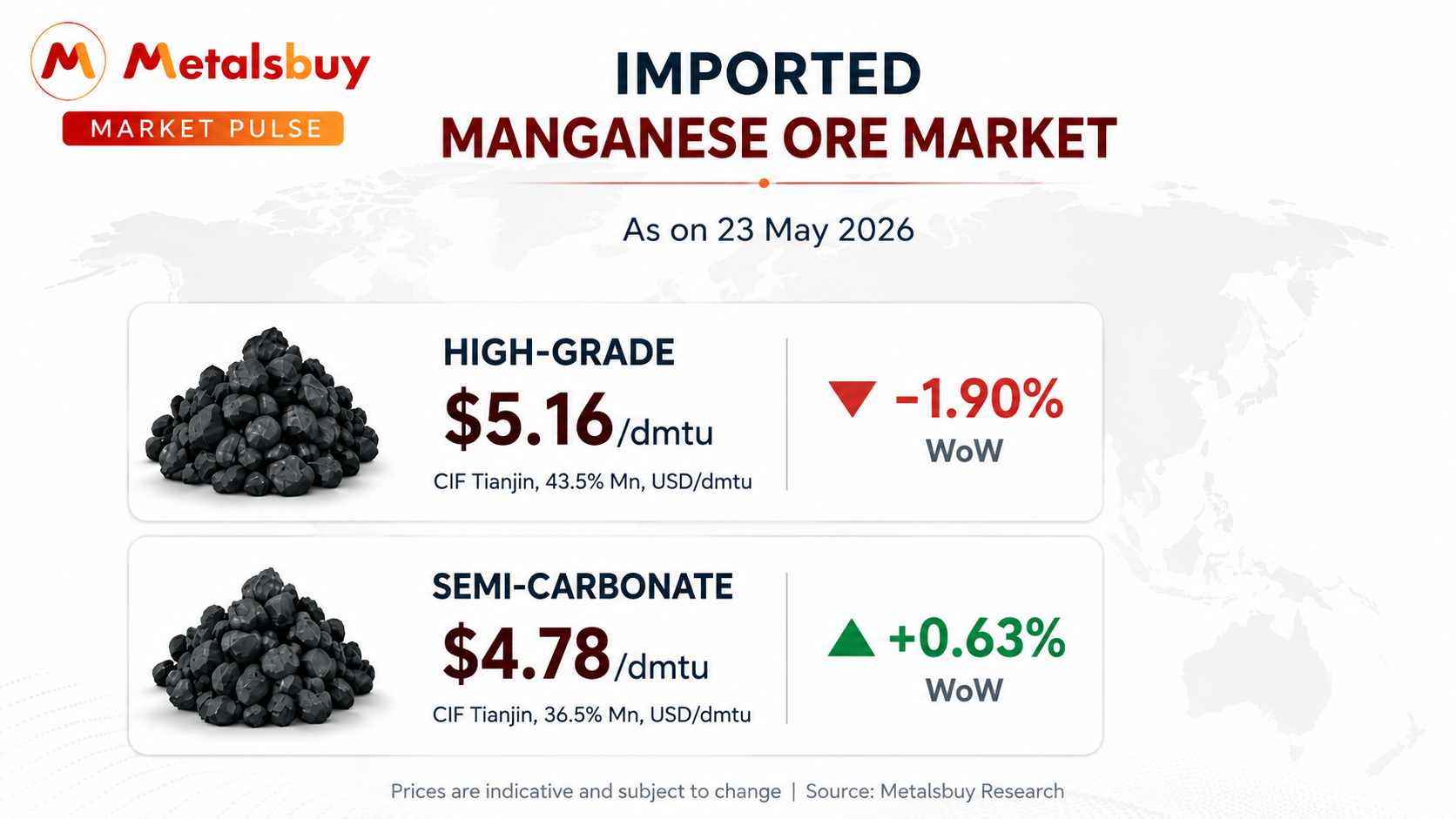
- High-Grade (43.5% Mn, CIF Tianjin): $5.16/dmtu
- WoW Movement: ▼1.90%
- Semi-Carbonate (36.5% Mn, CIF Tianjin): $4.78/dmtu
- WoW Movement: ▲0.63%
- High-grade spread over semi-carbonate: $0.38/dmtu
- Silico manganese demand sentiment: Remains cautious across major markets
- Market trend: Requirement-based buying continues dominating transactions
MARKET ANALYSIS
The imported manganese ore market continued showing a mixed trend this week as the gap between high-grade and semi-carbonate material widened further. As on 23 May 2026, the high-grade 43.5% Mn index at CIF Tianjin declined to $5.16/dmtu, down 1.90% week-on-week, while semi-carbonate 36.5% Mn moved slightly higher to $4.78/dmtu, increasing 0.63% over the previous week. The movement indicates that while selective support continues emerging for certain lower-grade material, the broader market still remains under pressure because of cautious downstream demand.
The correction in high-grade ore prices appears to be largely linked with softer buying activity from downstream alloy producers and steel-related sectors. Market participants continue avoiding aggressive procurement activity because silico manganese demand has not shown a meaningful recovery. Across several markets, buyers are increasingly maintaining a requirement-based approach rather than building inventory positions. This has naturally reduced urgency within spot transactions and has kept stronger price recovery limited.
Another important factor influencing the current market remains the broader steel environment. Asian steel markets have recently continued witnessing pricing pressure and slower buying activity across multiple regions. Steel mills continue focusing more closely on inventory management and operating margins rather than aggressive production expansion. Since manganese ore demand ultimately depends on alloy production and steel output, softer sentiment in downstream industries continues filtering into the imported ore market.
The difference in movement between high-grade and semi-carbonate material also reflects changing buying behavior among consumers. During periods of cautious demand and tighter operating margins, several buyers often move toward relatively economical raw material combinations to manage production costs. This may partly explain why semi-carbonate ore managed to witness some support despite broader market weakness. Consumers currently appear focused on balancing cost efficiency rather than maximizing procurement volumes.
Supply-side conditions also remain relatively comfortable at present. Recent industry data indicates stronger manganese ore exports from South Africa into China over recent months, improving overall material availability within the market. Increased cargo arrivals generally reduce concerns regarding immediate shortages and can place additional pressure on prices when demand momentum remains weak. Comfortable supply conditions combined with cautious buying sentiment have therefore created a market environment where stronger price rallies remain difficult to sustain.
Another observation emerging from the market is the continued cautious sentiment surrounding silico manganese production. The alloy sector itself has recently witnessed softer pricing and competitive market conditions in several regions. Producers remain selective regarding raw material procurement because finished alloy prices continue facing pressure from higher supply and measured demand growth. Since manganese ore represents one of the major cost components for alloy manufacturers, procurement decisions remain closely tied to visibility in finished product demand.
At the same time, the market is not currently witnessing signs of severe stress or abrupt deterioration. Material availability remains stable, transaction activity continues taking place, and demand has not disappeared completely. The current situation appears more reflective of a market waiting for stronger direction from downstream sectors rather than a market experiencing structural weakness.
INDUSTRY IMPACT
For silico manganese producers, softer high-grade ore prices may provide some relief on raw material procurement costs over the short term. However, lower input costs alone may not immediately improve profitability if finished alloy demand continues remaining moderate. Producers may therefore continue focusing on cautious inventory management and selective procurement strategies.
Traders are also likely to remain disciplined regarding fresh inventory positions. Since price direction currently lacks strong conviction, most market participants may continue preferring shorter procurement cycles rather than taking larger market positions.
For steel manufacturers, stable ore availability continues reducing immediate supply concerns. However, stronger demand signals from the steel sector will remain important for any sustainable recovery across the manganese value chain.
MARKET OUTLOOK
The imported manganese ore market currently appears to remain within a cautious and range-bound phase. High-grade ore may continue facing pressure if downstream buying activity does not improve meaningfully, while semi-carbonate material could continue receiving selective support from cost-sensitive consumers.
The next directional movement for the market will likely depend on improvement in steel demand and alloy sector sentiment. Until stronger procurement activity returns, the market may continue witnessing moderate movement rather than aggressive price shifts.