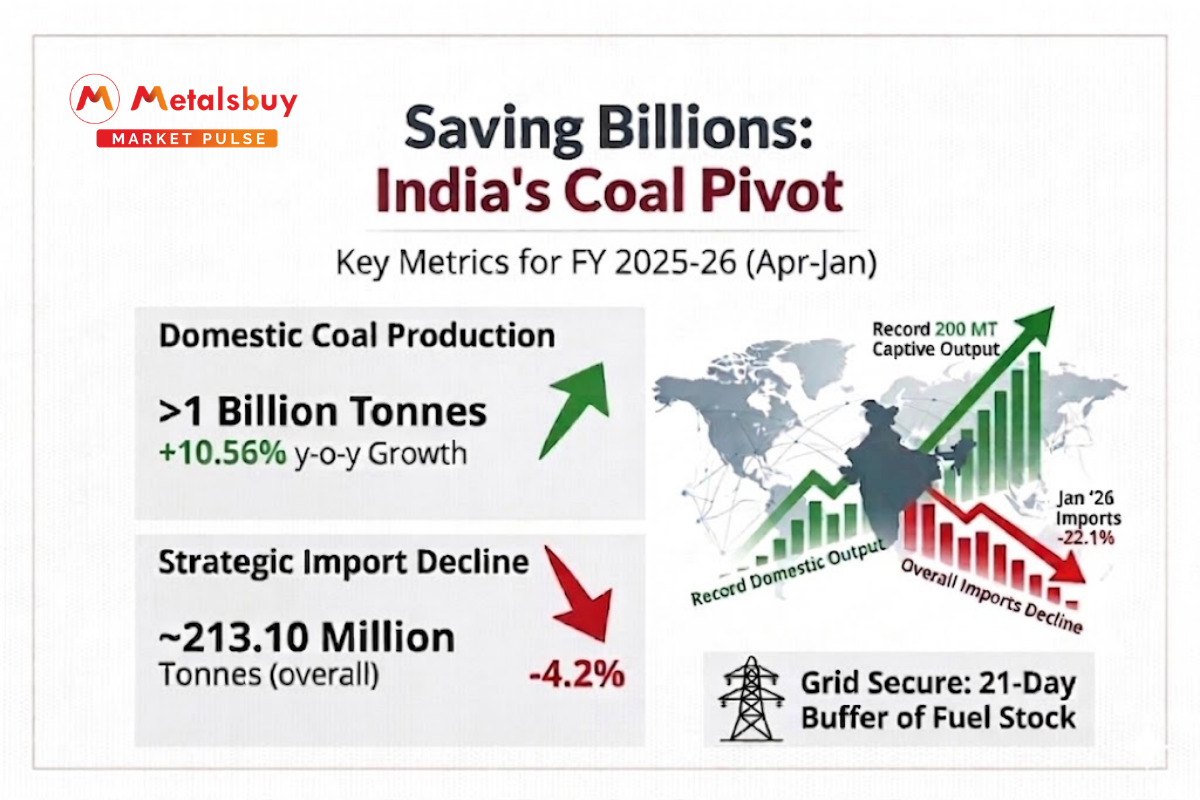
A strategic 4.2% drop in coal imports signals a monumental shift in India's energy landscape, saving billions in foreign exchange while fortifying the national grid against geopolitical shocks. Amid volatile global energy markets and soaring seaborne thermal coal prices, India is accelerating its transition toward energy self-reliance. Recent market data from the April-January period of the 2025-2026 fiscal year reveals a decisive 4.2% contraction in the country's overall coal imports, settling at 213.10 million tonnes (MT). This is not a temporary market anomaly, but a structural shift driven by an unprecedented boom in domestic coal production.
The Core Shift: Rewiring the Supply Chain
The transition is most evident in the commodity breakdown. Non-coking coal—the primary fuel for thermal power generation—saw imports plunge to 127.80 MT during the April-January period, down from 141.18 MT in the previous fiscal year. This decline accelerated drastically in January 2026, with monthly overall coal imports tumbling 22.1% year-on-year to just 16.64 MT.
Conversely, coking coal imports experienced a marginal uptick, rising from 45.83 MT to 50.39 MT to support India's booming domestic steel sector. However, the overarching macroeconomic trend is clear: India is aggressively weaning itself off expensive foreign thermal fuel.
The Driving Forces: Shielding the Grid from Global Shocks
This massive import substitution is fueled by India's relentless push for absolute energy security. In March 2026, the country successfully breached the historic 1-billion-tonne domestic coal production mark for the second consecutive year.
Furthermore, output from captive and commercial mines crossed a record 200 MT milestone on March 11, 2026, registering a robust 10.56% year-on-year growth. This surge is the direct result of proactive policy reforms, accelerated commercial mine allocations, and expanded transit models like the Rail-Sea-Rail network, which have streamlined the delivery of domestic fuel to coastal power plants.
Economic Ripple Effects and Strategic Wins
The financial and operational dividends of this transition are immense. By substituting pricey overseas thermal coal with domestic supply, India is preserving significant foreign exchange reserves. In the previous fiscal year (FY25) alone, a 7.9% reduction in coal imports (down to 243.62 MT) saved the national exchequer approximately $7.93 billion (₹60,681 crore). The current fiscal trajectory promises to yield similarly massive capital retention.
Beyond strengthening the balance sheet, this production surge has stabilized the national power grid. Domestic thermal power plants are now sitting on a robust 21-day buffer of fuel stock, effectively eliminating grid anxieties ahead of peak summer electricity demand.
The Road Ahead: Scaling for a Century of Growth
The Ministry of Coal is actively targeting a sustained annual production growth rate of 6% to 7%, aiming to scale domestic output to 1.5 billion tonnes by 2029-30. To sustain this momentum, the government has launched the 'Mission Coking Coal' initiative to increase domestic raw coking coal production to 140 MT by 2030, eventually shielding the steel manufacturing sector from import volatility. By turning inwards, breaking production records, and optimizing supply chains, India has successfully decoupled its baseline energy grid from the unpredictable swings of the global commodities market, laying down a resilient, self-reliant economic foundation.