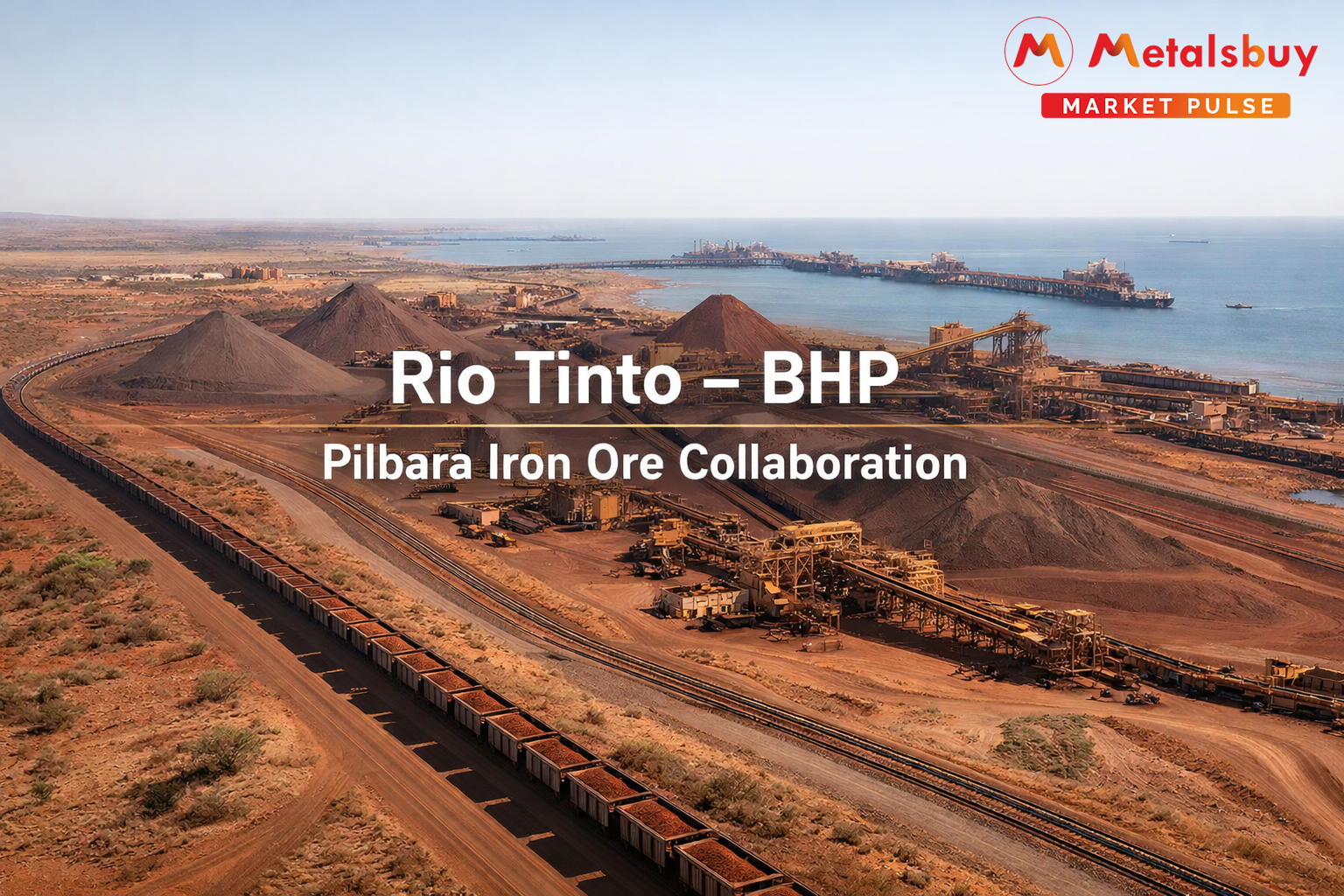
Global mining majors Rio Tinto and BHP have announced a potential collaboration in Western Australia’s Pilbara region, signalling a pragmatic shift toward asset optimisation and capital discipline in the global iron ore sector. The proposed cooperation could unlock up to 200 million tonnes of additional iron ore supply over the life of the project, subject to feasibility outcomes and regulatory approvals.
Deal Structure and Scope
The collaboration is currently framed through non binding memoranda of understanding, under which the two companies will jointly assess opportunities to develop iron ore resources located at adjacent operations. The plan involves mining ore from deposits owned by one party and processing it through the existing infrastructure of the other, including beneficiation facilities, rail, and port systems.
This infrastructure sharing model allows both companies to monetise stranded or lower priority resources without undertaking large scale greenfield investments. Initial assessments will focus on technical viability, cost structures, and commercial terms, followed by more detailed studies before any final investment decision is taken.
If approved, production from the collaboration is expected to commence in the early 2030s, aligning with the long term replacement cycle of ageing Pilbara assets.
Strategic Rationale Behind the Partnership
The proposed partnership reflects a broader shift in strategy among major miners, driven by several structural factors.
First, capital discipline has become central to iron ore strategy. With shareholder expectations focused on returns rather than volume growth, miners are increasingly favouring low capital intensity options that extend mine life rather than building new capacity.
Second, many Pilbara operations are maturing, with declining grades and rising strip ratios. Collaborative development allows companies to extract incremental tonnes efficiently, improving asset utilisation while reducing per tonne operating and sustaining capital costs.
Third, the partnership frees up capital for future facing commodities such as copper, nickel, and other energy transition metals, where both Rio Tinto and BHP have prioritised growth investments.
Implications for the Iron Ore Market
From a market perspective, the proposed 200 million tonnes of additional supply will be spread over several years, limiting the risk of short term oversupply. However, it reinforces the role of Australia as a stable, low cost supplier of seaborne iron ore at a time when global steelmakers remain cautious about supply security.
For steel mills, particularly in Asia, the collaboration supports continuity of supply from premium Pilbara blends, even as some legacy mines approach depletion. For traders, the development highlights the likelihood of steady baseline supply from Australia despite reduced appetite for large scale expansion projects.
The move also strengthens the competitive positioning of Australian producers against emerging supply sources such as West Africa, where execution risks, infrastructure constraints, and geopolitical uncertainty remain elevated.
Regulatory and Execution Considerations
The collaboration remains subject to regulatory approvals and engagement with Traditional Owner groups, a critical factor in Australian mining developments. Operational coordination between two competing producers will also require clearly defined commercial frameworks to manage cost sharing, scheduling, and capacity allocation.
Iron ore price volatility remains another key variable. While the low capital intensity nature of the project improves resilience, long term economics will still depend on global steel demand, decarbonisation pathways, and trade flows.
Industry Significance
Rather than pursuing mergers or large scale acquisitions, the Rio Tinto BHP collaboration reflects a new model of selective cooperation among major miners. By focusing on specific assets and shared infrastructure, companies can unlock value while preserving balance sheet strength and strategic flexibility.
If successfully executed, this approach could set a precedent for similar partnerships across mature mining regions globally.
Market Pulse Outlook
The Pilbara collaboration underscores a clear message for the iron ore industry: future growth will be incremental, disciplined, and infrastructure led. For policymakers, it reinforces Australia’s role in long term raw material security. For investors, it highlights a continued emphasis on returns over volume. For steelmakers, it signals stability rather than disruption in seaborne iron ore supply over the coming decade.