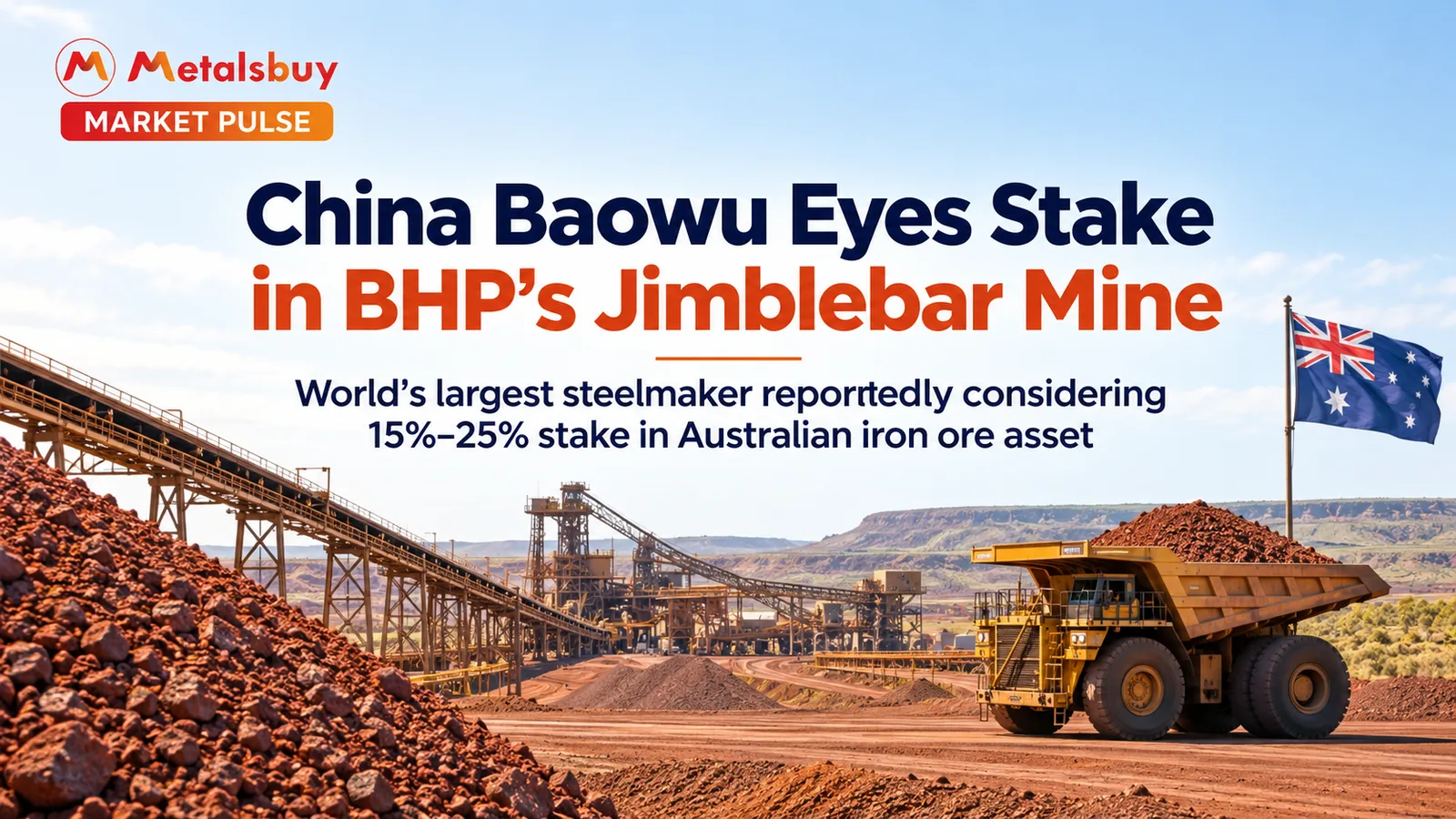
China Baowu Steel Group is reportedly considering a minority stake in BHP's Jimblebar iron ore mine in Western Australia. The reported interest is between 15% and 25%, with the stake expected to come from BHP's existing holding in the project. No agreement has been reached so far, and there is no confirmation that the discussions will eventually result in a transaction. Still, the size of the asset makes this one worth watching closely.
Jimblebar is already a large producing operation rather than a new mining project looking for investment. BHP's share of production from the mine was around 62.5 million tonnes in FY2026, accounting for roughly a quarter of the company's total iron ore output. At prevailing iron ore prices, that production was estimated to be worth around $6.2 billion. This gives some idea of the scale involved if Baowu does decide to acquire a stake.
A stake of up to 25% is being considered
According to the report, Baowu is looking at an interest ranging from 15% to 25%. No potential valuation has been disclosed, so it would be premature to put a number on the possible transaction. The stake would reportedly come from BHP's 85% holding, while the remaining interests are held by Japanese trading houses Itochu and Mitsui. The existing ownership structure gives Itochu an 8% interest and Mitsui a 7% interest.
For BHP, Jimblebar is part of its much larger Western Australian iron ore business. That business remains central to the company's portfolio, and BHP has said it regularly explores options that could create long-term value for shareholders. However, the company has not confirmed that a sale is under negotiation or that it has agreed to bring Baowu into the asset. At this stage, the reported interest remains just that — interest, not a completed deal.
Why Jimblebar matters
The production number is the main reason this story has attracted attention. 62.5 million tonnes in a single financial year makes Jimblebar a significant source of seaborne iron ore supply. A 15% stake in an operation of that size would represent exposure to several million tonnes of annual production, while a 25% stake would naturally be larger. The exact commercial arrangements around any future transaction, including offtake rights, have not been disclosed.
For a steelmaker such as Baowu, an ownership interest in an operating mine is different from simply purchasing ore cargoes in the spot market. It provides direct exposure to the upstream supply chain and creates a longer-term connection with the mining operation. That does not automatically mean the shareholder gets unrestricted access to all of its proportionate production, as this depends on the structure of any agreement. But it does give the steelmaker a position much closer to the source of the raw material.
China continues to look upstream
The reported move also comes at a time when Chinese steelmakers and state-backed organisations have been trying to strengthen their position in the global iron ore supply chain. China is the world's largest iron ore buyer and remains heavily dependent on imports, particularly from Australia and Brazil. That dependence has made supply security and purchasing terms an important issue for the country's steel industry for years.
Baowu already has experience investing in Australian iron ore assets. In 2022, it entered a joint venture with Rio Tinto to develop the Western Range project in the Pilbara, a project with planned annual capacity of around 25 million tonnes that started production in 2025. A possible investment in Jimblebar would therefore not be Baowu's first direct involvement in Australian iron ore. What makes Jimblebar different is that it is already a large and established producing operation.
The timing is interesting
The reported interest comes only months after BHP and China's state-backed iron ore buyer resolved a prolonged dispute over iron ore purchasing arrangements. The disagreement had affected purchases of certain BHP products, including Jimblebar fines, before the issue was resolved in April. The episode highlighted how important commercial negotiations between major miners and Chinese buyers have become.
There is also a wider strategic angle. Mining companies often bring partners into new projects to share development costs and construction risks. Jimblebar, however, is already an established operation, which makes a potential sale of an interest somewhat different from a conventional project-level partnership. Any decision by BHP to reduce its holding would therefore likely be examined closely from both a commercial and strategic perspective.
No deal has been confirmed yet
For now, there are more questions than answers. Neither a valuation nor the structure of a possible transaction has been disclosed, and Baowu has not confirmed that it will proceed. Regulatory considerations could also become relevant given the sensitivity around major Chinese investments in Australian resources. Chinese investment in Australia has faced greater scrutiny in recent years, particularly in strategically important resource sectors.
But the numbers alone make this an important development to follow. A possible 15%–25% stake in a mine where BHP's FY2026 production was 62.5 million tonnes would be a significant transaction in the iron ore industry. It would also deepen Baowu's direct involvement in Australia's Pilbara region, one of the most important iron ore-producing areas in the world. Whether the discussions move beyond the exploratory stage is something the market will now be watching.