Key Numbers
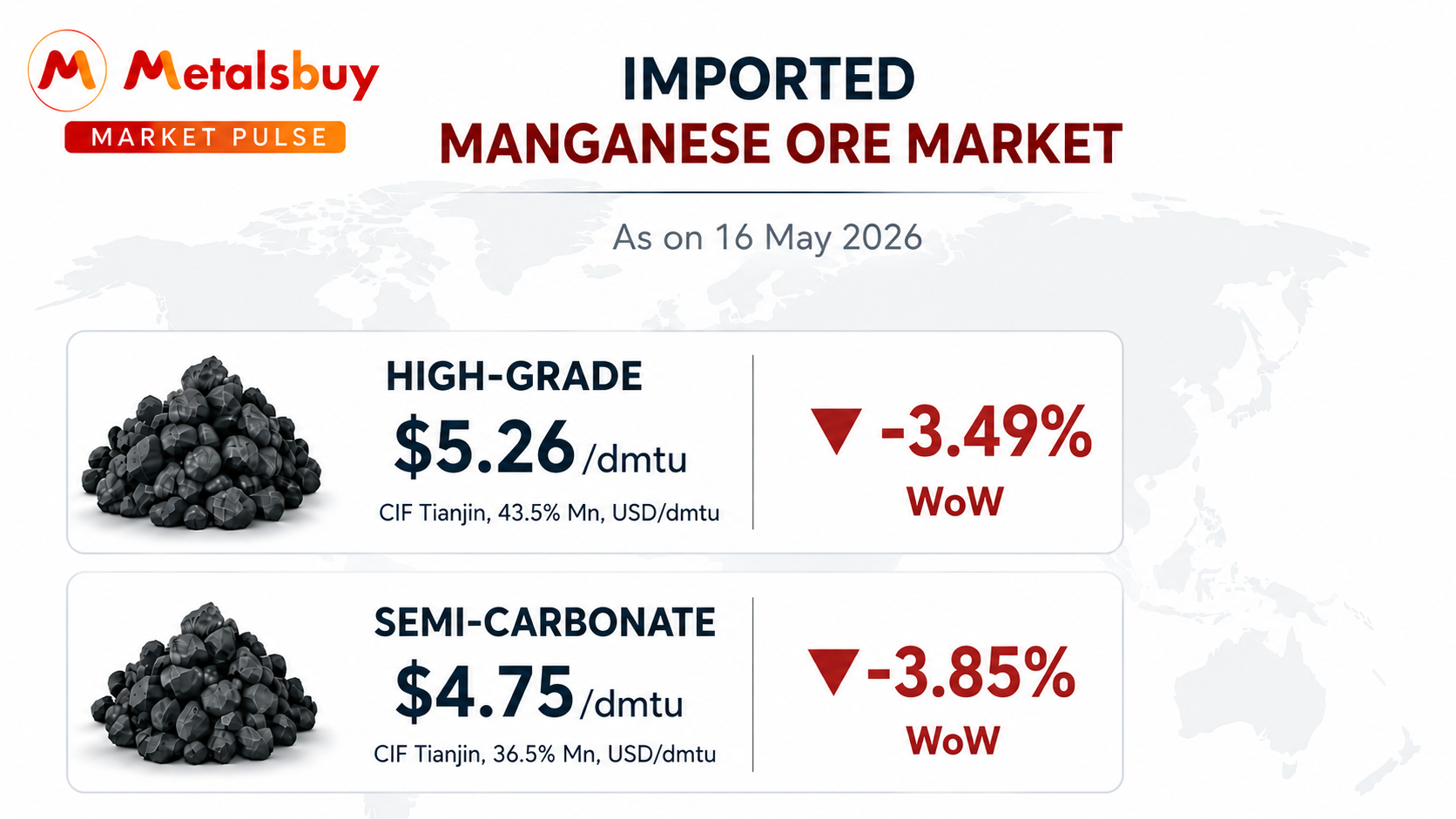
- High Grade Ore Index (43.5% Mn, CIF Tianjin): ↓ 3.49% WoW to $5.26/dmtu
- Semi-Carbonate Ore Index (36.5% Mn, CIF Tianjin): ↓ 3.85% WoW to $4.75/dmtu
- Spot buying activity remained subdued
- Silico manganese prices continued to weaken
- Steel prices remained under pressure amid softer demand
- Market participants expecting demand recovery signals from the steel sector
Market Analysis
The imported manganese ore market witnessed a moderate correction this week, with both High Grade (43.5% Mn) and Semi-Carbonate (36.5% Mn) indices moving lower as weak downstream demand and softer alloy prices weighed on overall market sentiment.
The High Grade Ore Index declined by 3.49% week-on-week to $5.26/dmtu, while Semi-Carbonate Ore fell by 3.85% to $4.75/dmtu. The correction follows the previous week's relatively firm market tone and reflects a shift in market attention toward downstream demand fundamentals rather than supply-side support.
The key pressure point for the market currently continues to originate from the silico manganese segment. Alloy prices have witnessed continued weakness over recent weeks due to slower buying activity and softer demand from steel producers. Reduced alloy margins have naturally impacted raw material procurement strategies, resulting in manufacturers maintaining conservative purchasing behavior and avoiding aggressive inventory accumulation.
The weakness in alloy prices is closely connected to the broader steel market environment. Steel prices have remained under pressure across multiple regions due to cautious buying activity, slower construction-linked demand, and measured procurement patterns. Since steel production remains the primary driver of ferro alloy consumption, any slowdown in steel sentiment eventually transmits directly to manganese ore demand.
The lower price movement observed this week does not necessarily indicate a structurally bearish market. Market feedback suggests that ore availability remains relatively balanced, with no significant signs of aggressive oversupply or distress selling. Transaction activity has slowed, but market participants continue maintaining cautious positions rather than undertaking aggressive liquidation of inventories.
Another important observation is that the current market correction appears to be demand-led rather than supply-led. Historically, markets witnessing demand-side pressure tend to respond relatively quickly once downstream sectors begin showing early signs of recovery. This distinction remains important because supply disruptions or inventory shortages are currently not the dominant factor influencing price direction.
Steel market sentiment now remains the largest variable determining future market movement. Seasonal construction activity, infrastructure spending momentum, and improvements in steel procurement behavior could gradually restore confidence across the supply chain. Market participants are therefore entering a wait-and-watch phase. Buyers remain selective, sellers remain cautious, and most participants are avoiding large commitments until clearer demand signals emerge.
While immediate market conditions continue to remain soft, expectations of downstream recovery are preventing sentiment from becoming significantly bearish. The market currently appears to be moving through a temporary adjustment phase rather than a prolonged correction cycle.
Industry Impact
Ferro Alloy Producers
The current decline in imported manganese ore prices may initially appear beneficial for ferro alloy producers from a raw material cost perspective. However, the overall benefit remains limited because silico manganese prices are also moving downward. Lower alloy realizations are putting pressure on producer margins, reducing the incentive for manufacturers to operate at aggressive production levels. As a result, many producers are expected to continue maintaining cautious operating rates and procure raw materials only based on immediate production requirements rather than building inventories. Unless alloy prices stabilize, ore price corrections alone may not significantly improve profitability.
Ore Traders & Suppliers
Traders are currently operating in a highly cautious environment where transaction activity remains slower than normal market conditions. With downstream consumers delaying procurement decisions and expecting further clarity on steel demand, many traders are avoiding aggressive stock accumulation. Instead, market participants are focusing on maintaining liquidity and minimizing inventory risk. However, the current correction is not yet triggering panic selling, suggesting that suppliers still believe downside risks may remain limited if downstream sentiment improves over the coming weeks.
Indian Market
For Indian consumers and ferro alloy manufacturers dependent on imported ore, the current softening in international sentiment may provide selective buying opportunities. Lower global prices could influence seaborne offers into India and provide temporary procurement advantages. However, Indian buyers are also expected to remain cautious because domestic alloy market conditions continue reflecting broader global demand weakness. Most participants may prefer staggered purchasing strategies rather than aggressive bookings until stronger signals emerge from the steel market.
Steel Industry
The steel industry continues to remain the most critical factor influencing manganese ore demand direction. Weak steel prices and slower procurement activity are directly impacting silico manganese consumption, which ultimately influences imported ore demand. Construction activity and overall industrial demand have remained softer than expected, limiting optimism across the supply chain. However, any improvement in steel demand through infrastructure activity, seasonal recovery, or stronger procurement sentiment could quickly alter market direction.
Market Outlook
The current market correction appears to be driven primarily by weak demand conditions rather than structural oversupply concerns. This distinction is important because demand-driven corrections typically reverse faster when downstream conditions improve. While short-term sentiment remains cautious, the market still has support factors in place. If steel prices begin stabilizing and silico manganese demand starts improving, buying interest could gradually return and support manganese ore prices over the coming weeks.
The overall tone therefore remains cautious in the near term but balanced-to-positive from a medium-term perspective.