KEY NUMBERS
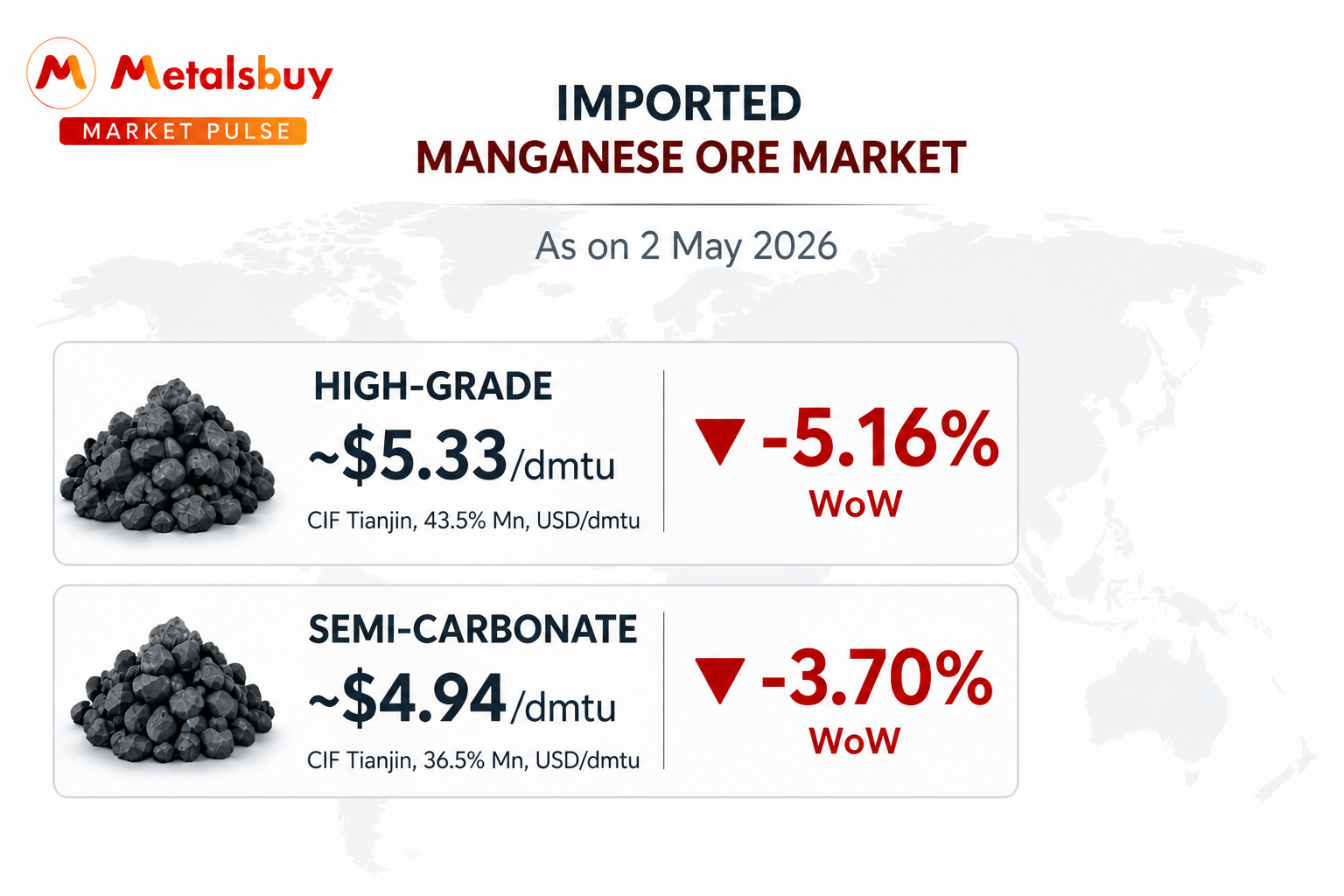
- High Grade Ore Index (43.5% Mn), CIF Tianjin: $5.33/dmtu
- Weekly Change: ▼ 5.16%
- Semi Carbonate Ore Index (36.5% Mn), CIF Tianjin: $4.94/dmtu
- Weekly Change: ▼ 3.70%
- Market Tone: Stable offers, weaker transactions, constructive medium-term outlook
MARKET ANALYSIS
The imported manganese ore market saw a measured correction this week, with the High Grade Ore Index (43.5% Mn, CIF Tianjin) easing to $5.33/dmtu, while the Semi Carbonate Ore Index (36.5% Mn) declined to $4.94/dmtu.
While index values softened, market conversations indicate that physical prices at Tianjin port remained relatively stable in many cases, with the sharper weakness visible more in concluded transactions than in outright offer levels. This suggests the market is experiencing a temporary slowdown in liquidity rather than broad-based distress.
A key factor behind the softer trading environment is growing caution among Chinese alloy producers and traders. Buyers are reportedly purchasing only immediate requirements and negotiating aggressively, reflecting squeezed margins in downstream silico manganese operations. At the same time, sections of the Chinese manganese alloy industry are understood to be reducing production or lowering operating rates. These cuts are typically a combination of routine maintenance, margin-led curtailments, and demand-linked adjustments rather than structural shutdowns.
When alloy plants slow output, raw material procurement naturally becomes more selective, reducing spot ore transactions even if sellers maintain firm asking prices. In the Chinese steel sector, some production moderation is also being linked to scheduled maintenance cycles, regional output controls, and softer construction demand. Since steel production directly influences ferro alloy demand, this has created a ripple effect across the manganese ore chain. The present correction should therefore be viewed as a pause after a rally, rather than a collapse in market fundamentals.
Recent months had seen manganese ore supported by tighter supply flows, healthier alloy output, and improved sentiment. As a result, the current decline appears more linked to buyer resistance and temporary operating cuts than any significant oversupply shock.
Major origins such as South Africa, Gabon, and Australia continue to remain important swing suppliers. Any disruption in shipments, freight, or port arrivals could quickly tighten the market again.
INDIA MARKET LINKAGE
For Indian silico manganese producers, the softer imported ore trend may provide near-term cost relief. This comes at an important time as domestic alloy markets have also faced slower buying interest and margin pressure. If imported ore remains moderate while finished alloy prices stabilise, Indian producers could see improved conversion economics. Ports such as Vizag, Kandla, Haldia, and Paradip will remain key indicators for landed cargo sentiment and replacement cost trends.
INDUSTRY IMPACT
The correction may help revive buyer interest after recent elevated price phases. Consumers who delayed purchases could return selectively, while traders may look for restocking opportunities if downside momentum slows. Most importantly, lower ore input costs can help restore balance between manganese ore pricing and alloy realisations, supporting healthier value-chain margins.
WHAT TO WATCH NEXT
- China alloy plant operating rates
- Steel mill maintenance / output discipline
- Tianjin port transaction volumes
- South African export shipments
- Indian alloy buying sentiment
MARKET OUTLOOK
Although weekly indices corrected, the underlying market remains more balanced than bearish. If Chinese production cuts prove temporary and downstream buying resumes, manganese ore prices could shift from correction mode into consolidation over the coming weeks.
For now, the tone remains cautiously positive, with improved affordability potentially setting the stage for the next demand cycle.