KEY NUMBERS
₹35,000 Crore : Planned capital expenditure over FY27 and FY28
₹15,000 Crore : Planned capex in FY27
₹20,000+ Crore : Planned capex in FY28
₹36,000 Crore : Planned investment in IISCO expansion
2.5 MTPA : Current IISCO steelmaking capacity
7.1 MTPA : Planned IISCO capacity by FY29
25–28 MTPA : Potential SAIL capacity by FY30
Bhilai : India’s largest rail producer
Bokaro : One of India’s largest flat steel producers
Burnpur (IISCO) : Centerpiece of SAIL’s future expansion
MARKET ANALYSIS
For years, India’s private steel companies dominated the headlines.
JSW expanded.
Tata Steel expanded.
Jindal expanded.
Now India’s largest government-owned steel producer is preparing to make its biggest move in decades.
Steel Authority of India Limited, better known as SAIL, has unveiled an expansion roadmap that could reshape the company over the next five years. The headline number is significant enough on its own — more than ₹35,000 crore of planned capital expenditure across the next two financial years.
The bigger story is what comes after that.
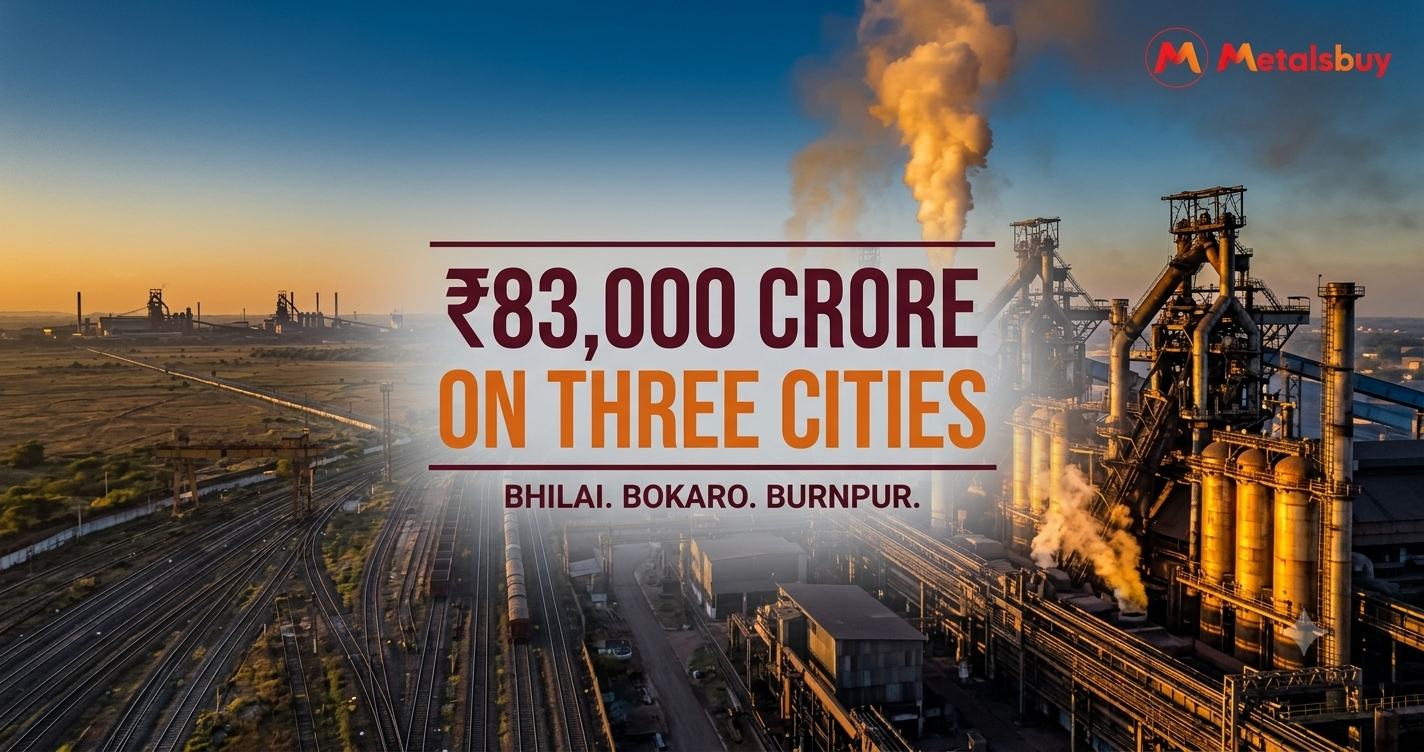
When the full expansion program is considered, the investment commitment approaches ₹83,000 crore across multiple steel plants, making it one of the largest industrial transformation programs currently underway in India.
This is not a maintenance cycle.
This is a reinvention.
At the center of the plan sit three iconic steel cities.
Bhilai.
Bokaro.
Burnpur.
Three plants.
Three regions.
One long-term strategy.
The objective is clear: increase capacity, improve efficiency and position SAIL for the next phase of India’s steel growth story.
THE BIGGEST BET IS HAPPENING IN BURNPUR
The most dramatic expansion is planned at IISCO Steel Plant in Burnpur.
Today, the facility operates with steelmaking capacity of approximately 2.5 million tonnes per annum.
The target is ambitious.
SAIL plans to increase capacity to 7.1 million tonnes per annum by FY29 through an investment estimated at ₹36,000 crore.
That would nearly triple the plant’s production capability.
For context, many standalone steel producers operate at capacities smaller than the increase SAIL intends to create at IISCO alone.
The project represents one of the largest single-site steel expansions currently planned anywhere in India.
And it is only one part of the broader strategy.
WHY BHILAI REMAINS THE CROWN JEWEL
For Metalsbuy readers, Bhilai may be the most important part of the story.
The Bhilai Steel Plant remains one of India’s most strategically significant industrial assets. It is the country’s primary rail manufacturer and produces many of the heavy structural products that support infrastructure development across India.
Almost every major railway expansion project in the country depends on Bhilai.
Every kilometre of track tells part of its story.
The plant is also expected to play a major role in SAIL’s future growth plans through capacity enhancement and modernization initiatives.
For Chhattisgarh, this is more than a corporate investment.
It is an industrial development story.
Expansion at Bhilai means employment, procurement, logistics activity and long-term demand across the region’s broader metals ecosystem.
WHAT THIS MEANS FOR THE STEEL INDUSTRY
The timing of SAIL’s investment program is important.
India’s steel demand continues to grow faster than most major economies. Infrastructure spending remains elevated. Manufacturing activity continues expanding. Railways, construction, renewable energy and industrial projects all require increasing volumes of steel.
Meeting that demand requires capacity.
Lots of it.
The industry’s growth over the last decade has largely been driven by private sector investment. SAIL’s latest plans suggest the public sector is now preparing to participate more aggressively in the next phase of expansion.
If fully executed, the company could increase total capacity to between 25 and 28 million tonnes per annum by FY30.
That would strengthen SAIL’s position as one of the country’s largest steel producers and significantly expand its contribution to domestic supply.
WHAT IT MEANS FOR FERRO ALLOYS
Every steel expansion eventually creates demand elsewhere.
More steel production means more ferrochrome.
More silico manganese.
More ferro manganese.
More alloy procurement.
The scale of SAIL’s planned investments makes this particularly relevant for the ferro alloy industry. Capacity additions across multiple integrated steel plants could create substantial long-term demand for alloying materials over the coming decade.
The Bhilai connection is especially important.
Chhattisgarh already hosts a large concentration of ferro alloy producers, sponge iron manufacturers and steel processors. Expansion at Bhilai strengthens the entire regional ecosystem.
For suppliers across central and eastern India, this is not just a SAIL story.
It is a demand story.
WHY THIS IS DIFFERENT FROM PREVIOUS EXPANSIONS
Steel companies announce expansion plans regularly.
Few involve three major integrated steel plants simultaneously.
What makes this program unique is its scale and geographic reach.
Rather than focusing on a single facility, SAIL is attempting to modernize and expand multiple strategic assets across its network. The approach spreads growth across regions while strengthening the company’s overall production platform.
It is the kind of transformation that takes years.
But when successful, the impact can last decades.
MARKET OUTLOOK
The Indian steel industry is entering a period where capacity expansion is no longer optional.
It is necessary.
Demand growth continues.
Infrastructure spending continues.
Urbanisation continues.
Steel consumption continues.
SAIL’s ₹83,000 crore roadmap is a response to that reality.
The projects will take time.
Execution risks remain.
Market conditions will fluctuate.
But the message is unmistakable.
India’s oldest steel giant is preparing for its next chapter.
And it is betting bigger than it has in a very long time.
Tags:
KEY NUMBERS
₹35,000 Crore : Planned capital expenditure over FY27 and FY28
₹15,000 Crore : Planned capex in FY27
₹20,000+ Crore : Planned capex in FY28
₹36,000 Crore : Planned investment in IISCO expansion
2.5 MTPA : Current IISCO steelmaking capacity
7.1 MTPA : Planned IISCO capacity by FY29
25–28 MTPA : Potential SAIL capacity by FY30
Bhilai : India’s largest rail producer
Bokaro : One of India’s largest flat steel producers
Burnpur (IISCO) : Centerpiece of SAIL’s future expansion
MARKET ANALYSIS
For years, India’s private steel companies dominated the headlines.
JSW expanded.
Tata Steel expanded.
Jindal expanded.
Now India’s largest government-owned steel producer is preparing to make its biggest move in decades.
Steel Authority of India Limited, better known as SAIL, has unveiled an expansion roadmap that could reshape the company over the next five years. The headline number is significant enough on its own — more than ₹35,000 crore of planned capital expenditure across the next two financial years.
The bigger story is what comes after that.
When the full expansion program is considered, the investment commitment approaches ₹83,000 crore across multiple steel plants, making it one of the largest industrial transformation programs currently underway in India.
This is not a maintenance cycle.
This is a reinvention.
At the center of the plan sit three iconic steel cities.
Bhilai.
Bokaro.
Burnpur.
Three plants.
Three regions.
One long-term strategy.
The objective is clear: increase capacity, improve efficiency and position SAIL for the next phase of India’s steel growth story.
THE BIGGEST BET IS HAPPENING IN BURNPUR
The most dramatic expansion is planned at IISCO Steel Plant in Burnpur.
Today, the facility operates with steelmaking capacity of approximately 2.5 million tonnes per annum.
The target is ambitious.
SAIL plans to increase capacity to 7.1 million tonnes per annum by FY29 through an investment estimated at ₹36,000 crore.
That would nearly triple the plant’s production capability.
For context, many standalone steel producers operate at capacities smaller than the increase SAIL intends to create at IISCO alone.
The project represents one of the largest single-site steel expansions currently planned anywhere in India.
And it is only one part of the broader strategy.
WHY BHILAI REMAINS THE CROWN JEWEL
For Metalsbuy readers, Bhilai may be the most important part of the story.
The Bhilai Steel Plant remains one of India’s most strategically significant industrial assets. It is the country’s primary rail manufacturer and produces many of the heavy structural products that support infrastructure development across India.
Almost every major railway expansion project in the country depends on Bhilai.
Every kilometre of track tells part of its story.
The plant is also expected to play a major role in SAIL’s future growth plans through capacity enhancement and modernization initiatives.
For Chhattisgarh, this is more than a corporate investment.
It is an industrial development story.
Expansion at Bhilai means employment, procurement, logistics activity and long-term demand across the region’s broader metals ecosystem.
WHAT THIS MEANS FOR THE STEEL INDUSTRY
The timing of SAIL’s investment program is important.
India’s steel demand continues to grow faster than most major economies. Infrastructure spending remains elevated. Manufacturing activity continues expanding. Railways, construction, renewable energy and industrial projects all require increasing volumes of steel.
Meeting that demand requires capacity.
Lots of it.
The industry’s growth over the last decade has largely been driven by private sector investment. SAIL’s latest plans suggest the public sector is now preparing to participate more aggressively in the next phase of expansion.
If fully executed, the company could increase total capacity to between 25 and 28 million tonnes per annum by FY30.
That would strengthen SAIL’s position as one of the country’s largest steel producers and significantly expand its contribution to domestic supply.
WHAT IT MEANS FOR FERRO ALLOYS
Every steel expansion eventually creates demand elsewhere.
More steel production means more ferrochrome.
More silico manganese.
More ferro manganese.
More alloy procurement.
The scale of SAIL’s planned investments makes this particularly relevant for the ferro alloy industry. Capacity additions across multiple integrated steel plants could create substantial long-term demand for alloying materials over the coming decade.
The Bhilai connection is especially important.
Chhattisgarh already hosts a large concentration of ferro alloy producers, sponge iron manufacturers and steel processors. Expansion at Bhilai strengthens the entire regional ecosystem.
For suppliers across central and eastern India, this is not just a SAIL story.
It is a demand story.
WHY THIS IS DIFFERENT FROM PREVIOUS EXPANSIONS
Steel companies announce expansion plans regularly.
Few involve three major integrated steel plants simultaneously.
What makes this program unique is its scale and geographic reach.
Rather than focusing on a single facility, SAIL is attempting to modernize and expand multiple strategic assets across its network. The approach spreads growth across regions while strengthening the company’s overall production platform.
It is the kind of transformation that takes years.
But when successful, the impact can last decades.
MARKET OUTLOOK
The Indian steel industry is entering a period where capacity expansion is no longer optional.
It is necessary.
Demand growth continues.
Infrastructure spending continues.
Urbanisation continues.
Steel consumption continues.
SAIL’s ₹83,000 crore roadmap is a response to that reality.
The projects will take time.
Execution risks remain.
Market conditions will fluctuate.
But the message is unmistakable.
India’s oldest steel giant is preparing for its next chapter.
And it is betting bigger than it has in a very long time.