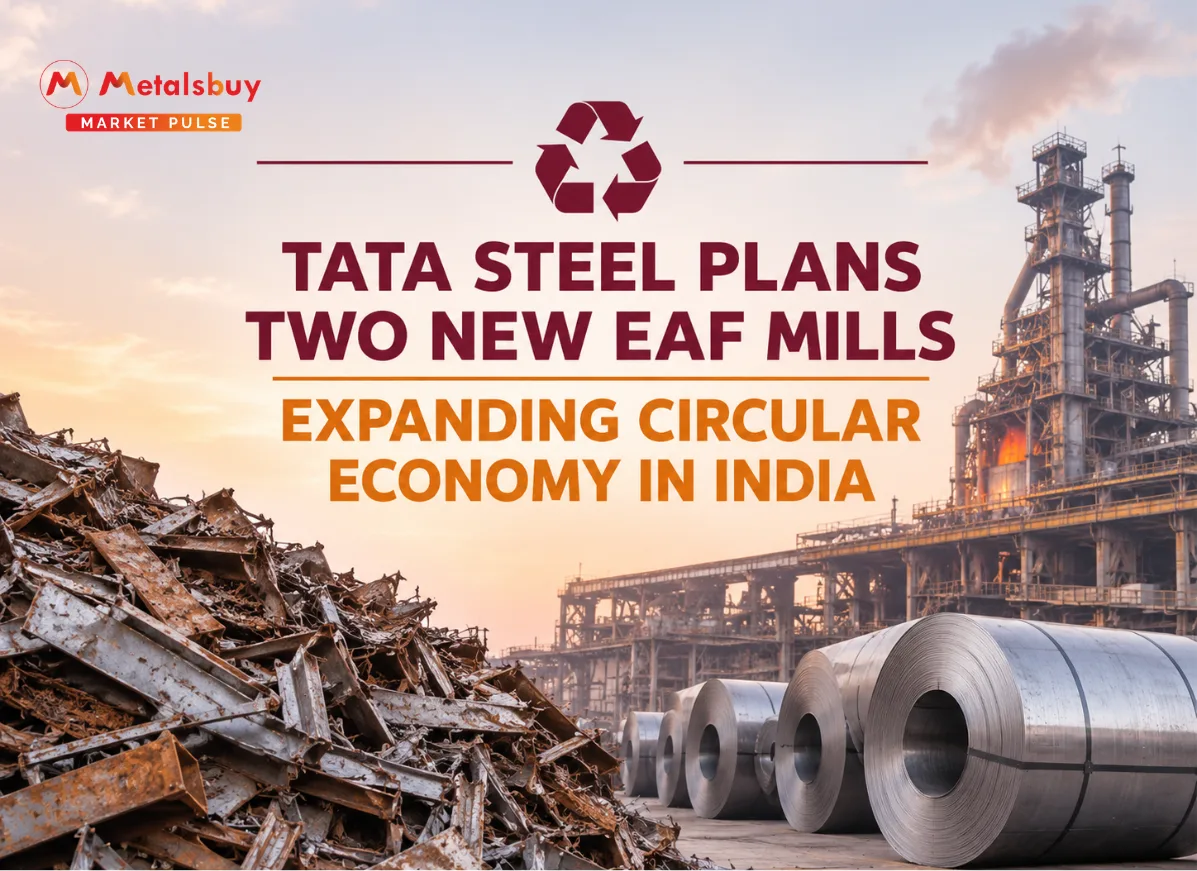
India’s private sector metallurgical giant is fundamentally restructuring its capacity expansion roadmap by placing a massive premium on the circular economy. Tata Steel Limited has officially signaled its intent to establish at least two new scrap-based steel manufacturing facilities in the country. By moving away from traditional, highly centralized blast furnace operations toward regional, electric-powered recycling hubs, the company is proactively tackling two of the industry's most pressing challenges simultaneously. This strategic rollout guarantees a massive reduction in the corporate carbon footprint while ensuring that fast-growing regional markets have uninterrupted, localized access to high-grade construction and engineering materials.
Expanding the circular economy footprint across southern and western regions
The steelmaker is actively scouting locations near massive urban centers to establish regional manufacturing hubs that leverage locally generated raw materials. The core of this fresh industrial push involves deploying capital into decentralized manufacturing models. According to recent corporate disclosures led by the top management, Tata Steel is currently evaluating locations in the western and southern industrial corridors of India for these upcoming scrap-based steel mills. This geographical strategy is highly calculated. Western and southern states house massive automotive manufacturing hubs, heavy engineering zones, and dense urban populations, making them the most prolific generators of end-of-life steel scrap in the subcontinent.
Building on the operational success of its recent ventures, this move represents the next logical step in the company's green portfolio. Tata Steel previously inaugurated a 0.75 million tonnes per annum scrap-based Electric Arc Furnace plant in Rohtak, Haryana, and is currently executing a 0.5 million tonnes per annum facility in Ludhiana, Punjab. By replicating this successful template in the south and west, the company aims to create a highly efficient, closed-loop supply chain. Instead of transporting raw iron ore from eastern India all the way across the country, the company will source local scrap, melt it using grid or renewable electricity, and sell the finished long products directly back into the same regional market.
Navigating the transition toward low carbon metallurgy
Moving away from traditional coal fired blast furnaces allows the company to actively meet its sustainability targets and satisfy eco conscious downstream buyers. The primary unique selling proposition of these planned scrap-based mills is their exceptional environmental performance. Traditional primary steelmaking heavily relies on the blast furnace route, which consumes massive quantities of imported metallurgical coal. This legacy process is incredibly carbon-intensive, typically emitting between 2.0 to 2.5 tonnes of carbon dioxide for every single tonne of crude steel produced.
By heavily integrating Electric Arc Furnace technology fed by ferrous scrap, Tata Steel completely bypasses this carbon-heavy reduction process. Industry data highlights that melting recycled steel scrap requires significantly less thermal energy and structurally lowers overall greenhouse gas emissions to a fraction of the blast furnace average. Furthermore, recycling one tonne of steel effectively conserves approximately 1.1 tonnes of raw iron ore and over half a tonne of coal. As global trade mechanisms begin to heavily penalize high-emission manufacturing, and major domestic automakers increasingly demand low-carbon steel for their vehicle supply chains, these new electric mills provide Tata Steel with a massive, future-proof competitive advantage.
Securing domestic scrap supply chains to fuel future capacity
Formalizing the vehicle scrapping sector and organizing regional metal recycling will be critical to feed these new electric furnaces reliably. Running a network of Electric Arc Furnaces requires absolute certainty in the backend raw material supply, presenting a unique logistical challenge. Currently, India faces a structural deficit in high-quality domestic ferrous scrap, frequently forcing the secondary steel sector to import between 8 and 9 million tonnes of scrap annually from the Middle East and Europe to bridge the gap.
To ensure that these two proposed mills do not fall victim to global scrap price volatility, Tata Steel is aggressively formalizing its own localized collection networks. The company has already launched a dedicated steel recycling business, setting up modern, automated shredding and processing centers that procure end-of-life vehicles, obsolete industrial machinery, and white goods directly from the market. By establishing these organized collection zones in proximity to the planned mills in the west and south, the steelmaker guarantees a continuous, high-purity feed of melting scrap. This proactive supply chain management effectively insulates the new plants from unpredictable international freight rates and ensures that factory run-rates remain highly profitable year-round.
Aligning localized production with national infrastructure goals
Building smaller regional mills reduces freight overheads and allows the manufacturer to rapidly serve the booming tier two industrial corridors. From a macroeconomic perspective, this shift towards decentralized, scrap-based capacity perfectly complements the broader growth narrative of the Indian economy. The central government’s National Steel Policy aims to achieve a total installed capacity of 300 million tonnes by 2030. While greenfield mega-projects in the east will provide the bulk tonnage, establishing 0.5 to 1 million tonne regional scrap mills offers unmatched operational agility.
These electric mills require a fraction of the land and capital expenditure compared to traditional integrated plants, and they can be constructed and commissioned in less than half the time. As tier-two cities across western and southern India undergo massive urban development, expanding metro networks, and building new commercial real estate, the demand for TMT rebars and structural shapes is surging locally. By processing scrap and rolling finished products right at the doorstep of these consumption hubs, Tata Steel drastically cuts down outbound logistical costs. Ultimately, this strategic expansion guarantees that the company will capture a dominant share of regional growth while actively leading the Indian metallurgical sector into a highly profitable, sustainable, and self-reliant era.