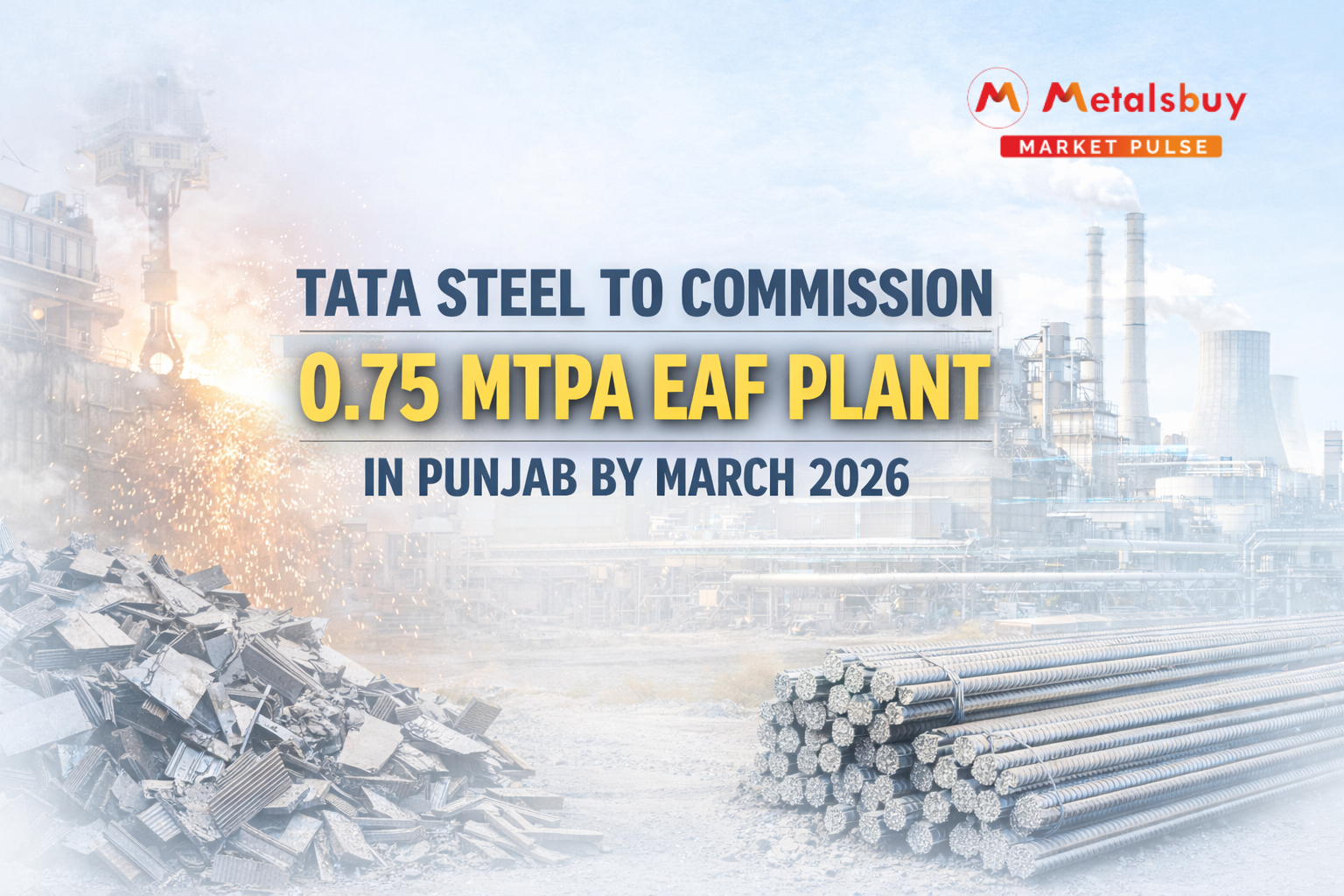
India’s transition toward low-carbon steelmaking is gaining momentum as Tata Steel Limited prepares to commission its 0.75 million tonnes per annum (MTPA) electric arc furnace (EAF) facility in Ludhiana, Punjab, by March 2026. The project represents a strategic shift toward scrap-based steel production and strengthens the company’s footprint in northern India’s long-steel market.
Project Investment and Capacity
The Punjab facility involves an estimated capital expenditure of approximately ₹3,200 crore, reflecting one of the largest recent private steel investments in the region. The plant will operate entirely on steel scrap as feedstock and will be integrated with a downstream rolling mill focused on producing rebars and construction-grade long products.
Once operational, the plant will:
-
Add 0.75 MTPA to India’s scrap-based steel capacity
-
Support infrastructure and housing demand in North India
-
Generate significant direct and indirect employment in the region
Strategic Relevance in India’s Steel Landscape
India produced over 140 million tonnes of crude steel in FY2023-24, maintaining its position as the world’s second-largest steel producer. However, the country’s steelmaking mix remains dominated by the blast furnace–basic oxygen furnace (BF-BOF) route, which is coal-intensive.
Currently:
-
Electric arc furnace (EAF) and induction furnace routes together contribute roughly 30–35% of India’s total steel output
-
The National Steel Policy envisions increasing the share of scrap-based steelmaking to enhance sustainability and reduce import dependence on coking coal
-
India’s domestic scrap availability is projected to rise steadily as vehicle scrappage policies and formalized recycling systems mature
The Ludhiana EAF project aligns with these national objectives by expanding organized scrap consumption capacity.
Decarbonisation and Cost Dynamics
EAF technology typically offers:
-
Lower carbon intensity compared to traditional blast furnace routes
-
Reduced dependence on iron ore and metallurgical coal
-
Operational flexibility in response to demand cycles
While exact emissions vary depending on electricity source and scrap quality, scrap-based EAF production can reduce CO₂ emissions significantly compared to coal-based steelmaking routes. With growing pressure from global buyers for greener supply chains, such investments strengthen India’s competitiveness in export markets.
From a cost perspective, EAF operations are highly sensitive to scrap prices and electricity tariffs. Punjab’s industrial ecosystem and proximity to northern scrap markets may provide logistical advantages, although sustained competitiveness will depend on stable scrap flows and power cost management.
Regional Impact
Punjab and surrounding northern states have strong consumption demand for long products driven by:
-
Urban housing development
-
Highway and rail infrastructure projects
-
Industrial warehousing growth
The commissioning of this facility is expected to improve supply reliability in the region and reduce transportation dependence from eastern and western steel hubs.
Market Outlook
India’s steel demand is projected to grow at 7–9% annually over the medium term, supported by government capital expenditure and private real estate recovery. As demand rises, scrap-based production capacity will play a critical balancing role, especially in serving regional markets efficiently.
For market participants on Metalsbuy, the Ludhiana EAF plant signals:
-
Rising organized scrap consumption
-
Potential tightening of northern India scrap supply over time
-
Increasing competition in the long steel segment
Conclusion
The upcoming commissioning of Tata Steel’s 0.75 MTPA EAF facility in Punjab marks a notable step in India’s evolving steelmaking structure. Beyond capacity addition, it reflects a broader structural shift toward scrap-based, lower-carbon production, a transition that will increasingly shape pricing dynamics, raw material flows, and competitive positioning in the domestic steel market.
As India advances toward higher steel consumption and sustainability commitments, investments of this nature will play a defining role in reshaping the industry’s production mix and regional supply chains.