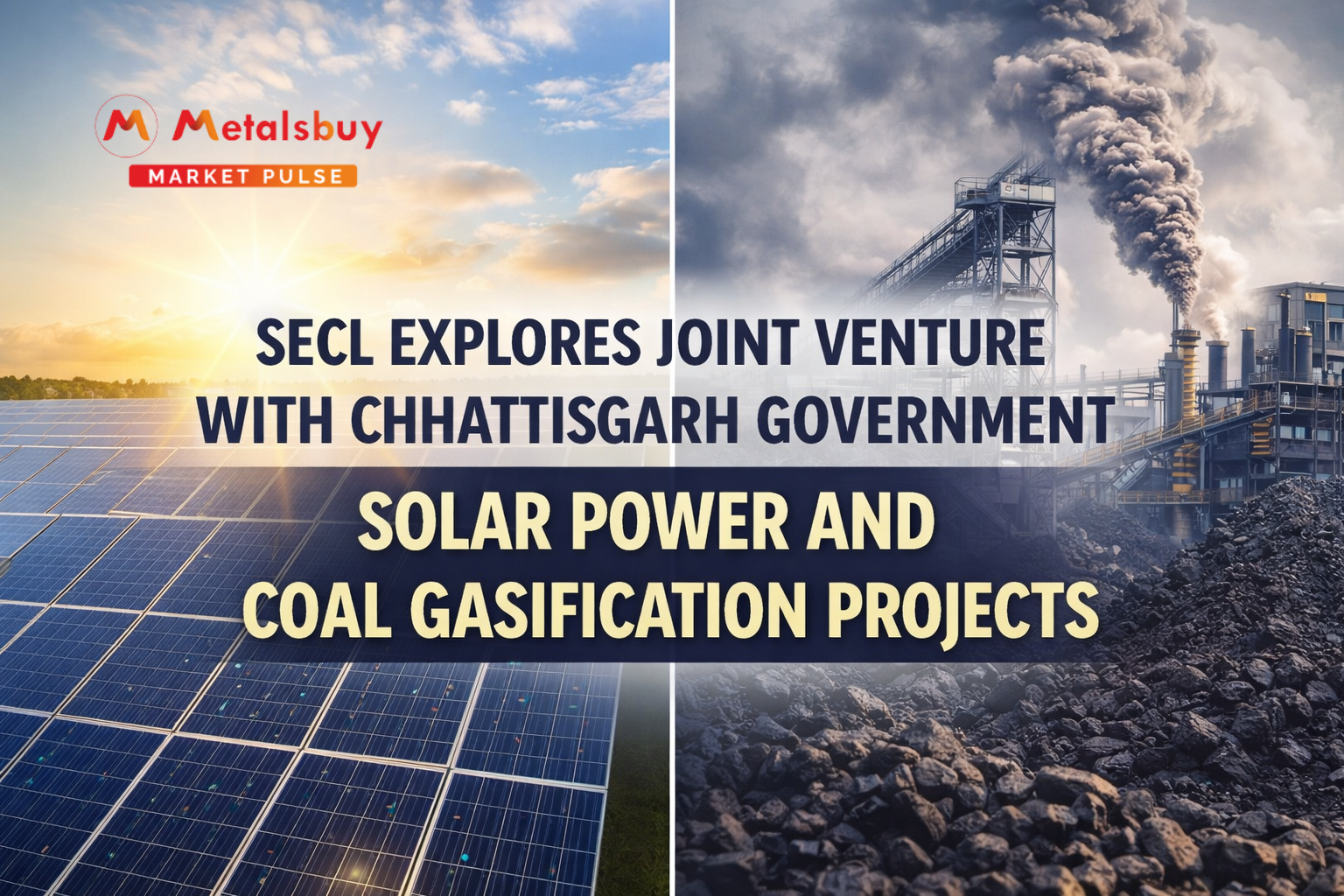
India’s coal major South Eastern Coalfields Limited (SECL) is exploring a strategic joint venture with the Government of Chhattisgarh to develop solar power projects and coal gasification initiatives. The move signals a calibrated diversification strategy that aligns conventional coal mining with cleaner energy and value-added downstream pathways.
SECL, a subsidiary of Coal India Limited, is one of India’s largest coal-producing entities, with significant operations concentrated in Chhattisgarh. The proposed collaboration reflects a broader shift underway within the coal sector — balancing energy security with transition planning.
1. Why This Development Matters
Chhattisgarh is among India’s most coal-rich states and a major power generation hub. However, with rising carbon transition pressures and policy incentives for cleaner fuels, coal producers are increasingly evaluating integrated energy strategies.
The proposed joint venture has two key pillars:
This dual approach suggests a hybrid transition model rather than a full pivot away from coal.
2. Solar Power Expansion: Monetising Land and Infrastructure
Coal mining companies typically hold large land banks and grid connectivity infrastructure, creating opportunities to deploy solar capacity at scale.
India’s renewable energy target stands at 500 GW of non-fossil fuel capacity by 2030. Solar remains the largest contributor to incremental renewable additions.
For SECL, solar expansion could:
Solar installations near mining zones also reduce transmission losses and improve local grid reliability.
3. Coal Gasification: Value Addition Over Raw Sale
Coal gasification converts coal into syngas, which can then be used to produce chemicals, methanol, fertilisers, hydrogen, and synthetic fuels.
India has set a target of 100 million tonnes of coal gasification capacity by 2030 to reduce crude oil imports and enhance domestic chemical manufacturing.
Coal gasification offers:
If executed effectively, gasification projects could materially alter coal demand composition — shifting from pure thermal usage toward industrial feedstock applications.
4. Implications for Steel and Metals Markets
For Metalsbuy participants, this development carries medium-term implications:
5. Policy and Transition Significance
The joint venture model with the state government suggests:
Rather than abandoning coal, SECL appears to be positioning itself within a diversified energy framework — combining renewable deployment with advanced coal utilisation technologies.
This reflects India’s broader “energy transition without disruption” approach — securing base-load supply while gradually integrating cleaner pathways.
Conclusion
SECL’s exploration of a joint venture with the Chhattisgarh government for solar and coal gasification projects highlights a strategic evolution in India’s coal sector.
The initiative is not merely an environmental gesture — it represents a structural shift toward value-added coal usage and renewable integration. For the metals and steel ecosystem, the move could influence future energy costs, hydrogen availability, and regional industrial expansion.
As India balances growth with decarbonisation, such hybrid energy strategies may increasingly define the competitive landscape.