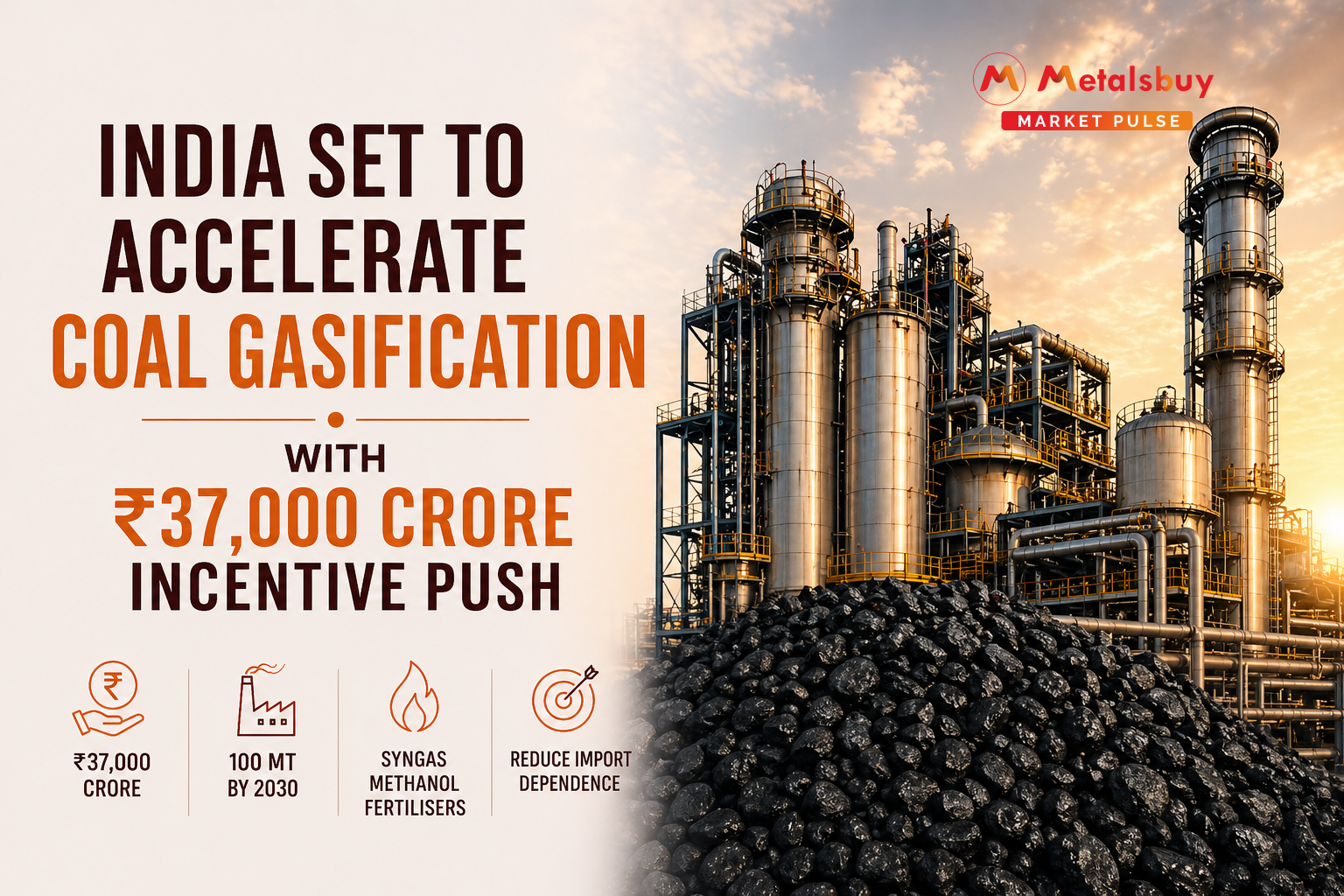
KEY NUMBERS
- Proposed Incentive Size: ₹35,000–37,000 Crore
- Target Coal Gasification Capacity: 100 Million Tonnes by 2030
- Focus Products: Syngas, Methanol, Fertilisers
- Objective: Reduce import dependence & boost domestic manufacturing
- Likely Beneficiaries: Coal miners, steelmakers, chemical producers, logistics players
MARKET ANALYSIS
India is preparing for one of its most ambitious energy-transition industrial programmes, with the Union Cabinet expected to approve an incentive package worth ₹35,000–37,000 crore to fast-track coal gasification projects across the country.
Coal gasification converts coal into synthetic gas (syngas), which can then be used for producing methanol, ammonia, fertilisers, power, hydrogen blends, and industrial chemicals. Unlike conventional coal burning, gasification allows higher-value industrial usage of domestic coal reserves.
This move signals a strategic shift in India’s commodity and manufacturing roadmap. Instead of relying heavily on imported natural gas, methanol, ammonia, and other feedstocks, India aims to monetise its abundant coal resources through cleaner downstream applications.
The programme’s target of 100 million tonnes capacity by 2030 is significant. If executed effectively, it can create a new industrial ecosystem involving mining, EPC contractors, steel fabrication, storage tanks, heavy engineering, pipelines, rail logistics, and specialty chemicals.
For the metals sector, this is particularly relevant. Large-scale gasification plants require massive quantities of structural steel, alloy plates, stainless steel piping, pressure vessels, conveyors, fabricated components, and industrial machinery. This could generate multi-year demand visibility for domestic steel and engineering manufacturers.
Private sector participation is expected to be a key pillar of the policy. Incentive-led viability support may attract large conglomerates, public sector enterprises, and global technology providers into the segment.
India’s coal-rich states such as Odisha, Chhattisgarh, Jharkhand, Madhya Pradesh, and West Bengal may emerge as major investment destinations if the policy rollout gains momentum.
INDUSTRY IMPACT
The proposed scheme can become a structural demand catalyst for the metals and infrastructure ecosystem.
Steel producers may benefit from fresh demand in plant construction, fabrication, process equipment, and project execution. Industrial gas, valves, pumps, refractories, and engineering companies may also see opportunity pipelines expand.
For coal producers, the development opens a value-added route beyond thermal power dependency, helping diversify monetisation channels. Chemical manufacturers could gain domestic access to methanol and syngas-based feedstocks, reducing import-linked volatility. Logistics operators, wagon suppliers, ports, and bulk handling companies may also gain as raw material movement rises.
If implemented with strong timelines and clear incentives, the coal gasification mission could become one of India’s most important commodity-linked industrial growth stories of the decade.
What to Watch Next:
- Final Cabinet approval timeline
- Incentive disbursement framework
- Eligible project categories
- Participation from private majors
- State-level investment announcements