KEY NUMBERS
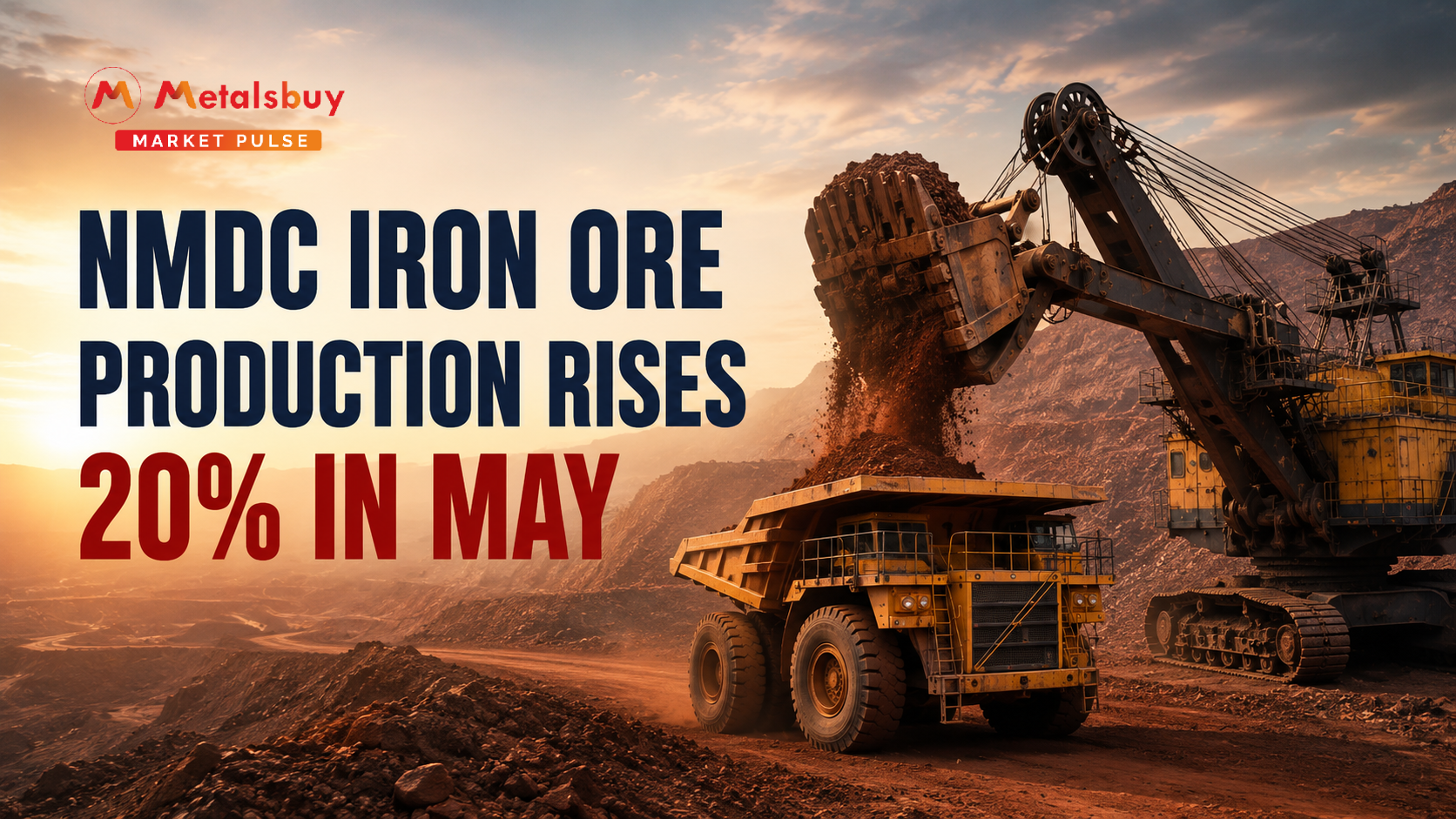
- May 2026 Iron Ore Production: 5.31 Million Tonnes (MT)
- YoY Growth in Production: ▲ 20%
- May 2026 Sales: 4.04 MT
- YoY Change in Sales: ▼ 6.9%
- FY27 Cumulative Production (Apr-May): 9.96 MT
- Key Production Driver: Strong output from Chhattisgarh mines
- Market Impact: Improved iron ore availability for domestic steelmakers
- Industry Signal: Production growth outpacing immediate consumption demand
MARKET ANALYSIS
India's largest iron ore producer, NMDC Limited, has reported a strong start to FY27, with iron ore production rising nearly 20% year-on-year to 5.31 million tonnes in May 2026. The increase highlights the company's continued operational strength and reflects the growing emphasis on securing raw material availability for India's expanding steel sector. At a time when domestic steelmakers continue pursuing capacity expansion and infrastructure demand remains robust, higher iron ore production provides a positive signal for the broader steel value chain.
The latest production figures underline NMDC's ability to maintain mining momentum despite market fluctuations and operational challenges that typically affect the mining sector. Strong output from the company's Chhattisgarh operations played a significant role in supporting overall production growth. The achievement also demonstrates how India's mining sector is increasingly aligning itself with the country's long-term steel growth ambitions.
However, while production numbers have impressed the market, the sales data presents a more nuanced picture. NMDC's sales during May stood at 4.04 million tonnes, reflecting a decline of approximately 6.9% compared with the same period last year. The divergence between production and sales suggests that while supply-side capabilities remain strong, immediate consumption demand may not be expanding at the same pace.
This contrast between rising production and softer sales offers valuable insight into the current state of the steel and raw material market. It suggests that producers are preparing for future demand growth even as steelmakers remain cautious in their near-term procurement strategies.
WHAT THE PRODUCTION GROWTH TELLS US
The 20% increase in production is not merely a monthly achievement. It reflects a broader trend of strengthening mining activity across India as steel demand expectations remain positive over the medium and long term. The country's steel industry continues to invest heavily in capacity expansion, with several major producers announcing brownfield and greenfield projects over the last two years.
Iron ore remains the most critical raw material for steel production, and ensuring adequate domestic availability has become increasingly important. Rising production from NMDC therefore contributes directly to India's objective of reducing supply bottlenecks and supporting long-term industrial growth.
The performance is particularly important because India is targeting significant increases in steelmaking capacity over the coming decade. Government infrastructure spending, urban development projects, manufacturing growth, renewable energy investments, and transportation projects are all expected to increase steel consumption substantially. Mining companies are therefore positioning themselves to support this future demand cycle.
The cumulative FY27 production figure of 9.96 million tonnes during the first two months of the financial year further reinforces this trend. It indicates that the production growth is not an isolated monthly event but part of a broader operational strategy aimed at sustaining higher output levels.
WHY SALES HAVE NOT KEPT PACE
While production growth has been strong, the decline in sales reflects prevailing market realities. Several steel producers continue adopting a cautious procurement approach amid fluctuating steel prices and uncertain demand visibility in certain segments. Inventory optimization remains a key focus area for many manufacturers, resulting in more disciplined raw material purchases.
The steel market itself is currently experiencing mixed sentiment. Long-term demand fundamentals remain positive, supported by infrastructure investments and industrial growth. However, short-term pricing pressure, competitive market conditions, and softer export opportunities in some regions have encouraged steelmakers to remain selective regarding inventory accumulation.
As a result, iron ore consumption has not increased at the same pace as production. This does not necessarily indicate weakness in the market but rather highlights a temporary mismatch between supply growth and immediate procurement activity.
Many steel producers are also closely monitoring raw material prices before making large procurement commitments. The availability of sufficient inventories across parts of the supply chain has reduced urgency among buyers, contributing to softer sales volumes despite stronger mining output.
IMPACT ON THE STEEL INDUSTRY
For domestic steel manufacturers, higher iron ore production is generally a positive development. Increased raw material availability helps improve supply security and can potentially reduce concerns regarding future shortages. A stable iron ore supply environment is particularly important as steelmakers continue expanding capacity across multiple regions.
Improved production levels can also support greater price stability within the domestic iron ore market. When supply remains healthy, steel producers gain greater flexibility in procurement planning and inventory management. This becomes especially valuable during periods of volatile global commodity markets.
The development is also encouraging for downstream industries that depend on steel availability. Construction, infrastructure, automotive, engineering, renewable energy, and manufacturing sectors all benefit indirectly from a stable raw material supply chain.
For ferro alloy producers, stronger steel production potential eventually translates into higher demand for alloying materials such as silico manganese and ferro manganese. Although the impact may not be immediate, sustained growth in steel production capacity generally supports long-term demand for allied industries.
WHAT IT MEANS FOR CHHATTISGARH
The performance once again highlights the strategic importance of Chhattisgarh in India's mining and metals ecosystem. The state remains one of the country's most important centers for iron ore mining, steel production, sponge iron manufacturing, and ferro alloy production.
Strong output from NMDC's Chhattisgarh operations reinforces the region's role as a critical supplier of raw materials to steel plants across India. As steel capacity continues expanding, the importance of mining hubs such as Chhattisgarh is expected to increase further.
The continued operational success of these mines also contributes to employment generation, infrastructure development, logistics activity, and industrial investment across the region.
MARKET OUTLOOK
NMDC's latest production figures provide a positive signal for India's long-term steel growth story. The substantial increase in output demonstrates that the mining sector is preparing itself for higher future demand and remains confident about the industry's trajectory.
The softer sales numbers, however, suggest that steelmakers continue exercising caution in the near term. Market participants are likely to monitor steel demand, infrastructure activity, and manufacturing growth closely before significantly increasing procurement volumes.
Looking ahead, the key variable will be how quickly steel consumption catches up with the growing availability of raw materials. If infrastructure spending and industrial activity continue supporting demand growth, the current production momentum could become a strong foundation for the next phase of expansion in India's steel sector.
For now, the message from the mining industry is clear: supply readiness is improving, and India's raw material ecosystem is positioning itself for sustained growth.