Key Numbers
• Project Value: ₹2,977 Crore ($317 Million)
• Handling Capacity: 10 Million Tonnes Per Annum (MTPA)
• Location: Visakhapatnam, Andhra Pradesh
• Execution Timeline: 42 Months
• NMDC FY26 Iron Ore Production: 53.15 Million Tonnes
• NMDC FY26 Iron Ore Sales: 50.23 Million Tonnes
• NMDC 2030 Production Target: 100 Million Tonnes
• NMDC Planned Investments: ₹50,000 Crore
Market Analysis
NMDC Is Investing Beyond Mining Capacity
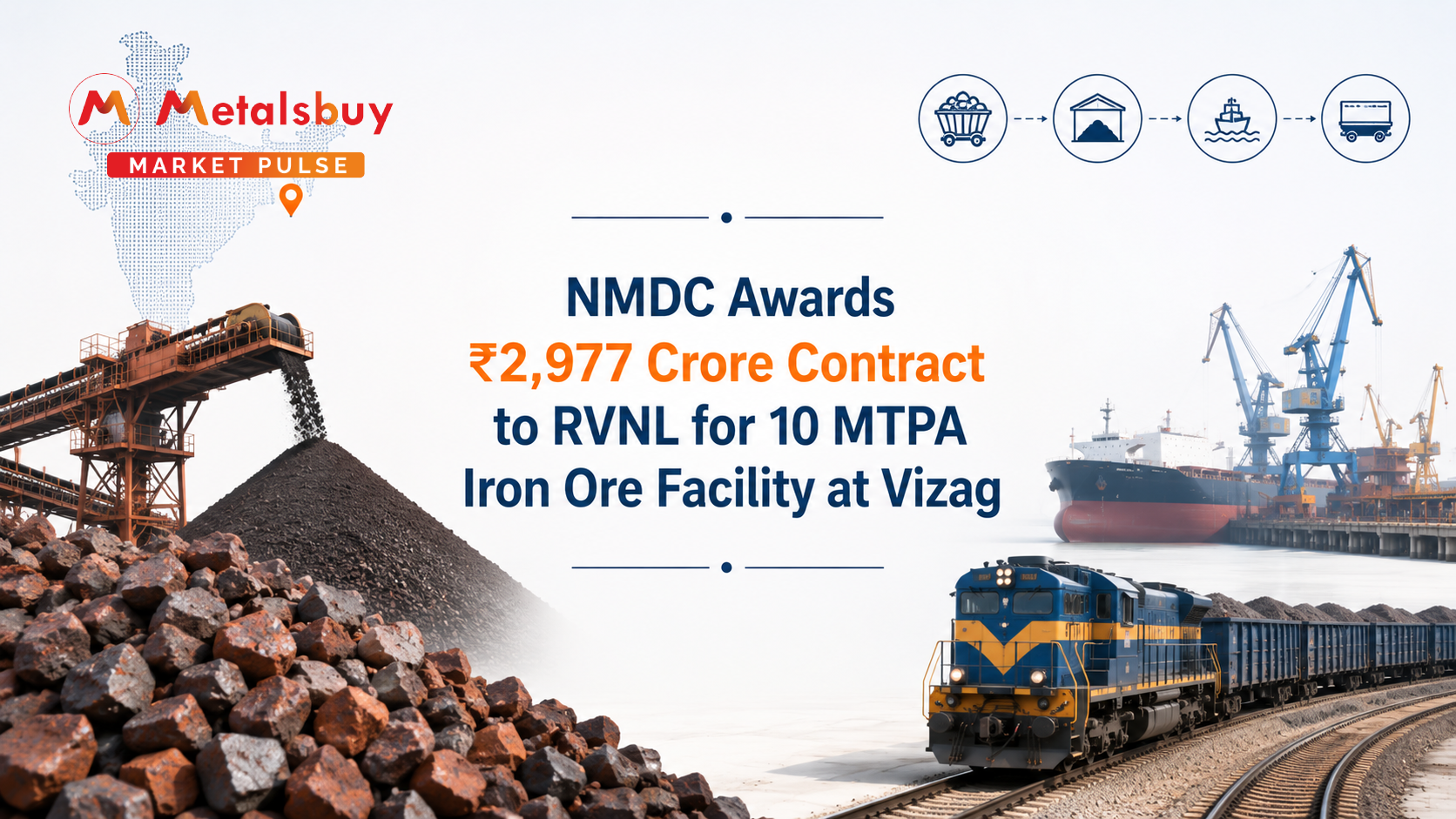
India's largest iron ore producer, NMDC, has awarded a ₹2,977 crore contract to Rail Vikas Nigam Limited (RVNL) for the construction of a large iron ore buffer stockyard and blending facility at Visakhapatnam. While the announcement may initially appear to be a logistics project, its strategic significance extends far beyond storage infrastructure. The facility will have a handling capacity of 10 million tonnes per annum and is designed to strengthen NMDC's ability to store, blend and dispatch iron ore more efficiently. As India's steel industry continues to expand, the focus is increasingly shifting from merely producing more iron ore to ensuring that the right quality material reaches customers consistently and efficiently.
The investment reflects a broader trend emerging across the mining sector. Over the last decade, producers have invested heavily in increasing mining output. However, the next phase of growth will require improvements in logistics, inventory management and product quality consistency. For a company targeting 100 million tonnes of annual iron ore production by 2030, infrastructure bottlenecks could become as important as mining capacity itself. This project is therefore best viewed as a critical component of NMDC's long-term expansion strategy rather than a standalone logistics investment.
Why Blending Facilities Matter to Steelmakers
Iron ore quality plays a significant role in blast furnace productivity, coke consumption and overall steelmaking efficiency. Steel producers often source ore from multiple mines, resulting in variations in iron content, alumina levels and other metallurgical characteristics. Blending facilities help create a more uniform product by combining ores from different sources to achieve consistent specifications. This consistency can improve furnace performance, reduce operational variability and enhance productivity at steel plants.
The Visakhapatnam facility is expected to support NMDC's plans to offer standardized blended iron ore products to customers. Such products could potentially command a premium over conventional ore because of their predictable quality and operational benefits. In mature mining markets such as Australia and Brazil, quality-controlled ore products have become an important differentiator. NMDC's latest investment suggests that India may be moving in a similar direction as the steel industry becomes increasingly focused on efficiency and productivity.
Vizag Offers a Strategic Advantage
The choice of Visakhapatnam is not accidental. The city serves as one of India's most important mineral handling and export hubs, offering strong rail connectivity, access to major ports and proximity to key steelmaking regions. NMDC's major iron ore operations are located in Chhattisgarh and Karnataka, making Vizag a natural logistics gateway for both domestic and export-oriented movements. The location allows the company to consolidate material from multiple sources before dispatching it to customers.
The facility is also expected to improve inventory flexibility and reduce supply chain disruptions. During periods of fluctuating demand or transportation challenges, buffer stockyards provide producers with the ability to maintain reliable deliveries. As India's steel industry expands and customer expectations evolve, supply chain reliability is becoming an increasingly important competitive factor. The new infrastructure could therefore strengthen NMDC's position as a preferred supplier to both domestic and international steelmakers.
Supporting India's Expanding Steel Industry
The project comes at a time when India's steel sector is witnessing unprecedented investment activity. New steel plants, capacity expansions and downstream projects are being announced across Odisha, Chhattisgarh, Jharkhand and other industrial regions. These investments will require significantly larger volumes of iron ore over the coming decade. Ensuring that raw material supply chains can support this growth will be critical for maintaining competitiveness across the steel value chain.
NMDC produced a record 53.15 million tonnes of iron ore in FY26 and is targeting more than 60 million tonnes in the current financial year. Looking further ahead, the company plans to nearly double production capacity to 100 million tonnes by 2030. Achieving these targets will require not only additional mining output but also modern logistics infrastructure capable of handling significantly larger volumes. The Visakhapatnam project is one of the first major steps in preparing for that future.
A Shift Toward Value Addition in Mining
Historically, India's mining sector has largely focused on extraction and transportation. However, the economics of the industry are gradually evolving. Companies are increasingly looking at ways to create additional value through beneficiation, pelletization, blending and quality optimization. These activities not only improve customer outcomes but can also help producers earn better realizations for their products. The blending facility fits squarely within this broader value-addition strategy.
For steelmakers, consistent raw material quality can translate into lower operating costs and improved productivity. For miners, it creates opportunities to differentiate products in a highly competitive market. The convergence of these interests is likely to drive further investment in ore processing and logistics infrastructure over the coming years. As steel production becomes more sophisticated, the quality of raw materials will become increasingly important alongside volume considerations.
Industry Impact
The ₹2,977 crore investment highlights a growing realization within the mining industry that future competitiveness will depend as much on logistics and product quality as on production volumes. For steel producers, improved blending capabilities could provide more consistent raw material supplies and potentially improve blast furnace performance. For NMDC, the project strengthens its ability to support India's long-term steel growth ambitions while positioning itself as a supplier of higher-value iron ore products.
The development also reinforces the importance of infrastructure investments across the mining value chain. As India moves toward significantly higher steel production capacity, efficient movement and handling of raw materials will become increasingly critical to sustaining growth.
The Visakhapatnam blending facility represents more than just another infrastructure project. It reflects the changing priorities of India's mining and steel sectors, where quality, consistency and supply chain efficiency are becoming central to long-term competitiveness. As steelmakers seek greater operational efficiency and miners pursue higher-value product offerings, investments of this nature are likely to become more common.
For the steel industry, the project is a reminder that the future of competitiveness begins long before iron ore enters a blast furnace. It starts with the ability to deliver the right material, at the right quality, at the right time.