Key Numbers
| Indicator | Data |
|---|---|
| Share of India’s steel output using gas-based DRI. | ~6% |
| India’s annual sponge iron production | ~50 million tonnes |
| Potential production cuts at affected mills | Up to ~40–50% |
| Share of steel produced via blast furnace route | ~50% |
| LNG price movement | Elevated amid Middle East tensions |
Source: Industry estimates, trade reports, and market observations
LNG Supply Disruptions Begin to Affect India’s Secondary Steel Sector
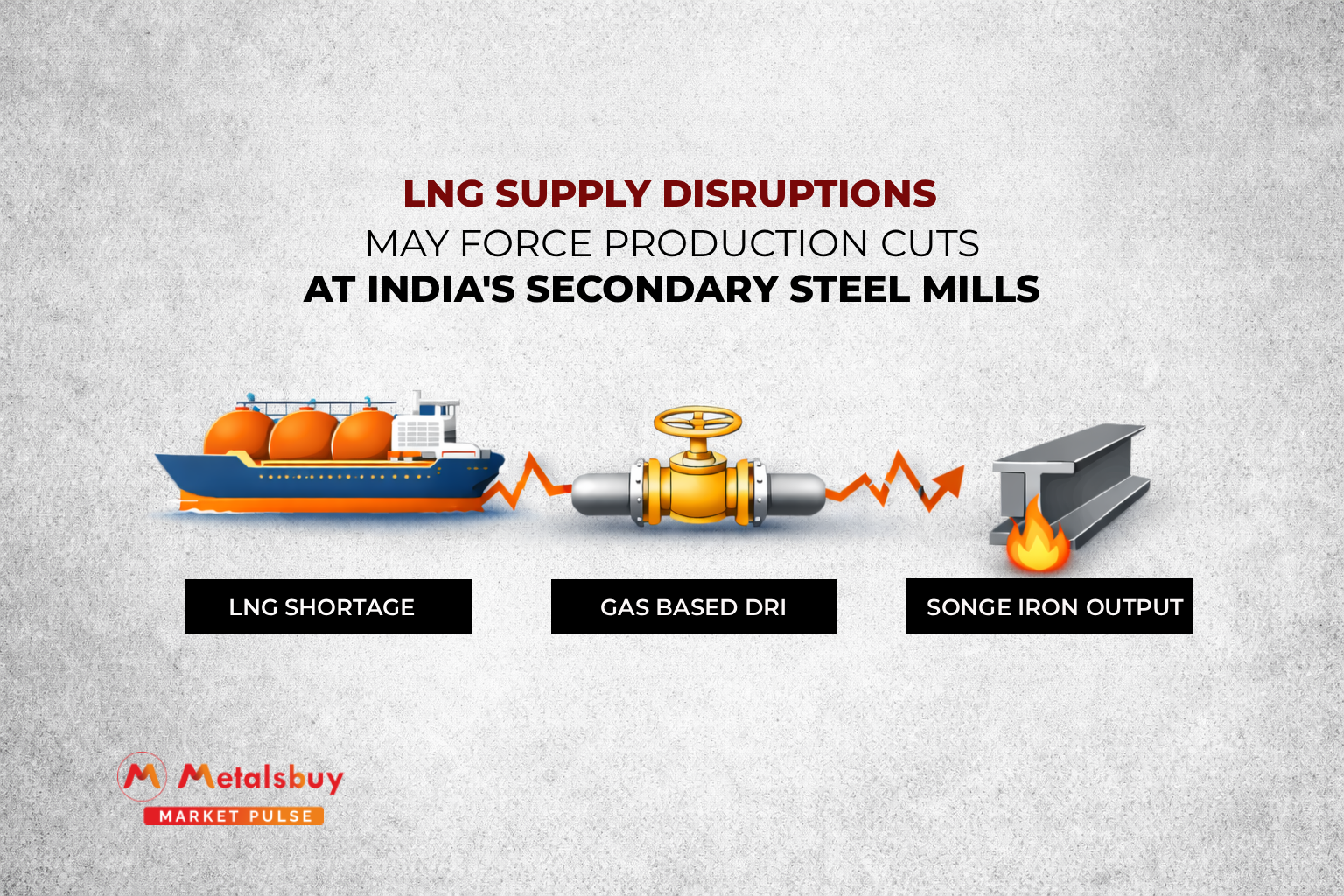
India’s secondary steel sector is beginning to face operational challenges as LNG supply disruptions linked to geopolitical tensions in the Middle East start to affect industrial gas availability. A number of steel mills, particularly those operating gas-based direct reduced iron (DRI) units, depend heavily on natural gas for their production processes. The ongoing conflict involving Iran has disrupted LNG supply flows to parts of India, prompting gas distributors to restrict supply to industrial consumers in order to prioritize essential sectors. These restrictions are beginning to impact steel producers that rely on gas-based reduction technologies for sponge iron production. As supply tightens and gas prices remain elevated, several mills have indicated that production levels may need to be reduced if the situation persists. The emerging gas supply constraints highlight how geopolitical developments can rapidly influence industrial production within energy-dependent sectors.
Secondary Steelmakers Highly Dependent on Gas-Based Sponge Iron Production
India is the world’s largest producer of sponge iron, with annual output estimated at approximately 50 million tonnes, much of which feeds the country’s secondary steelmaking industry. Gas-based DRI units play an important role within this ecosystem, producing high-quality sponge iron that is subsequently used in electric arc furnaces and induction furnaces to manufacture steel. Although only around 6 percent of India’s total steel production is directly linked to gas-based DRI routes, the impact is concentrated among clusters of small and medium-sized steel producers. These mills often operate with tighter margins and limited fuel flexibility, making them particularly sensitive to fluctuations in natural gas availability. When LNG supply is disrupted or prices increase sharply, these producers face immediate operational constraints. As a result, any prolonged reduction in gas supply can quickly translate into lower sponge iron production and reduced steel output within the secondary steel sector.
Gujarat Steel Cluster Among the Most Affected Regions
Steel producers located in Gujarat are expected to face the most significant impact from LNG supply disruptions, as a large portion of the region’s DRI units depend on natural gas sourced through LNG import terminals. Industrial gas suppliers have already begun prioritizing supplies to critical sectors such as power generation and city gas distribution networks, leading to reduced allocation for industrial users. This shift in supply priorities has created uncertainty among secondary steel producers that depend on consistent gas availability to maintain stable operations. Some producers have indicated that production cuts of up to 40–50 percent may be necessary if gas supplies remain constrained over an extended period. Such reductions could temporarily lower sponge iron availability within the domestic market, affecting downstream steel production among secondary manufacturers.
Rising Energy Costs Add Additional Pressure to Steel Producers
The gas supply constraints are occurring alongside a broader rise in energy and logistics costs across global commodity markets. LNG prices have remained elevated due to geopolitical tensions and supply disruptions, increasing operating costs for industries dependent on natural gas. At the same time, higher freight rates and energy prices have pushed up the cost of transporting key raw materials such as iron ore and coking coal. For secondary steel producers already facing gas supply limitations, these additional cost pressures further complicate operational planning. Mills may be forced to evaluate alternative fuels, adjust production schedules, or temporarily reduce capacity utilization in order to manage rising input costs. These developments demonstrate how energy market volatility can cascade through industrial sectors, affecting both production decisions and cost structures.
Industry Impact
Production disruptions among gas-based DRI units could tighten sponge iron supply in certain regional markets, particularly if LNG supply constraints persist for an extended period. Secondary steelmakers that rely on sponge iron as a key input may face higher procurement costs if domestic availability declines. Larger integrated steel producers operating blast furnace routes are likely to be less affected by LNG shortages, as their production processes depend primarily on coking coal rather than natural gas. However, sustained energy market volatility could still influence overall steel production costs across the industry. In the near term, the situation highlights the vulnerability of energy-intensive manufacturing sectors to geopolitical disruptions in global fuel markets.
Metalsbuy Market Pulse View
The LNG supply disruptions affecting India’s secondary steel sector illustrate the growing interconnectedness between geopolitical events and industrial production systems. Gas-based DRI units, which form a crucial part of India’s sponge iron ecosystem, are particularly sensitive to fluctuations in natural gas availability and pricing. If supply constraints persist, the secondary steel sector may experience temporary production adjustments, potentially influencing regional steel supply dynamics. Monitoring developments in global LNG markets and energy supply routes will therefore remain critical for assessing the short-term outlook for India’s gas-based steelmaking segment.