KEY NUMBERS
September 2025 : Blast Furnace 3 shut down for expansion
April 2026 : Latest production month affected by the shutdown
21.18 Lakh Tonnes : JSW Steel production in April 2026
1% : Reported year on year decline in April production
10% : Underlying growth excluding Blast Furnace 3 impact
3 MTPA : Original hot metal capacity of Blast Furnace 3
4.5 MTPA : Expanded capacity after upgrade
1.5 MTPA : Additional hot metal capacity being added
Mid 2026 : Expected restart timeline
Vijayanagar : India’s largest steelmaking complex
MARKET ANALYSIS
Sometimes the most important steel plant in India is the one that is not producing steel.
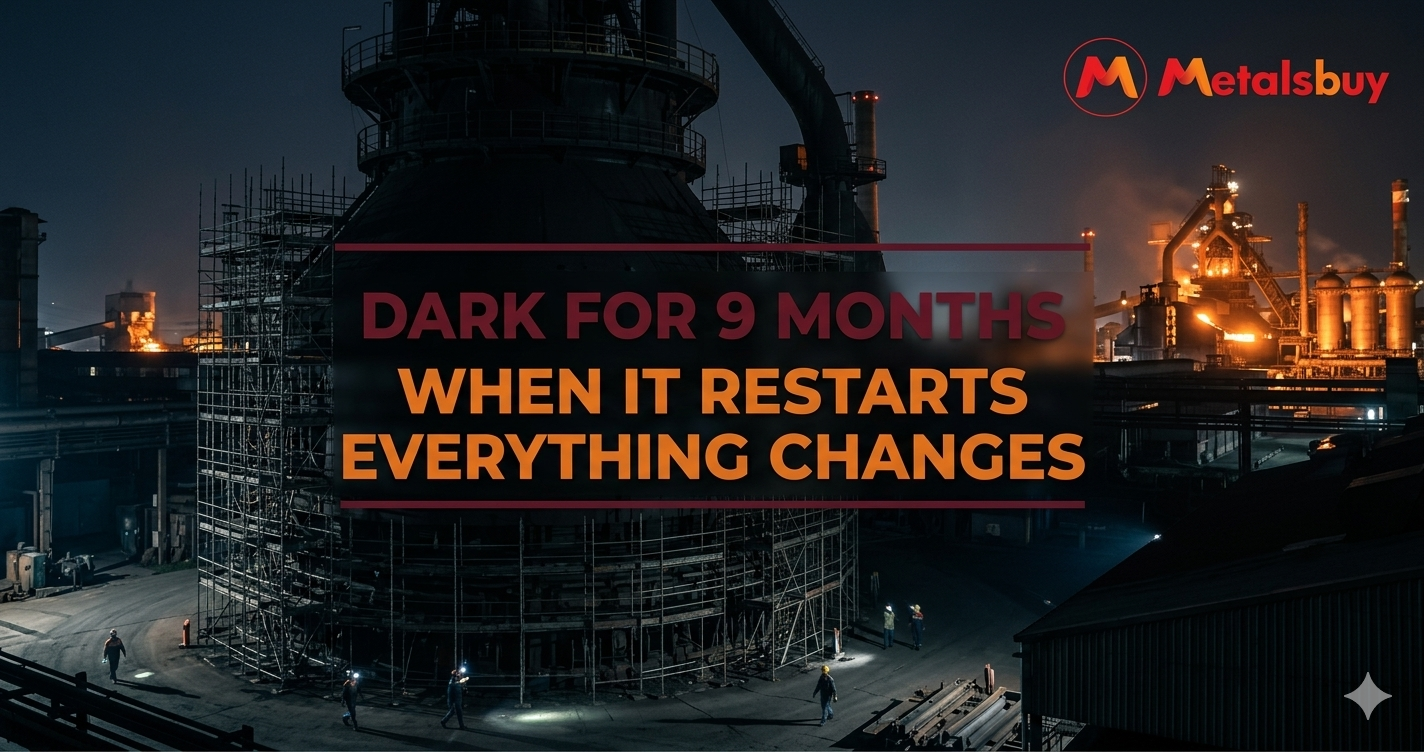
For nine months, Blast Furnace 3 at JSW Steel’s Vijayanagar complex has been silent. The furnace, one of the largest steelmaking assets in the country, was shut down in September 2025 as part of a major capacity expansion project. Since then, the shutdown has quietly influenced production numbers, market sentiment and procurement activity across the steel value chain.
The impact is visible in the data.
JSW Steel reported production of 21.18 lakh tonnes during April 2026, down 1 percent compared with the previous year. On the surface, the number appears underwhelming. India is producing record volumes of steel. Demand remains healthy. Capacity expansion continues across the sector. Yet the country’s largest steel producer reported lower output.
The explanation sits inside Vijayanagar.
Blast Furnace 3 is being upgraded from 3 million tonnes per annum to 4.5 million tonnes per annum of hot metal capacity. The project temporarily removes a major production asset from service, but the objective is simple. Produce significantly more steel once the furnace returns.
That distinction matters.
The reported decline is not the result of weak demand. It is not the result of operational challenges. It is the result of a deliberate decision to sacrifice current output in exchange for higher future production.
Strip out the effect of Blast Furnace 3 and the story looks very different.
Underlying growth during April was approximately 10 percent.
That is the number many market participants are watching.
WHY THIS UPGRADE MATTERS
India’s steel industry is entering a phase where capacity additions increasingly come from expanding existing facilities rather than building entirely new plants.
The economics are attractive.
Infrastructure already exists. Logistics networks are established. Skilled manpower is available. Expansion projects can often be completed faster than greenfield developments.
Vijayanagar is perhaps the best example of this strategy.
Already one of the largest steelmaking complexes in the world, the facility continues growing through targeted expansions rather than wholesale reconstruction. The Blast Furnace 3 project follows that approach.
The additional 1.5 million tonnes of hot metal capacity may appear incremental compared with India’s overall steel output.
In reality, it is significant.
Few individual projects can add that much production capacity in a single restart event.
WHAT IT MEANS FOR FERRO ALLOYS
This is where the story becomes especially relevant for the ferro alloy industry.
Blast furnaces consume iron ore and coke.
Steelmaking consumes alloys.
When a steel producer adds 1.5 million tonnes of annual hot metal capacity, the impact eventually reaches ferrochrome, silico manganese and ferro manganese procurement.
The demand does not arrive gradually.
It arrives when production ramps up.
That is why alloy suppliers are watching the Vijayanagar restart closely. One furnace returning to operation can influence procurement volumes across multiple alloy categories. Few events create a larger immediate demand signal than a major blast furnace re entering service after a prolonged shutdown.
The steel industry often focuses on capacity announcements.
Alloy markets tend to focus on capacity utilisation.
The restart matters because utilisation will increase.
INDUSTRY IMPACT
The Vijayanagar project highlights an important feature of India’s current steel expansion cycle.
Growth is becoming increasingly sophisticated.
Rather than simply adding new capacity, producers are investing in productivity improvements, debottlenecking projects and efficiency upgrades that generate higher output from existing assets.
This approach improves capital efficiency while accelerating production growth.
For the broader steel market, it reinforces confidence that India’s capacity expansion story remains intact despite temporary fluctuations in monthly production numbers.
Short term declines can sometimes hide long term growth.
This is one of those cases.
MARKET OUTLOOK
The most important steel production number in India may not be April’s output.
It may be the first full quarter after Blast Furnace 3 returns.
Once the upgraded furnace resumes operations, JSW Steel will gain access to an additional 1.5 million tonnes of annual hot metal capacity. Production growth that has been temporarily suppressed could begin appearing in reported numbers.
For steel markets, that means higher output potential.
For ferro alloy producers, it means stronger procurement opportunities.
For investors, it means the difference between reported growth and underlying growth may finally disappear.
The furnace has been dark for nine months.
When it comes back online, the market will notice.