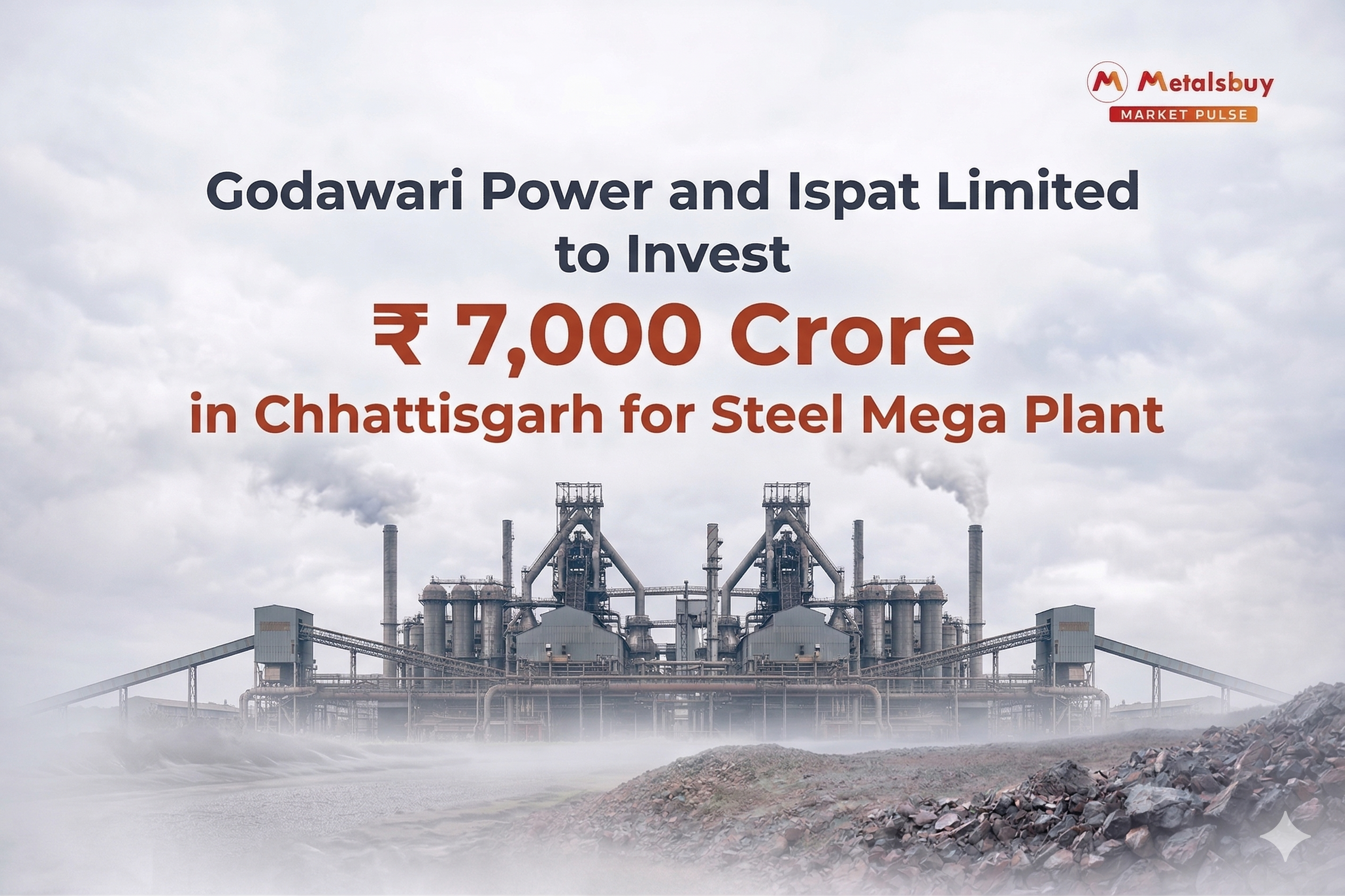
As India’s infrastructure narrative enters an accelerated phase, the domestic steel sector is witnessing a distinct pivot from mere survival economics to aggressive, strategic capacity building. Amidst a global landscape where steel consumption has largely stagnated, India remains an undeniable bright spot, projecting robust domestic demand growth in the current fiscal year. Capitalizing directly on this macroeconomic tailwind, Godawari Power and Ispat Limited (GPIL) has initiated a profound corporate realignment, marked by a massive ₹7,000 crore capital expenditure and the strategic absorption of its subsidiary.
This dual-pronged approach—a high-value greenfield expansion paired with corporate streamlining—signals a transformative period for the Raipur-based manufacturer, positioning it to capture a dominant share of India’s booming structural steel market.
The Blueprint of Scale: Tripling Capacity in Chhattisgarh
The core of GPIL’s latest strategic maneuver is the board’s approval of a state-of-the-art, 1 million tonnes per annum (MTPA) integrated steel plant. Slated for development in the village of Sarora, approximately 50 kilometers from the company's existing base in Raipur, Chhattisgarh, the new facility represents a monumental scaling of operations.
Currently, the company operates a 0.5 MTPA capacity steel plant at the Siltara Industrial Area. However, with that facility consistently running at an exceptionally high capacity utilization rate of over 95 percent, GPIL had essentially hit a growth ceiling. The Sarora project is designed to effectively triple the company's overall production footprint within an estimated timeline of three-and-a-half years.
Simultaneously, the company announced the successful completion of its corporate restructuring. The amalgamation of its wholly-owned subsidiary, Godawari Energy Limited, into the parent entity has been officially sanctioned by the National Company Law Tribunal (NCLT), Cuttack Bench. With the order filed and effective as of late March 2026, this GPIL merger eliminates operational redundancies and consolidates the company's balance sheet, creating a leaner, unified corporate structure perfectly timed to support its multi-billion-rupee expansion phase.
The USP: Fiscal Prudence Meeting Market Deficit
What separates this ₹7,000 crore steel plant expansion from typical industry announcements is the underlying financial engineering and targeted product mix, which together form the primary Unique Selling Proposition (USP) of GPIL's strategy.
Historically, massive capital expenditures in the metals sector have been heavily leveraged, leaving balance sheets vulnerable to cyclical downturns. GPIL, however, is executing this expansion through a highly disciplined 1:1 financing ratio. Strikingly, the 50 percent equity portion—amounting to roughly ₹3,500 crore—will be funded entirely through internal accruals rather than equity dilution. This underscores a robust cash generation capability and protects shareholder value, a factor that immediately resonated with the market, driving the company's market capitalization past the ₹17,600 crore mark following the announcement.
Furthermore, the Sarora facility is not pursuing generic flat steel. Instead, the plant is purpose-built to manufacture heavy and medium section structural steel alongside wire rods. This is a highly calculated move to align with the specific demands of India's current economic engine. With the Union Budget committing a record ₹12.2 lakh crore toward public capital expenditure for infrastructure development in FY26-27—spanning new high-speed rail corridors, ports, and urban transit systems—the structural steel demand in India is experiencing a severe upward trajectory. GPIL is essentially building a bespoke supply line for the nation's ongoing infrastructure deficit.
The Strategic Horizon: Navigating the Indian Steel Sector Outlook
The timing of GPIL’s expansion aligns perfectly with the broader Indian steel sector outlook. Recent macroeconomic data reveals that while global steel dynamics remain volatile, India's core sector steel output continues to clock impressive year-on-year growth. Market agencies anticipate this momentum to sustain, driven heavily by public infrastructure spending, the introduction of City Economic Regions (CERs), and private real estate recovery.
However, the market is not without its complexities. Tightening supply conditions, primarily due to reduced import volumes and raw material constraints, have kept domestic flat and structural steel prices hovering near multi-month highs. By committing to a 1 MTPA integrated facility now, GPIL is buffering itself against future supply chain bottlenecks while ensuring it has the volume ready when domestic demand peaks in the coming years.
Looking ahead to the project's slated completion in late 2029, the strategic foresight of the Godawari Power and Ispat leadership becomes evident. By consolidating operations through the NCLT merger approval and deploying accumulated capital into a high-demand product niche, the company is doing more than just expanding its manufacturing footprint. It is actively redefining its tier status within the Chhattisgarh steel industry, evolving from a regional mid-cap player into a highly integrated, financially fortified powerhouse ready to supply the literal framework of India’s infrastructure decade.