KEY HIGHLIGHTS
- Crude steel output: 42.1 million tonnes (MT), up 3.0% YoY.
- Finished steel production: 40.6 MT, a 4.9% YoY increase.
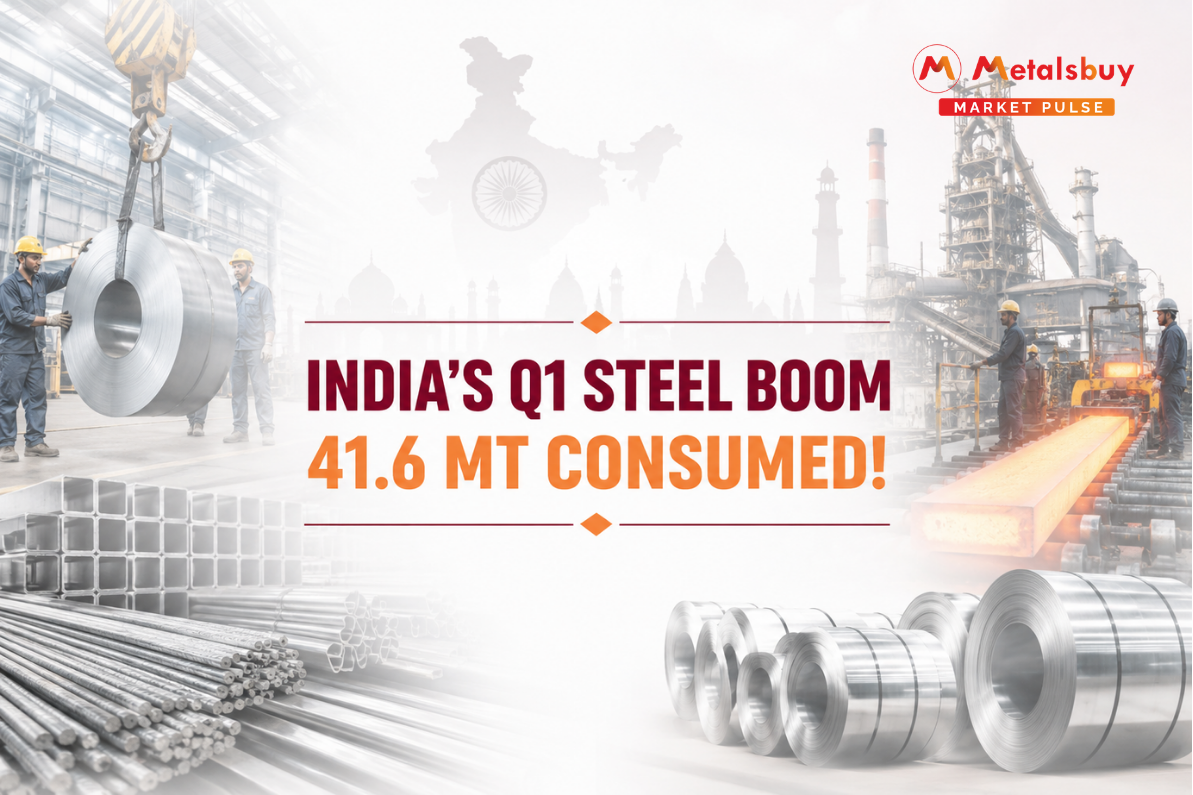
- Domestic consumption: 41.6 MT, surging by 8.3% YoY.
- Current production capacity: Approx. 222 MTPA.
- Export volume growth: 31.4% YoY to 1.59 MT.
- Export value: Rs. 12,475.2 crore ($1.33 billion).
- Import volume: 2.06 MT, valued at Rs. 20,214.5 crore ($2.15 billion).
MARKET ANALYSIS
The Indian steel industry has maintained its positive trajectory during the first quarter of FY27 (April-June 2026), driven by robust domestic demand and strategic capacity expansions. The sector's performance highlights a consistent upward trend, particularly in domestic consumption, which outpaced production growth. This surge is largely attributed to sustained activity in the infrastructure, construction, and manufacturing sectors. The data reflects a healthy domestic market where demand is strong enough to absorb the increased production and necessitate further capacity additions.
The industry's capacity reached approximately 222 million tonnes per annum (MTPA) by the end of June 2026. This marks a steady progression toward the ambitious target set by the National Steel Policy, which aims for a capacity of 300 MTPA by 2030. A notable development in this quarter was the Bhilai Steel Plant's agreement with MECON to manage its expansion project, which will increase its capacity from 7 MTPA to 10.2 MTPA.
On the trade front, the sector experienced substantial activity. Finished steel exports saw a significant jump of 31.4% year-on-year, reaching 1.59 MT. This indicates improved global competitiveness for Indian steel products. However, imports also remained substantial at 2.06 MT, suggesting that specific grades or specialized steel products are still being sourced externally to meet domestic requirements.
Several strategic initiatives further shaped the quarter. The development of a 258-km slurry pipeline for the Bokaro Steel Plant promises to streamline logistics and raw material supply. Furthermore, international collaborations, such as SAIL's partnership with PT Krakatau Steel in Indonesia, demonstrate an intent to expand the Indian footprint in the global stainless steel market. The expansion of the Green Steel Initiative, which certified 97 producers, underscores a growing commitment to sustainable manufacturing practices within the industry.
WHAT IT MEANS FOR THE STEEL INDUSTRY
The robust performance in Q1 FY27 signifies a period of consolidation and growth for the Indian steel sector. The strong domestic consumption figures are a highly positive indicator, reflecting the ongoing momentum of infrastructure projects and manufacturing activities across the country. The fact that consumption grew at an 8.3% clip—faster than the 4.9% growth in finished steel production—suggests a tight domestic market where demand is currently the driving force.
The continued investment in capacity expansion, such as the Bhilai Steel Plant project, is a necessary response to this demand environment. As the industry approaches the 222 MTPA mark, the focus is clearly shifting towards bridging the gap to the 300 MTPA target for 2030. The significant rise in exports also points to a maturing industry capable of competing in international markets, although the slightly higher import volume indicates a need for continued focus on developing specialized, value-added steel products domestically.
The emphasis on logistical improvements, like the slurry pipeline, and sustainability, through the Green Steel Initiative, indicates an industry that is looking beyond mere production volumes. These initiatives are critical for improving long-term cost efficiency and meeting increasingly stringent global environmental standards.
MARKET OUTLOOK
The outlook for the Indian steel industry remains strongly positive for the remainder of FY27. Given the government's continued focus on infrastructure development and the apparent strength of the domestic manufacturing sector, domestic steel consumption is expected to remain robust.
Capacity expansion will continue to be a central theme, as major players execute their long-term growth plans. The industry's ability to manage raw material costs and improve logistical efficiencies will be crucial factors in maintaining profitability.
Furthermore, the push towards sustainable, 'green' steel is expected to accelerate. As international markets increasingly prioritize environmentally responsible manufacturing, Indian producers who adopt these practices will likely gain a competitive edge in export markets. The industry appears well-positioned to leverage domestic demand while expanding its global presence, provided it can successfully navigate the complexities of international trade and environmental regulations.