Key Numbers
• Defence-Grade Steel Supplied: 5,700 Tonnes
• Naval Platforms: 3 Newly Commissioned Indian Navy Vessels
• Steel Grade: DMR 249A Special Defence Grade
• Manufacturing Plants: Rourkela, Bokaro & Bhilai
• Vessels: INS Dunagiri, INS Agray & INS Sanshodhak
• Previous Major Defence Projects: INS Vikrant, INS Nilgiri, INS Himgiri, INS Udaygiri
Market Analysis
Special Steel Is Becoming a Strategic National Asset
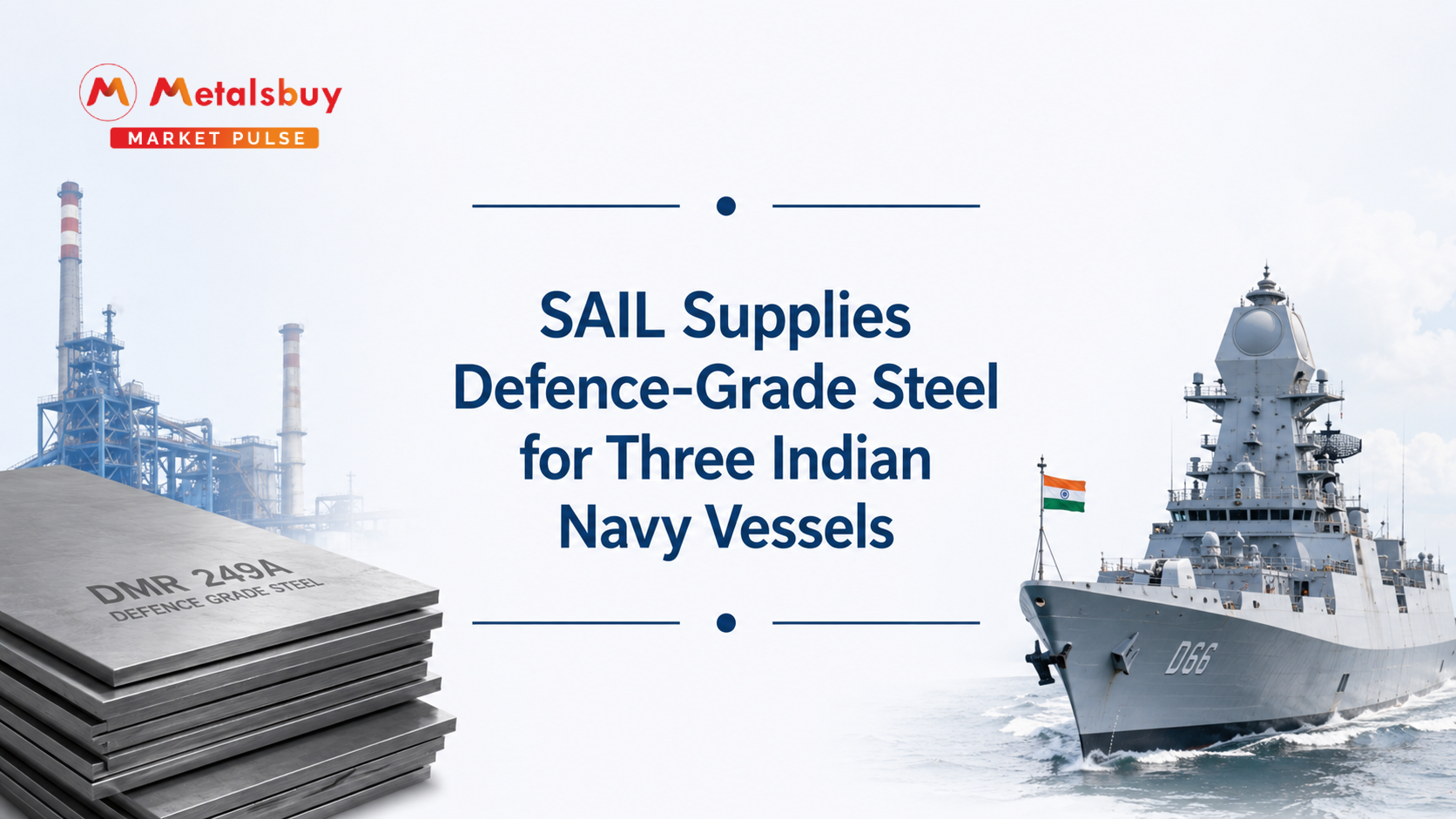
Steel Authority of India Limited (SAIL) has supplied the complete requirement of approximately 5,700 tonnes of special defence-grade steel for three newly commissioned Indian Navy vessels—INS Dunagiri, INS Agray and INS Sanshodhak. Manufactured across SAIL's Rourkela, Bokaro and Bhilai steel plants, the DMR 249A grade hot-rolled plates and sheets are specifically designed for naval applications requiring exceptional strength, weldability and impact resistance. The achievement highlights how India's steel industry is increasingly contributing not only to infrastructure and manufacturing but also to national security and defence self-reliance.
The commissioning of these vessels demonstrates the growing maturity of India's domestic defence manufacturing ecosystem. Until a little over a decade ago, specialised naval steel was largely imported because domestic producers lacked the capability to manufacture such advanced grades consistently. Today, Indian steelmakers have successfully developed indigenous technologies capable of meeting the demanding specifications required for modern warships, significantly reducing dependence on overseas suppliers.
Defence Steel Represents the Highest End of Value Addition
Unlike conventional structural or commercial steel, defence-grade steel requires extremely stringent quality standards. Naval vessels operate in harsh marine environments while facing high-impact loads, blast resistance requirements and long operational lifespans. Steel used in warships must therefore exhibit superior toughness, corrosion resistance and welding performance without compromising structural integrity.
Producing such specialised grades requires advanced metallurgical capabilities, sophisticated process controls and rigorous quality testing. DMR-grade steel developed in collaboration with India's defence research ecosystem has become one of the country's most important value-added steel products. Every successful delivery strengthens India's technological capabilities while demonstrating that domestic manufacturers can compete in one of the most demanding steel segments globally.
Defence Manufacturing Is Creating New Opportunities for the Steel Sector
India's defence modernisation programme is generating a new source of demand for specialised steel products. Indigenous aircraft carriers, stealth frigates, destroyers, submarines, offshore patrol vessels and support ships all require advanced steel grades that were once largely imported. As naval expansion continues under the Atmanirbhar Bharat initiative, domestic steel producers are expected to play an increasingly strategic role in supporting these programmes.
SAIL has steadily expanded production capacity for DMR-grade plates, particularly at the Special Plate Plant of the Rourkela Steel Plant, anticipating higher demand from the defence sector. Investments in specialised production facilities not only improve national security but also help Indian steelmakers move further up the value chain where margins and technological differentiation are significantly higher.
The Steel Industry's Role Extends Beyond Infrastructure
Much of the discussion around India's steel industry focuses on infrastructure, construction, automotive and manufacturing. However, defence has quietly emerged as another high-growth segment for value-added steel. Unlike commodity steel, defence applications prioritise performance, certification and reliability over price alone. This encourages continuous innovation and long-term investment in metallurgical research.
The successful supply for INS Dunagiri, INS Agray and INS Sanshodhak follows SAIL's earlier contributions to flagship naval programmes, including the indigenous aircraft carrier INS Vikrant and several Project 17A stealth frigates. These projects demonstrate the increasing integration between India's steel industry and its broader defence manufacturing ecosystem.
Strategic Self-Reliance Starts with Domestic Materials
The importance of indigenous defence steel extends well beyond manufacturing. During periods of geopolitical uncertainty or supply chain disruptions, access to specialised raw materials can become a critical strategic advantage. Developing domestic capabilities reduces dependence on imports while ensuring that sensitive defence programmes remain insulated from international supply risks.
The Indian government's continued emphasis on self-reliance has encouraged closer collaboration between steel producers, defence laboratories and shipbuilders. The result has been the successful development of specialised steel grades capable of meeting world-class standards. This capability not only supports current naval programmes but also strengthens India's long-term industrial competitiveness.
Building Capabilities for the Future
As India continues expanding its naval fleet and defence manufacturing capacity, demand for specialised steel is expected to grow steadily. Future programmes involving submarines, next-generation destroyers, aircraft carriers and naval support vessels will require even more advanced steel grades and manufacturing technologies.
For the steel industry, this represents an opportunity to diversify beyond conventional products and strengthen its presence in high-value engineering applications. Continued investments in research, metallurgy and specialised production will be essential for maintaining India's competitive advantage in defence manufacturing.
Industry Impact
SAIL's latest supply reinforces the strategic importance of India's steel industry beyond commercial applications. By producing advanced defence-grade steel domestically, the country has significantly strengthened its self-reliance while reducing dependence on imported specialised materials. The development also highlights how value-added steel production is becoming an increasingly important growth segment for Indian steelmakers.
As defence manufacturing accelerates under the Make in India and Atmanirbhar Bharat initiatives, specialised steel producers are expected to play an even greater role in supporting India's long-term strategic capabilities.
Outlook
The future of India's steel industry will not be defined solely by production volumes but also by its ability to manufacture advanced, technology-intensive products. Defence-grade steel represents one of the highest levels of metallurgical capability and offers significant opportunities for value addition.
With naval modernisation, indigenous defence manufacturing and strategic infrastructure projects gaining momentum, demand for specialised steel is expected to remain strong. SAIL's contribution to these three naval platforms demonstrates that India's steel industry is increasingly becoming a strategic partner in building the nation's industrial and defence capabilities.