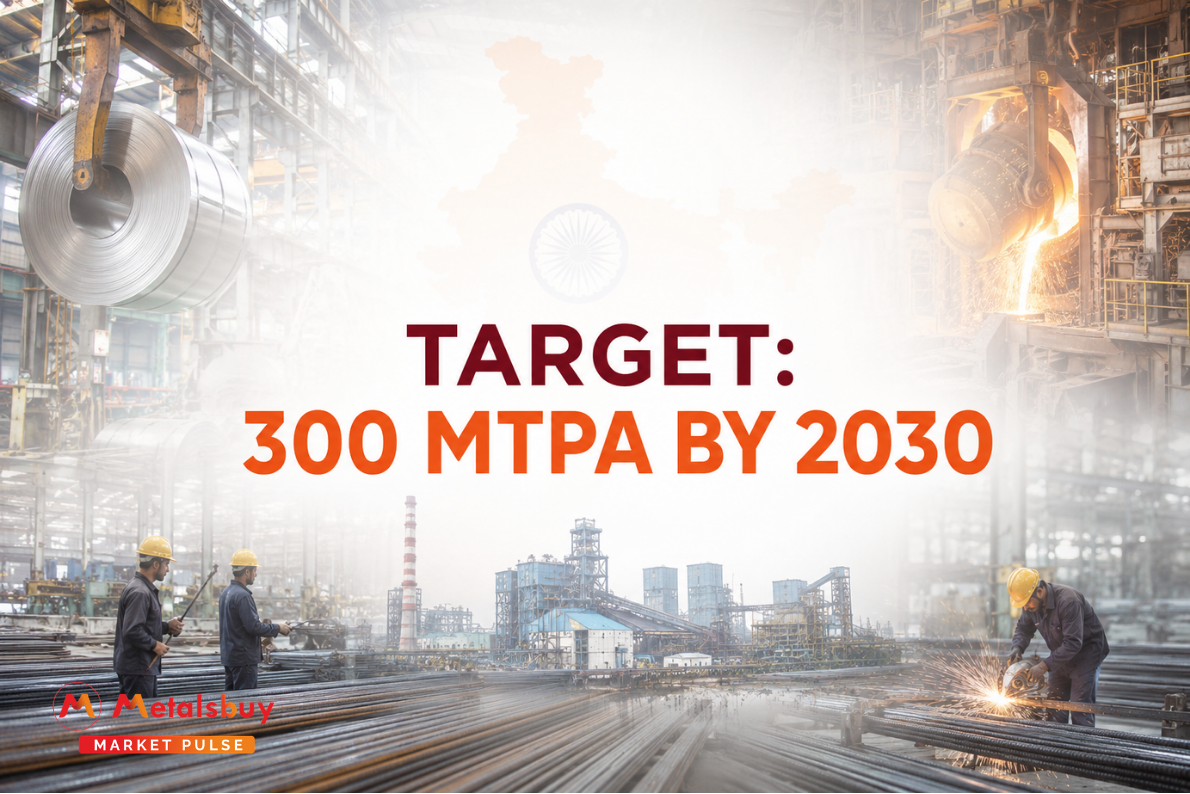
The Indian steel industry has achieved a significant milestone, with the country's crude steelmaking capacity reaching approximately 222 million tonnes per annum (MTPA) as of June 2026. This landmark highlights India's steady progress toward its ambitious National Steel Policy target of establishing 300 MTPA capacity by 2030, solidifying its position as a global manufacturing powerhouse.
KEY NUMBERS
- Current Capacity: 222 MTPA (June 2026)
- 2030 Target: 300 MTPA
- Bhilai Plant Expansion: 7 MTPA to 10.2 MTPA
- Jamda-Bokaro Slurry Pipeline: 258 km
- Slurry Pipeline Capacity: 8.3 million tonnes annually
MARKET ANALYSIS
The expansion in India's steel capacity is being driven by robust domestic demand and significant infrastructure investments. Recent Ministry of Steel data underscores this growth trajectory, reflecting continued modernization across the sector.
A major driver of this capacity augmentation is the expansion of existing facilities. Steel Authority of India Limited (SAIL) has initiated a significant brownfield expansion at its Bhilai Steel Plant, signing an Engineering, Procurement, and Construction Management (EPCM) consultancy agreement with MECON Ltd. This project aims to elevate the plant's production capacity from 7 MTPA to 10.2 MTPA. The collaboration with MECON, a state-owned engineering firm, is expected to bring advanced engineering and construction management practices to ensure timely and efficient project execution.
Furthermore, the sector is seeing substantial improvements in raw material logistics, addressing a historical bottleneck. SAIL is developing India's longest steel-sector slurry pipeline, stretching 258 kilometers from Jamda to the Bokaro Steel Plant. This pipeline will transport approximately 8.3 million tonnes of iron ore annually. By moving away from conventional rail transport, the pipeline will ensure a continuous and reliable supply of raw materials, significantly lower freight costs, and reduce the plant's carbon footprint.
The industry's growth is also fostering strategic partnerships. RITES Ltd. and MECON Ltd. have recently signed a Memorandum of Understanding (MoU) to jointly pursue consultancy and infrastructure projects. This collaboration will leverage their combined expertise in transport infrastructure, metals, mining, and energy, allowing them to deliver integrated solutions both domestically and internationally.
Sustainability is emerging as a core focus area alongside capacity expansion. Under the Green Steel Initiative, the government has issued Green Steel Certificates to 97 producers across 15 states. These certifications, covering products like TMT Bars, HR/CR Coils, Plates, Wire Rods, and Pipes, indicate a growing commitment to environmentally responsible manufacturing, particularly among secondary and mid-sized producers. The taxonomy measures emissions intensity per tonne of finished steel, promoting genuine carbon footprint reduction.
WHAT IT MEANS FOR THE STEEL INDUSTRY
The achievement of 222 MTPA capacity indicates that the Indian steel sector is well-positioned to support the country's rapid economic growth and infrastructure development. The investments in plant modernization, such as the Bhilai expansion, demonstrate a commitment to enhancing operational efficiency and adopting advanced technologies.
The development of dedicated logistics infrastructure, exemplified by the Jamda-Bokaro slurry pipeline, is a critical step in optimizing the supply chain. By reducing reliance on the often-congested railway network, steel producers can improve raw material security and mitigate transportation-related cost volatility, ultimately enhancing their competitiveness.
Moreover, the increasing adoption of green steel practices reflects the industry's alignment with global sustainability trends. The certification of 97 producers is a positive signal, although the broader industry, particularly large integrated producers, still faces challenges in adopting low-emission technologies at scale due to cost and policy uncertainties. However, the foundational framework is now in place to encourage a gradual shift towards greener production methods.
MARKET OUTLOOK
The outlook for the Indian steel industry remains highly positive. With domestic demand projected to stay strong, driven by government spending on infrastructure, construction, and manufacturing, the sector is on a clear path toward the 300 MTPA target by 2030.
Future growth will likely be characterized by continued investments in capacity additions, technological upgrades, and sustainable practices. The strategic review of expansion projects by the Ministry of Steel, including recent assessments at the IISCO Steel Plant by Union Minister H.D. Kumaraswamy, highlights the government's active role in facilitating this growth.
However, the industry must navigate challenges such as volatile raw material prices and the need for significant capital to adopt deep decarbonization technologies. Success will depend on the effective execution of expansion projects, continued government policy support, and the industry's ability to balance production growth with environmental stewardship. Overall, the current momentum suggests a robust and resilient future for India's steel ecosystem.