KEY HIGHLIGHTS
* Current Capacity: National crude steel production capacity hits 222 million tonnes per annum as of mid-2026.
* Strategic Target: Expanding toward 300 million tonnes by 2030 under the National Steel Policy framework.
* Capital Outlay: Top four domestic producers boosting aggregate capital expenditure by 40 percent to Rs 700 billion for FY2027.
* Digital Integration: Sector-wide technological investments projected to escalate from 1.2 billion to 2.7 billion dollars by the end of the decade.
* Import Defenses: Government extends 11 to 12 percent safeguard duties on overseas steel imports until April 2028.
* Sustainability Shift: Nearly 100 producers secure Green Steel Certificates amidst a massive push for low-carbon manufacturing.
MARKET ANALYSIS
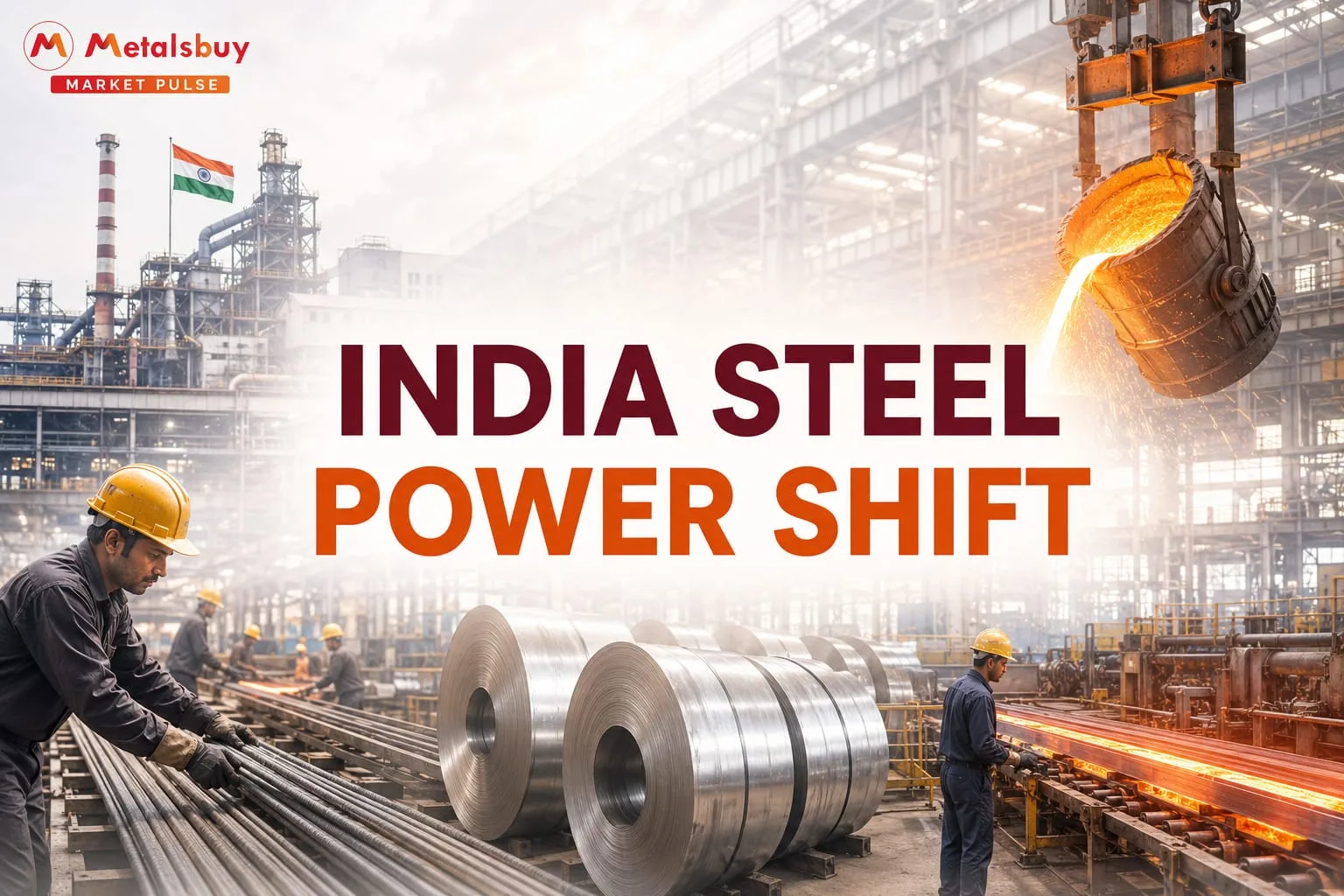
The Indian steel industry is currently experiencing a monumental expansion phase, officially crossing a crude steelmaking capacity of 222 million tonnes per annum. This remarkable achievement places the nation firmly on track to fulfill the ambitious National Steel Policy target of 300 million tonnes by the end of the decade. As domestic consumption skyrockets—fueled by massive government infrastructure initiatives, railway modernization, robust defense manufacturing, and rapid urbanization—steel producers are aggressively scaling their operations to meet future needs. The sector already contributes a solid 2 percent to the national GDP and employs roughly 26 lakh people directly and indirectly, making its continuous growth critical to the broader economic stability of the country.
Recent market assessments reveal that India's finished steel consumption is projected to grow by over 50 million tonnes over the next five years alone. To accommodate this surging demand, the top listed domestic steel giants are initiating a historic, multi-year capital expenditure cycle. Financial commitments reflect a staggering 40 percent year-on-year increase in aggregate capex, pushing the total investment pool to Rs 700 billion for the fiscal year ending March 2027, up from Rs 500 billion the previous year. This immense financial muscle is being strategically directed toward large-scale plant modernization, enhancing raw material logistics, and the aggressive adoption of cutting-edge production technologies.
Simultaneously, protective trade policies are creating a highly secure environment for these domestic investments. By extending the 11 to 12 percent safeguard duties on steel imports through April 2028, policymakers are effectively insulating local producers from dumped materials originating in heavily subsidized Asian markets. This vital regulatory shield guarantees that domestic manufacturers can maintain firm steel prices, easily absorb heavy capital outlays, and confidently protect their profit margins despite occasional fluctuations in global energy and freight costs.
WHAT IT MEANS FOR THE STEEL INDUSTRY
This rapid scale-up signifies a structural transformation in how Indian steel companies operate, invest, and compete on the global stage. Primarily, the massive influx of capital ensures that the industry is not merely adding sheer volume but is actively modernizing its foundational infrastructure. A key focus is securing uninterrupted raw material connectivity. For example, major public sector initiatives include the commissioning of a 258-kilometer slurry pipeline connecting Jamda and Bokaro. Designed to transport over 8.3 million tonnes of iron ore annually, this logistical marvel drastically reduces reliance on congested rail transport networks, effectively cutting freight costs and eliminating supply chain bottlenecks.
Furthermore, the domestic industry is experiencing a massive pivot toward sustainable, eco-friendly manufacturing. Heavy investments are pouring into Electric Arc Furnace technology and Direct Reduced Iron systems that utilize recycled scrap to manufacture low-carbon steel. Private sector leaders recently commenced a colossal Rs 16,350 crore greenfield integrated steel project in Andhra Pradesh dedicated exclusively to future-ready green steel. This proves that capacity expansion and environmental responsibility are now moving parallel to one another.
Technology integration is also becoming a non-negotiable operational standard. Companies are anticipated to more than double their digital investments, reaching nearly 2.7 billion dollars by 2030. These funds will deploy artificial intelligence, automation, and advanced emission monitoring tools to drive energy efficiency across legacy blast furnaces and modern plants alike. With stronger domestic pricing and government backing, the industry is well-positioned to shift from producing basic structural steel to delivering high-grade, specialized alloys required by the defense, aerospace, and electric vehicle sectors.
MARKET OUTLOOK
Looking ahead, the Indian steel sector is geared for sustained, positive growth supported by incredibly robust underlying economic fundamentals. Per capita steel consumption is accelerating rapidly, with forward-looking estimates predicting a steady climb from current levels to approximately 160 kg by 2030, and eventually 220 kg by 2047. While geopolitical tensions in the Middle East and fluctuating global freight rates might introduce short-term operational hurdles, the strong domestic demand matrix will comfortably absorb these external shocks.
The transition toward sustainable and self-reliant production is gaining formidable momentum across both primary and secondary producers. With almost a hundred mid-sized and large producers already securing Green Steel Certificates for critical products like TMT bars and wire rods, India is positioning itself not just as a volume leader, but as a future-ready manufacturing hub. As leading corporations continue to inject billions of rupees into capacity building, the Indian steel ecosystem will undoubtedly emerge as a highly resilient, profitable, and globally competitive powerhouse over the next five to ten years