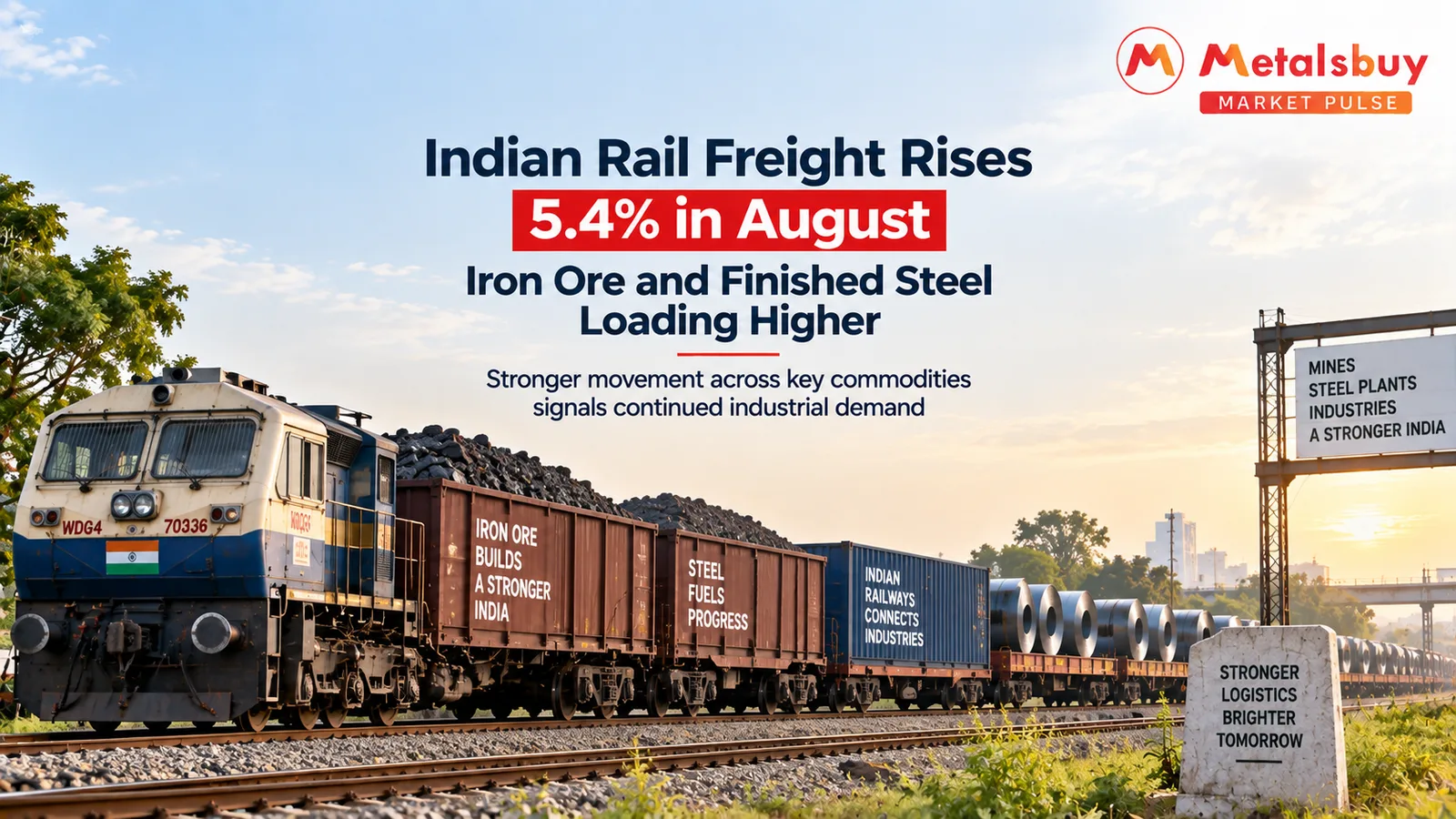
Indian Railways recorded a 5.4% year-on-year increase in freight loading in August 2026, with total freight movement reaching 137.9 million tonnes (MT) compared with 130.9 MT in August 2025. Freight revenue also increased by 6.27% during the month, indicating higher movement across several important commodity categories. The growth was particularly visible in iron ore, coal, clinker, containers and finished steel.
Iron ore movement leads the major commodity segments
Iron ore recorded the strongest growth among the major commodities reported for August, with railway loading increasing 12.1% year on year. The increase is important for the steel industry because rail remains a major transportation route for moving iron ore from mining regions to steel plants and other processing locations. Higher rail movement therefore reflects increased activity in the movement of one of the industry's key raw materials.
Clinker loading also increased 10.4%, while domestic container movement rose 9.2%. The growth across these categories shows that the increase in rail freight was not restricted to one commodity, with both bulk industrial materials and containerised cargo recording higher movement during the month.
Coal loading increases 6%
Coal loading by Indian Railways increased 6% in August compared with the same month last year. Coal continues to account for a major share of rail freight, particularly because of its movement from mining regions to power plants and industrial consumers. Higher coal loading therefore remains closely linked to the country's power generation and industrial supply chains.
The increase also comes at a time when coal logistics have remained important for steel and sponge iron producers. Movement of coal by rail provides a critical connection between mines, power plants and industrial centres, particularly for bulk volumes that are difficult to shift economically through other modes.
Finished steel loading rises 4.9%
Finished steel loading increased 4.9% year on year in August. While the growth rate was lower than that of iron ore and clinker, the increase indicates higher movement of finished steel through the railway network. Steel movement by rail connects major production centres with consuming markets and infrastructure projects across different regions.
For the steel industry, the simultaneous rise in iron ore and finished steel loading is notable. Higher iron ore movement represents greater transportation of raw material, while the increase in finished steel indicates continued movement of processed material towards downstream markets. The two flows together show that rail continues to play an important role across different stages of the steel supply chain.
Other freight segments also record growth
Mineral oil loading increased 3.1%, while fertiliser loading rose 1.6% during August. The balance category of other goods recorded stronger growth of 8.2%, indicating that the increase in freight activity extended beyond the traditional bulk commodities.
The 9.2% rise in domestic container loading is particularly relevant as Indian Railways continues to expand its freight base beyond coal, iron ore and other bulk commodities. A wider commodity mix can help the railway network increase its participation in industrial and commercial logistics.
Five new Gati Shakti Cargo Terminals commissioned
Indian Railways commissioned five new Gati Shakti Cargo Terminals (GCTs) during August, taking the cumulative number of commissioned terminals to 149 as of August 31, 2026. The new terminals are located at Shivlakha in Gujarat, Nalli in Tamil Nadu, Shaktinagar in Uttar Pradesh, Deoragram in Madhya Pradesh and Brajrajnagar in Odisha.
The expansion of the GCT network is aimed at bringing freight handling facilities closer to production and consumption centres. For industries handling bulk commodities such as iron ore, coal, steel and other raw materials, additional terminals can improve access to rail logistics and support more efficient cargo handling.
Freight revenue grows faster than loading
Freight revenue increased 6.27% in August compared with August 2025, slightly faster than the 5.4% increase in physical freight loading. The numbers indicate that the railway freight business continued to expand during the month alongside higher movement of industrial commodities.
The revenue growth also comes as Indian Railways continues to invest in freight infrastructure and improve connectivity between production centres, ports and consumption markets. The development of cargo terminals and dedicated freight infrastructure is intended to make rail a more efficient option for industries moving large volumes over longer distances.
Rail freight remains important for steel and mining
The August numbers are significant for India's steel and mining industries because several of their core commodities recorded growth at the same time. Iron ore loading rose 12.1%, coal 6% and finished steel 4.9%, while clinker and containers recorded even stronger increases. This provides a clear indication that rail-based movement of industrial materials remained active during the month.
The figures also come against a broader expansion of dedicated freight infrastructure. India's dedicated freight corridors recorded strong utilisation in August, with the Western and Eastern corridors together handling around 438 trains per day, or about 91% of their stated combined daily capacity, according to recent reporting. This highlights the increasing role of dedicated rail infrastructure in moving bulk and industrial cargo across the country.
What the August numbers indicate
The August freight data shows a broad-based increase in rail movement, with particularly strong growth in iron ore, clinker and domestic containers. For the metals sector, the 12.1% rise in iron ore loading and 4.9% increase in finished steel loading are the key numbers to watch. At the same time, higher coal movement and continued investment in cargo terminals point to the importance of rail logistics in supporting India's industrial supply chain.
With freight loading at 137.9 MT and five additional Gati Shakti Cargo Terminals commissioned during the month, Indian Railways is continuing to expand both freight volumes and infrastructure. The next few months will show whether the current growth in industrial cargo movement continues as steel, mining, power and infrastructure activity develops further.
Source note: Figures are based on August 2026 Indian Railways data released by the Ministry of Railways. Commodity loading figures represent year-on-year changes for August 2026.