Key Highlights
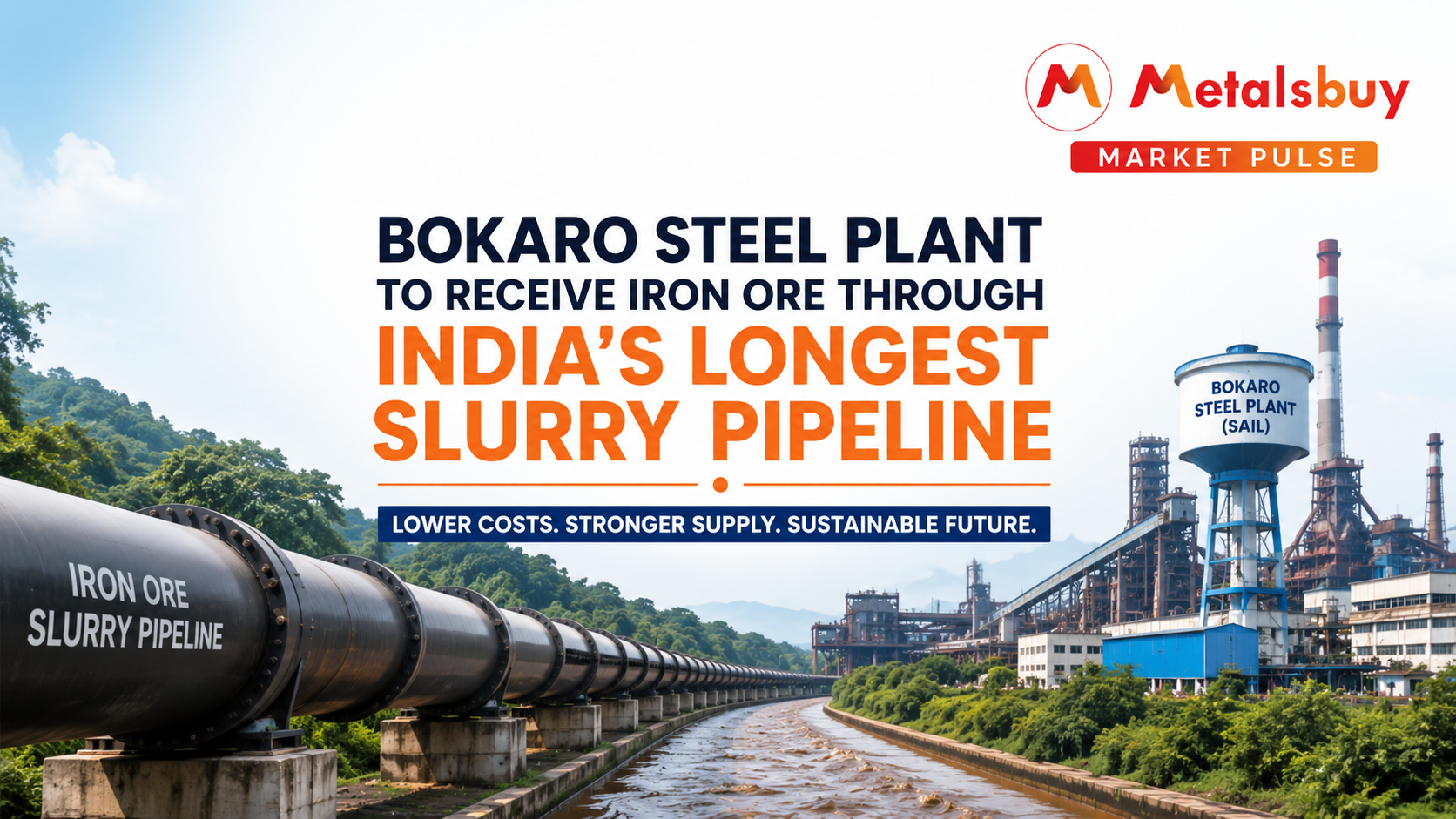
- India's longest iron ore slurry pipeline is set to supply iron ore to Bokaro Steel Plant.
- The project will significantly reduce dependence on rail transportation.
- Lower logistics costs are expected to improve steelmaking efficiency.
- The pipeline will help reduce carbon emissions associated with bulk transportation.
- The development strengthens the raw material supply chain for one of SAIL's largest integrated steel plants.
In a significant boost to India's steel logistics infrastructure, Bokaro Steel Plant (BSL) is set to receive iron ore through the country's longest slurry pipeline, marking a major step towards improving raw material efficiency and reducing transportation costs. The project, developed by Rungta Mines Ltd., will transport beneficiated iron ore slurry from Odisha to Bokaro, where it will be processed into pellets before being used in steel production.
The initiative is expected to transform the economics of iron ore transportation by replacing a substantial portion of rail movement with pipeline logistics. Besides lowering freight costs, the project also aligns with the steel industry's growing focus on sustainability and supply chain optimisation.
Key Numbers
- Pipeline Length: Approximately 200 km
- Destination: Bokaro Steel Plant, Jharkhand
- Raw Material: Iron ore slurry
- Developer: Rungta Mines Ltd.
- Primary Objective: Reduce logistics cost and ensure uninterrupted iron ore supply.
- Major Beneficiary: SAIL's Bokaro Steel Plant
Project Analysis
Iron ore transportation remains one of the largest cost components in steel manufacturing. Traditionally, steel plants rely heavily on railway wagons for transporting ore from mines, making them vulnerable to freight rate fluctuations and wagon availability.
The slurry pipeline offers a more reliable alternative by transporting finely ground iron ore mixed with water directly to the processing facility. Once received, the slurry is dewatered and converted into pellets for blast furnace consumption. This integrated logistics solution is expected to provide Bokaro Steel Plant with a steady and cost-effective raw material supply while reducing transit losses.
Supply Side Analysis
India's steel production capacity continues to expand, increasing the demand for uninterrupted iron ore supplies. Although the country possesses abundant iron ore reserves, transportation bottlenecks often impact plant operations. Pipeline-based logistics can significantly improve supply chain efficiency by ensuring continuous raw material movement irrespective of railway congestion. This enhances production planning while reducing inventory carrying costs. The project may also encourage other steel producers to evaluate similar infrastructure investments for long-distance mineral transportation.
Cost & Logistics Analysis
Logistics accounts for a considerable share of steel production costs in India. The slurry pipeline is expected to deliver multiple benefits:
- Lower freight expenditure compared to rail transportation.
- Reduced dependency on railway rake availability.
- Minimal handling losses during transportation.
- Improved delivery consistency.
- Lower greenhouse gas emissions due to reduced diesel consumption.
As Indian steelmakers continue focusing on operational efficiency, such infrastructure projects can provide a long-term competitive advantage.
Industry Impact
The Bokaro slurry pipeline project represents more than just a logistics upgrade. It reflects the industry's transition towards modern, technology-driven supply chain management. For steel manufacturers, reduced transportation costs directly improve operating margins. For end-users, greater production efficiency can support stable steel availability during periods of high demand.
The project also complements India's ambition of expanding domestic steel production capacity while reducing infrastructure bottlenecks.
Metalsbuy Market Pulse Insight
As Indian steelmakers scale up production, competitive advantage will increasingly depend not only on manufacturing capacity but also on logistics efficiency. Projects such as the Bokaro slurry pipeline demonstrate that investments in supply chain infrastructure can generate long-term cost savings while improving sustainability. Similar projects may become more common as the industry moves towards achieving the National Steel Policy's production targets.
Outlook
The successful commissioning of the slurry pipeline is expected to:
- Improve raw material security for Bokaro Steel Plant.
- Reduce logistics costs over the long term.
- Strengthen supply chain resilience.
- Encourage wider adoption of slurry pipeline infrastructure across India's mining and steel sectors.
- Support sustainable growth of the domestic steel industry.
Disclaimer
This article has been prepared by Metalsbuy Market Pulse for informational purposes only. The information has been compiled from publicly available industry sources believed to be reliable. Readers should independently verify information before making commercial or investment decisions.