KEY NUMBERS
June 1, 2026 : Fresh industry concerns raised over rolled steel imports
12% : Current safeguard duty on flat steel imports
11% : Safeguard duty level after scheduled tapering
3 Years : Duration of the current safeguard framework
June And July : Traditionally weaker demand months due to monsoon activity
Rolled Steel Imports : Primary focus of industry concerns
Indian Steel Industry : World’s second largest steel producer
Domestic Demand : Typically slows during the monsoon season
Policy Debate : Extension and strengthening of safeguard measures
Market Impact : Potential effect on mill utilisation and production decisions
MARKET ANALYSIS
For much of the past year, Indian steelmakers were worried about exports.
Now they are watching imports again.
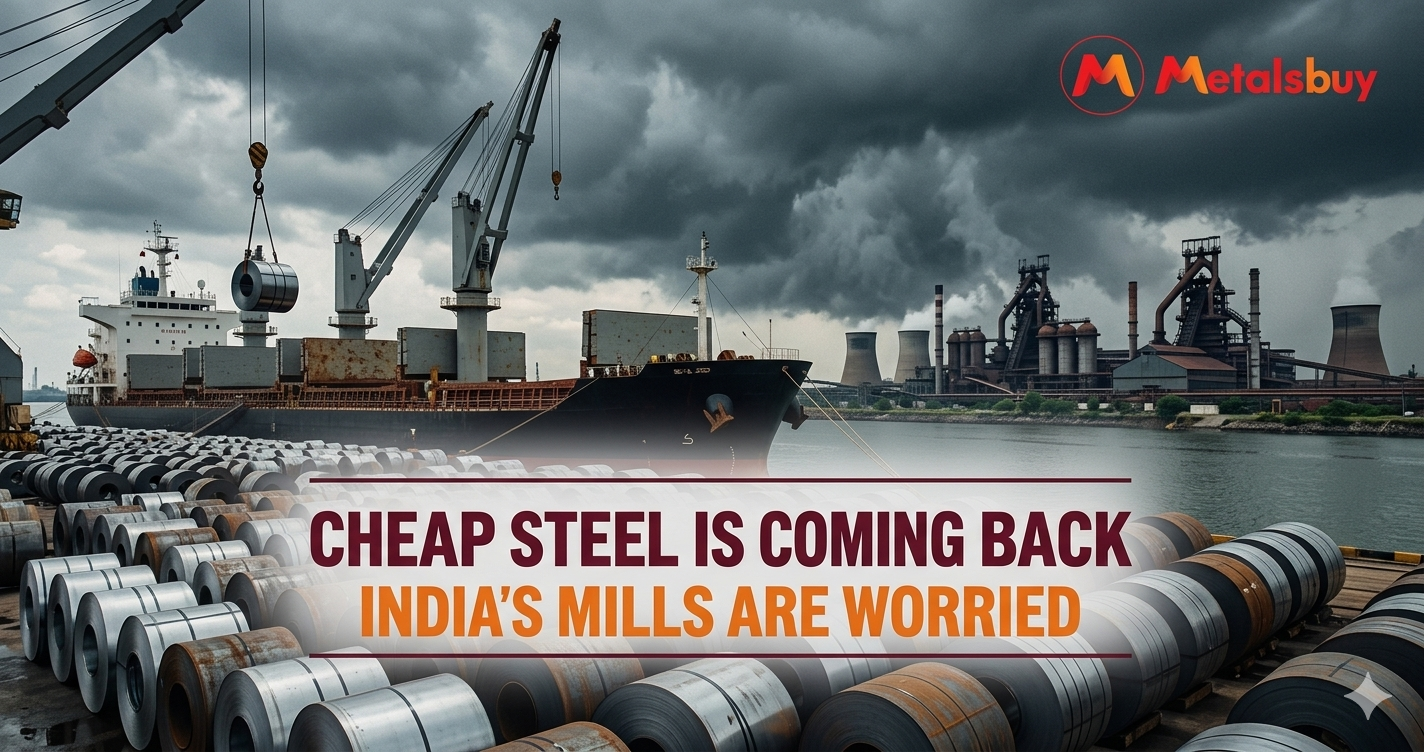
Industry participants have raised fresh concerns regarding rising rolled steel imports into India, reigniting a debate that has shaped the domestic steel market for years. The timing is significant. The discussion comes just as the monsoon season begins, a period when steel demand from construction and infrastructure projects typically slows across large parts of the country.
When demand weakens, imports become a much bigger issue.
Steel mills can absorb foreign competition during periods of strong consumption. During slower periods, even relatively modest import volumes can place additional pressure on pricing and utilisation rates. That is why safeguard measures remain one of the most closely watched policy tools within the industry.
India currently operates a safeguard duty framework on certain flat steel imports, beginning at 12 percent and gradually tapering to 11 percent over a three year period. The objective is straightforward. Domestic producers argue that the measures help prevent sudden surges of low priced imports from disrupting the local market.
The debate, however, is far from one sided.
Steelmakers see imports as a threat to profitability and capacity utilisation. Downstream consumers often take a different view. Manufacturers, fabricators, engineering companies and construction firms generally benefit from lower steel prices because steel represents a major component of their input costs.
That tension sits at the heart of the current discussion.
The question is not whether imports are increasing.
The question is how much protection is appropriate.
WHY THE MONSOON CHANGES THE EQUATION
The timing of this debate matters almost as much as the import volumes themselves.
June and July are traditionally slower months for steel consumption. Construction projects slow in many regions. Infrastructure activity becomes more difficult. Procurement decisions are often delayed until weather conditions improve.
As a result, mills enter the monsoon period with greater sensitivity to pricing pressure.
Imports that might have little impact during periods of strong demand can become far more disruptive when domestic consumption softens. This is why safeguard duty discussions frequently intensify during this time of year.
Steel producers argue that maintaining market stability becomes especially important during seasonal demand slowdowns.
Buyers often counter that competitive imports help keep costs under control.
Both arguments have merit.
That is what makes the policy debate so difficult.
WHAT IT MEANS FOR FERRO ALLOYS
The ferro alloy connection is direct.
Steel production drives alloy consumption.
If domestic mills face sustained pricing pressure from imports and respond by reducing production, demand for ferrochrome, silico manganese and ferro manganese also declines. Lower utilisation rates translate into lower procurement volumes.
On the other hand, if safeguard measures support domestic production levels, alloy demand remains more stable.
For ferro alloy producers, the issue is not necessarily the price of imported steel.
It is the impact imports have on domestic steel output.
A mill operating at full capacity consumes significantly more alloy material than a mill operating defensively.
That is why alloy suppliers closely follow safeguard duty discussions even when they are not directly involved in the steel trade debate itself.
THE OTHER SIDE OF THE ARGUMENT
Imports are not automatically negative for the economy.
Lower steel prices benefit a wide range of downstream industries including automotive, engineering, infrastructure, renewable energy and manufacturing. Competitive pricing can improve the cost position of Indian manufacturers and support broader industrial activity.
This is why policymakers often face competing priorities.
Protecting domestic steel producers may support investment and employment within the steel sector. Allowing greater import competition may benefit a much larger group of steel consuming industries.
The challenge is finding a balance that supports both.
That balance rarely satisfies everyone.
MARKET OUTLOOK
The safeguard duty debate is unlikely to disappear anytime soon.
India’s steel industry continues expanding capacity, while global producers continue looking for export opportunities. That combination ensures that import competition will remain a recurring feature of the market.
The immediate focus will be on how import volumes evolve during the monsoon months and whether policymakers view additional intervention as necessary.
For steel producers, the objective is maintaining healthy utilisation rates during a seasonally weaker period.
For downstream users, the priority is preserving access to competitively priced material.
For ferro alloy markets, the equation remains relatively simple.
The more steel India produces, the more alloys it consumes.
The outcome of the current debate will therefore be watched closely across the entire metals value chain.