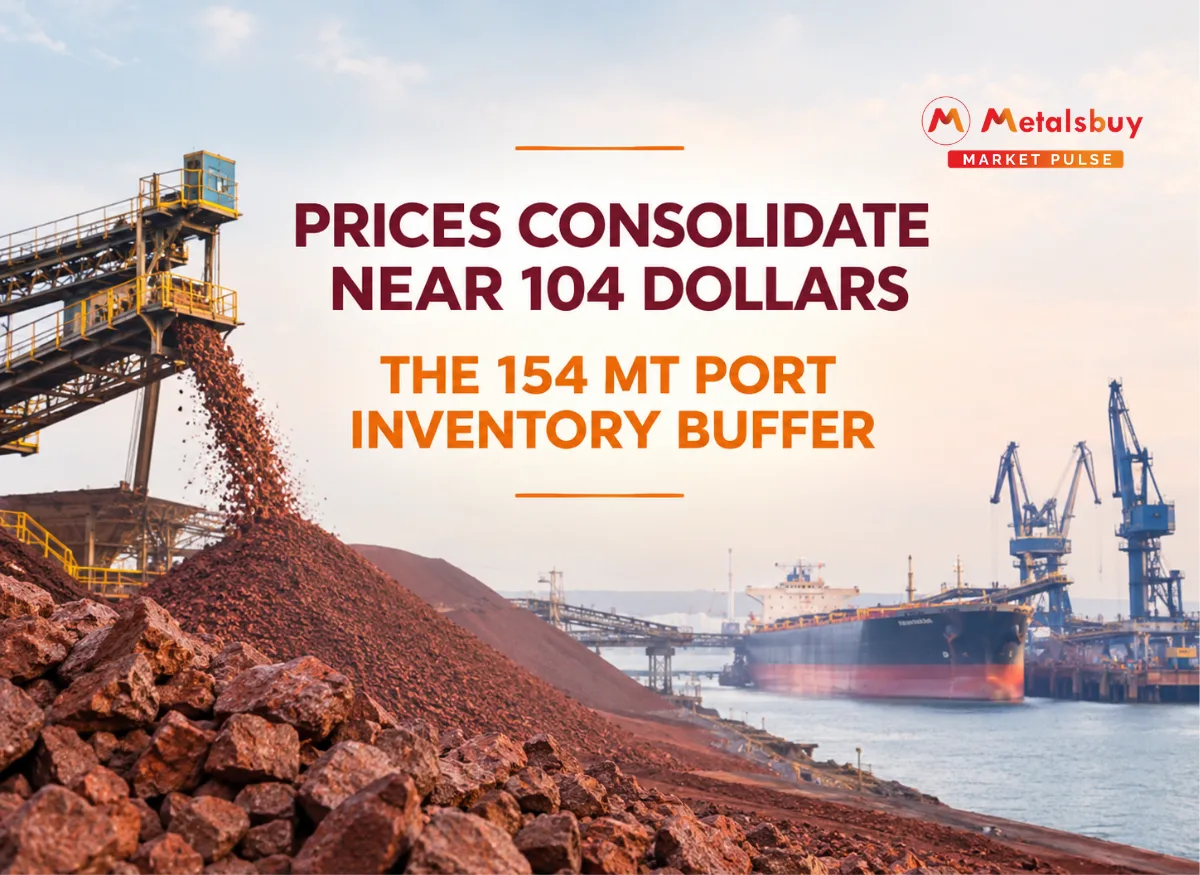
The international raw materials market is currently navigating a period of strategic stabilization following a highly volatile summer quarter. As the second half of October unfolds, global iron ore prices are experiencing a natural consolidation phase, balancing between robust supply volumes and shifting demand expectations across major Asian manufacturing hubs. For the broader steel industry, particularly expanding markets like India, this pricing moderation is an incredibly positive development. It allows primary blast furnace operators to optimize their raw material procurement costs, ensuring that corporate profit margins remain heavily protected as mills ramp up production to meet the booming post-monsoon infrastructure demand.
Evaluating the late october pricing trends and global supply
The benchmark pricing for essential steelmaking ingredients is finding a healthy and manageable equilibrium as major global miners maintain steady extraction rates. During the second half of October 2026, the international spot market for 62 percent grade iron ore fines delivered to Chinese ports showcased notable range-bound trading. After briefly testing higher resistance levels earlier in the month, benchmark prices stabilized comfortably near the $100 to $104 per metric tonne mark on a cost and freight basis. This stabilization is primarily driven by an incredibly robust and uninterrupted supply chain originating from the world's leading mining hubs.
Major extraction conglomerates in Pilbara, Western Australia, and the Carajas region in Brazil have successfully ramped up their outbound shipment volumes following the conclusion of their respective seasonal maintenance cycles. Maritime tracking data indicates that weekly global shipments of iron ore have consistently hovered around the 30 to 32 million tonne mark throughout October. Because this high-volume supply is reaching Asian ports without any severe logistical bottlenecks or weather-related delays, it effectively caps any sudden, panic-driven price spikes, creating a highly predictable purchasing environment for integrated steelmakers globally.
Chinese stimulus measures and port inventory dynamics
The primary demand center for global iron ore is actively absorbing this incoming material while keeping a close eye on macroeconomic policy developments. China continues to dictate the overarching momentum of the seaborne iron ore trade. Throughout late October, the market has been highly reactive to a series of financial stimulus packages announced by the Chinese central government. While initial monetary easing measures generated a wave of speculative buying that briefly pushed futures contracts higher, the physical spot market has remained highly disciplined. Chinese steel mills are currently prioritizing absolute operational efficiency over sheer volume growth, choosing to procure raw materials strictly on a need-based schedule rather than aggressively hoarding inventory.
This cautious but steady procurement strategy is reflected in the massive stockpiles currently sitting at major Chinese coastal terminals. Iron ore port inventories have steadily accumulated, currently hovering around the 152 to 154 million tonne threshold. This massive physical buffer acts as a crucial shock absorber for the entire Asian commodities market. Because Chinese mills have immediate access to these localized stockpiles, they are not forced to chase escalating seaborne offers. This dynamic naturally prevents the market from overheating and keeps global benchmark prices trading in a highly sustainable, consolidated range.
Strategic procurement advantages for the domestic steel sector
For the rapidly expanding Indian heavy manufacturing ecosystem, this period of global pricing consolidation presents a highly lucrative commercial window. While India is largely self-sufficient in iron ore extraction, domestic prices are often heavily influenced by international pricing trends. When global seaborne prices stabilize near the $100 per tonne mark, it prevents severe cost-push inflation within the Indian domestic mining sector. State-owned merchant miners and private extractors in Odisha and Chhattisgarh are able to maintain highly competitive local pricing, which directly benefits domestic integrated steel producers.
Furthermore, Indian mills that rely on importing specific high-grade iron ore pellets or premium lumps for specialized blending purposes are actively capitalizing on this stable global pricing. By locking in bulk cargo shipments at these moderate rates, domestic blast furnace operators can structurally lower their average cost of raw materials. This cost optimization is absolutely vital right now. As the Indian construction sector accelerates its execution speeds following the withdrawal of the monsoon, secondary and primary steelmakers are aggressively ramping up their output. Maintaining low input costs allows these manufacturers to offer highly competitive finished steel pricing to domestic infrastructure developers without sacrificing their own corporate profit margins.
Setting a resilient foundation for the final quarter
From a broader macroeconomic perspective, the current holding pattern in global iron ore prices is the ideal scenario for a balanced and healthy metals market. Hyper-inflated raw material costs frequently destroy downstream demand and stall global construction projects. Conversely, a stable pricing floor near $100 per tonne ensures that global miners remain highly profitable and can continue investing in sustainable extraction technologies, while steelmakers enjoy the cost predictability required to plan their long-term capital expenditures. As the global steel industry prepares to enter the final months of the calendar year, this disciplined and well-supplied raw material market guarantees that production lines will keep moving smoothly. Ultimately, this stability provides the perfect runway for India’s ambitious industrial sectors to close out the year with record-breaking production and sales metrics.