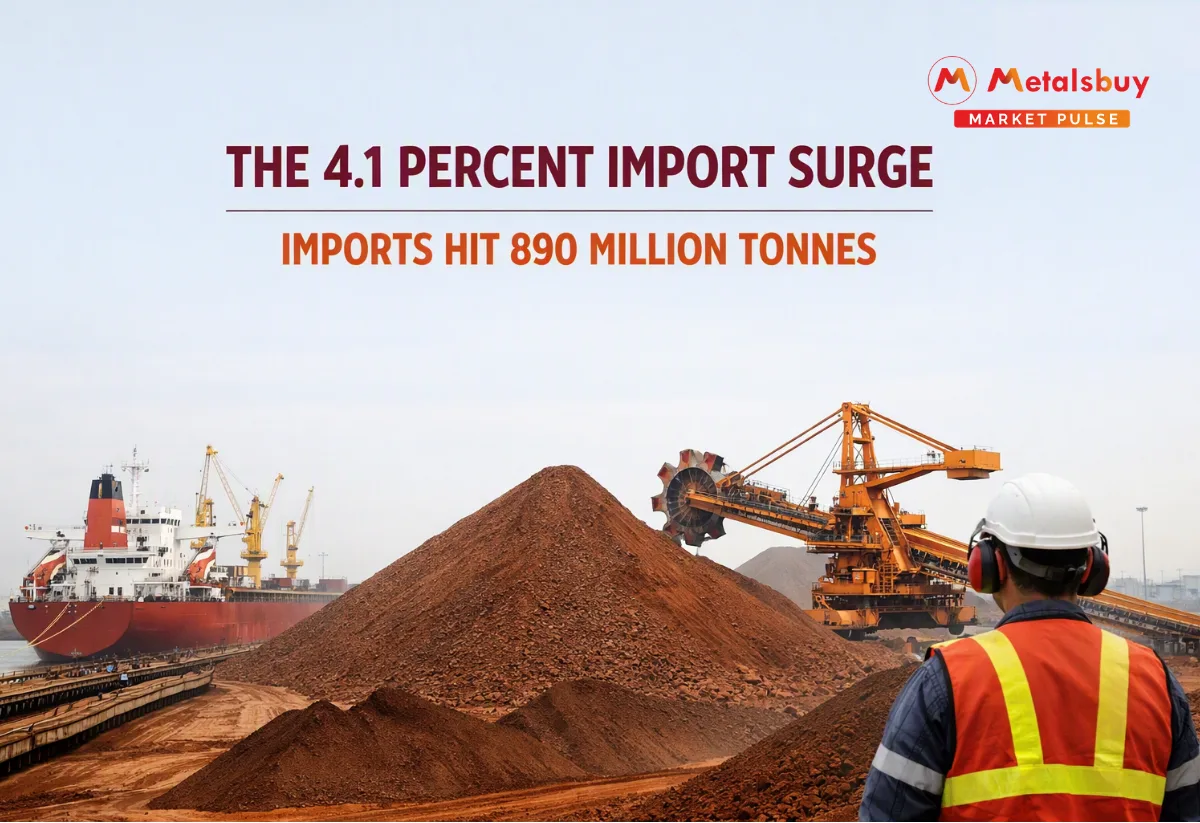
China's vast steel manufacturing sector is displaying a highly calculated approach to its raw material procurement strategy as the third quarter concludes. Recent customs data reveals that the nation’s total iron ore imports grew by a solid 4.1 percent year-on-year during the first nine months of 2026. This steady influx of seaborne material, occurring even as the domestic economy transitions away from traditional real estate construction, highlights a strategic industrial pivot. Major Chinese steelmakers are actively capitalizing on stable global commodity pricing to secure high-grade feedstocks, ensuring their blast furnaces operate at maximum thermal efficiency while supporting the country's broader shift toward advanced, value-added manufacturing.
Evaluating the steady surge in seaborne cargo volumes
The September import surge was heavily driven by the urgency to build raw material stockpiles ahead of China’s massive National Day Golden Week holidays in early October. By pushing large volumes of cargo through coastal customs and into factory stockyards before the week-long national shutdown, domestic steel producers effectively guaranteed uninterrupted production lines. This proactive cargo clearance prevents any sudden supply-side bottlenecks and ensures that mills are not forced into expensive spot-market purchases immediately following the holiday period.
Prioritizing high grade imports for better furnace efficiency
As integrated mills face tighter operational margins and stricter environmental regulations, they are actively substituting low-grade domestic ore with these high-grade imports. Feeding a blast furnace with premium imported ore drastically reduces the required volume of metallurgical coke—an increasingly expensive and carbon-heavy fuel. By optimizing the raw material mix, Chinese steelmakers achieve superior hot metal yields, structurally lower their base cost of production, and significantly reduce the overall carbon emissions generated per tonne of finished steel.
Port stockpiles and pre holiday market stabilization
The continuous flow of imported iron ore has also led to a highly comfortable inventory situation at major coastal logistics hubs, providing a massive buffer for the domestic market. Throughout the third quarter, iron ore inventories held at major Chinese ports have consistently hovered near the 150 million tonne mark. This massive accumulation acts as a critical shock absorber for the entire Asian commodities trade. Because domestic mills have access to this abundant, localized supply, they can execute a highly disciplined, just-in-time procurement strategy.
When international seaborne freight rates spike or global spot prices experience sudden volatility, Chinese buyers can simply retreat from the international market and draw down on these existing port stockpiles. This purchasing flexibility has effectively capped the upward pricing momentum of global iron ore, keeping benchmark spot prices relatively stable just below the hundred-dollar threshold. For global miners, while the pricing lacks explosive upside, the 4.1 percent volume growth guarantees steady, high-volume cash flows.
Long term implications for global commodity markets
From a macroeconomic standpoint, the robust import data over the first three quarters sends a highly positive signal regarding the resilience of China's heavy manufacturing base. The country's ongoing transition toward a "new economy"—heavily reliant on the production of new energy vehicles, consumer appliances, and high-tech infrastructure—demands massive volumes of specialized flat steel and cold-rolled coils. Manufacturing these premium steel grades requires a consistently high-quality base of raw materials. The 4.1 percent growth in iron ore imports proves that Chinese mills are successfully securing the precise inputs needed to climb the global value chain.
As the industry navigates the final quarter of 2026, this disciplined procurement strategy guarantees that the Chinese steel ecosystem will remain highly liquid and cost-competitive. By balancing strong import volumes with optimized factory run-rates, China continues to provide a massive, reliable anchor for the entire international raw materials supply chain.