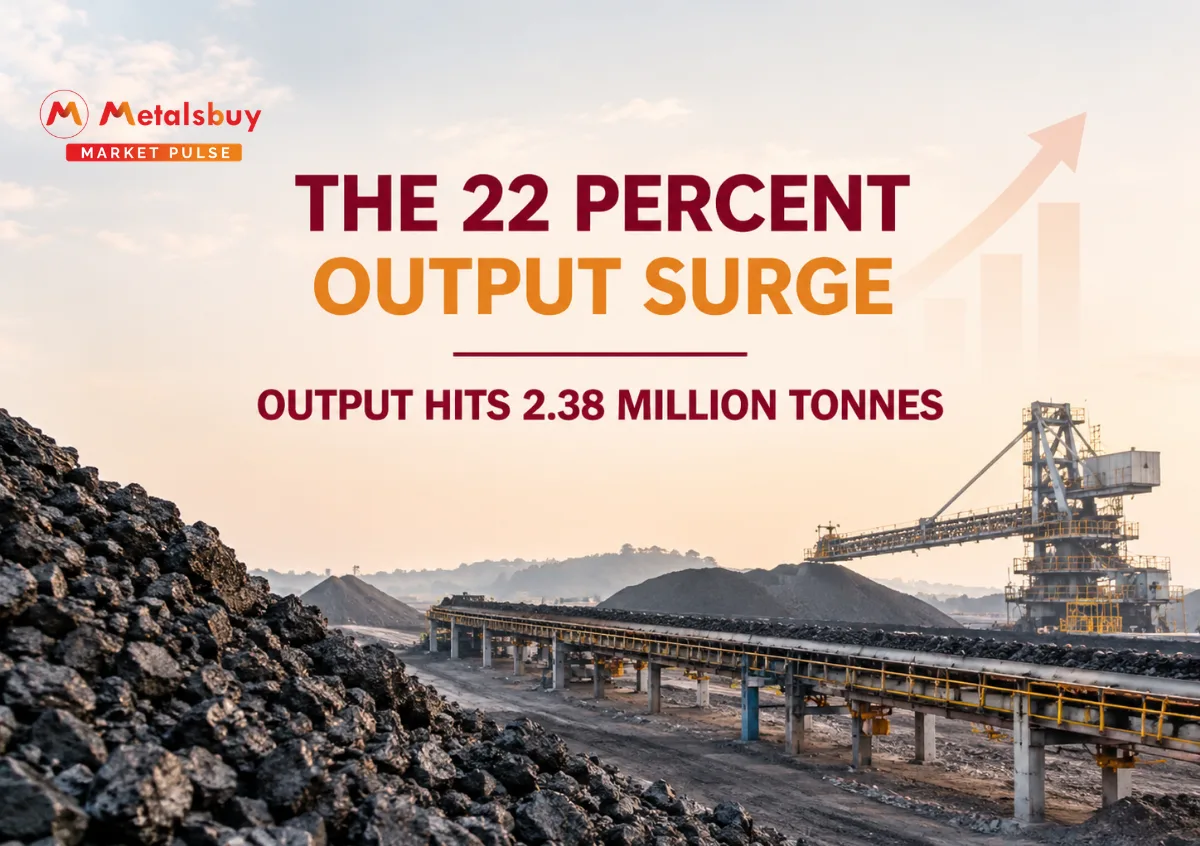
Bharat Coking Coal Limited has posted an exceptional operational performance for the month of September 2026, delivering a massive boost to India's raw material supply chain. The Dhanbad-based mining giant, a primary subsidiary of Coal India Limited, registered a staggering 22 percent year-on-year growth in its core coking coal output. This robust expansion in metallurgical coal extraction provides a highly positive signal for the domestic steel industry. As primary steelmakers aggressively ramp up their blast furnace operations to meet post-monsoon construction demands, the availability of high-quality, domestically sourced coking coal acts as a critical buffer against global supply chain volatility and fluctuating seaborne prices.
Surging metallurgical coal production fuels domestic kilns
The latest provisional production data reveals a highly strategic operational focus by the mining company. During September 2026, BCCL successfully extracted an estimated 2.38 million tonnes of coking coal, marking a decisive 22 percent jump from the 1.95 million tonnes recorded in the corresponding month of the previous year. This specific focus on metallurgical grades over generic thermal coal underscores the company's commitment to feeding the nation's critical heavy industries.
Total raw coal production for the month, encompassing all grades, also maintained a positive trajectory, crossing the 2.85 million tonne mark. This overall volume growth is particularly impressive given the operational challenges typically associated with September. By maximizing the output from its high-yielding opencast blocks like the Kusunda and Block-II areas, BCCL has ensured that domestic steel mills will not face any supply-side shortages as they enter the peak manufacturing season. The consistent month-on-month volume expansion solidifies the company's position as the absolute backbone of India's coking coal ecosystem.
Overcoming monsoon hurdles through mechanized logistics
Executing a 22 percent production hike during the tail end of the Indian monsoon requires exceptional on-ground coordination and modernized infrastructure. Heavy rainfall across the Jharia coalfields traditionally disrupts open-pit mining operations and saturates haul roads, leading to severe logistical bottlenecks. However, BCCL has managed to largely decouple its production run-rates from these seasonal weather patterns.
This operational resilience is the direct result of heavy capital expenditure in First Mile Connectivity projects. The company has actively transitioned away from traditional, manual truck-loading methods, replacing them with mechanized coal handling plants and rapid loading silos. These covered, high-speed loading systems protect the extracted coal from moisture degradation and allow for rapid evacuation directly into railway rakes. Consequently, total coal dispatches from BCCL also saw a healthy parallel growth in September, outpacing fresh production to ensure that pithead inventories were swiftly moved to consumer steel plants without delay.
Import substitution shields steelmakers from global price shocks
From a macroeconomic perspective, the 22 percent surge in domestic coking coal production carries immense financial benefits for the Indian steel sector. Currently, India imports approximately 85 percent of its annual coking coal requirements, leaving primary producers heavily exposed to international price shocks. In recent weeks, premium hard coking coal prices out of Australia have exhibited significant volatility, hovering tightly between $210 and $230 per tonne on a free-on-board basis.
When BCCL increases its domestic output by such a massive margin, it directly facilitates import substitution. Every additional tonne of domestic coking coal integrated into a blast furnace reduces the country's reliance on expensive foreign shipments, conserving valuable foreign exchange reserves. For domestic steelmakers, blending higher volumes of affordable domestic coal with imported premium grades structurally lowers the overall cost of hot metal production. This allows integrated mills to protect their profit margins and maintain competitive pricing for finished steel products like rebar and hot-rolled coils in the domestic market.
Boosting washed coal output for enhanced furnace efficiency
Beyond raw extraction, BCCL is making significant strides in its beneficiation and coal washing capabilities. Providing raw coking coal is only the first step; delivering a product with optimized ash content is what truly benefits the end-user. During September, the output of washed coking coal from the company's operational washeries witnessed a robust double-digit increase, perfectly complementing the growth in raw extraction.
Indian coking coal inherently contains higher ash levels compared to prime Australian or North American grades. By aggressively expanding its washing capacity, BCCL is successfully reducing the ash content of its output down to highly acceptable metallurgical standards. The availability of clean, washed domestic coal directly improves the thermal efficiency of blast furnaces, lowers the consumption of metallurgical coke, and reduces overall carbon emissions per tonne of crude steel produced. This commitment to quality upgrading ensures that domestic coal remains a highly viable, long-term raw material for India's modernizing steel plants.
Supporting the long term national infrastructure vision
The exceptional growth recorded in September is not an isolated achievement but rather a vital component of a much broader national strategy. As the Indian government targets a massive 300 million tonnes per annum of domestic crude steel capacity by 2030, the underlying raw material supply chain must scale up proportionately.
BCCL’s current operational momentum proves that the domestic mining sector is fully capable of meeting this escalating demand. By continuously investing in heavy earth-moving machinery, modernizing underground extraction techniques, and expanding its washery network, the company is building a highly resilient raw material foundation. As the broader market heads into the busy third quarter, the guaranteed availability of high-volume, domestic coking coal ensures that India's ongoing infrastructure and manufacturing boom remains completely insulated from external supply constraints, setting a highly positive and stable tone for the remainder of the financial year.