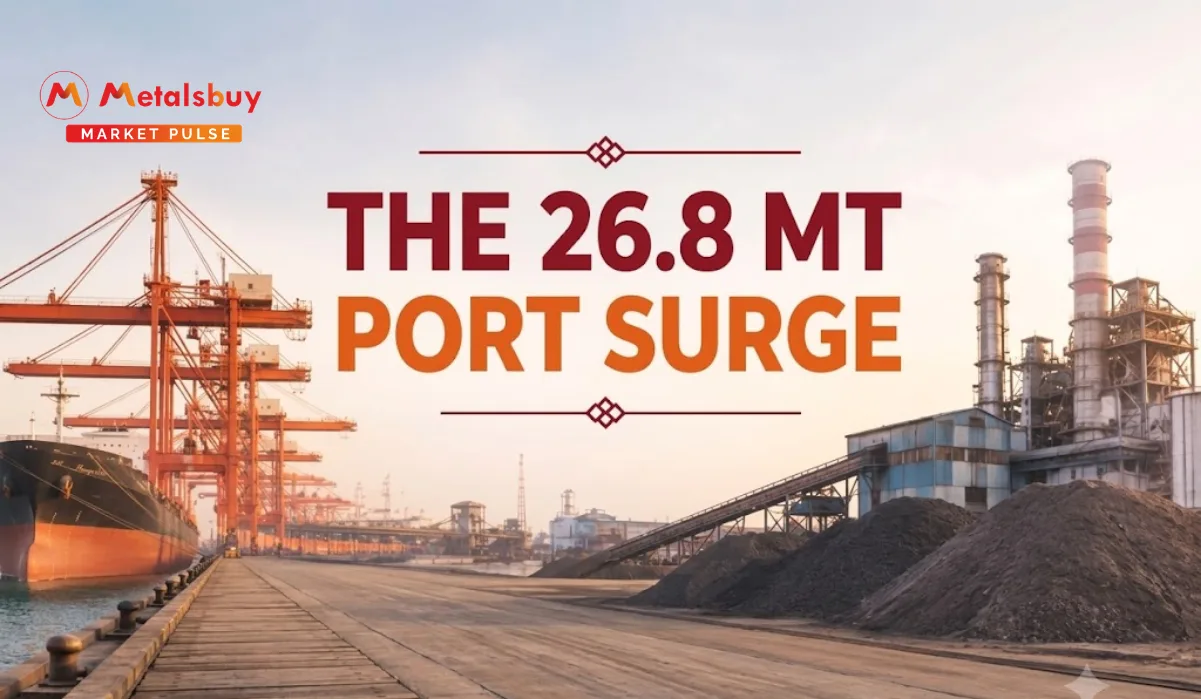
India’s major maritime ports have recorded a steady upward trend in metallurgical coal shipments during the first five months of the current fiscal year. The robust double-digit growth in inbound coking coal traffic perfectly mirrors the aggressive capacity utilization rates being maintained by the country’s primary steelmakers. As the domestic manufacturing sector gears up for a busy post-monsoon quarter, the seamless movement of this critical raw material provides a highly positive signal for the broader infrastructure supply chain.
Import volumes highlight resilient steel production
Recent logistical data covering the April to August period of the 2026-27 financial year shows that coking coal traffic at major Indian ports grew by a healthy 10 percent year-on-year. During this five-month window, port authorities handled an estimated 26.8 million tonnes of inbound coking coal, a noticeable jump from the approximately 24.3 million tonnes processed during the corresponding period last year.
This steady influx is a direct result of strong procurement strategies by major integrated steel plants. Because India relies on seaborne markets—primarily Australia, the United States, and Russia—for nearly 85 percent of its metallurgical coal requirements, port traffic serves as a highly accurate barometer for underlying blast furnace activity. A 10 percent growth in raw material handling indicates that primary steel producers are not just sustaining their output but actively scaling up their operational run-rates to meet growing domestic consumption.
Eastern maritime hubs drive the cargo movement
The geographical distribution of these imports further highlights the strategic nature of India's steel logistics. Eastern maritime hubs, particularly Paradip, Haldia, and Visakhapatnam, continue to handle the lion's share of this incoming cargo. These ports serve as the primary logistical gateways for the mineral-rich eastern steel belt, seamlessly feeding integrated plants located across Odisha, Jharkhand, and Chhattisgarh.
Paradip Port, in particular, has seen massive volume clearances, supported by recent ongoing investments in mechanized bulk cargo handling and rapid railway loading facilities. By improving turnaround times for large Capesize and Panamax vessels, these ports are ensuring that imported coking coal reaches the factory gates with minimal logistical bottlenecks. This efficiency is especially crucial during the challenging monsoon months when traditional road freight faces severe disruptions.
Bridging the gap in domestic raw material quality
The strong appetite for imported coking coal is essential for maintaining the operational efficiency of India's modern blast furnaces. While domestic miners like Bharat Coking Coal Limited (BCCL) are making commendable efforts to increase local production and washed coal output, the sheer scale of India's current steel capacity expansion requires high-grade imported blends.
Imported metallurgical coal generally offers lower ash content and a higher swelling index, which are critical properties for maintaining the structural integrity of the coke used in large-scale blast furnaces. By blending this high-quality imported coal with domestic supplies, Indian steelmakers can optimize their fuel costs while simultaneously improving their production yields and reducing overall carbon emissions per tonne of steel produced.
Strategic stockpiling for the upcoming festive quarter
The timing of this 10 percent import growth is equally significant for the domestic market. Accumulating 26.8 million tonnes of raw material between April and August demonstrates a highly proactive inventory management approach by private and state-owned steel mills alike. The third quarter of the financial year, starting in October, is traditionally the peak season for construction, real estate development, and automotive manufacturing.
By securing massive volumes of coking coal now, steelmakers are actively building a robust supply buffer at their plant sites. This strategic stockpiling ensures that when the monsoon fully recedes and large-scale infrastructure projects resume their maximum execution speeds, the steel mills will not face any sudden supply-side constraints or spot-market price shocks. For the broader industrial ecosystem, this uninterrupted flow of vital raw materials from the ports to the plants guarantees that India’s ambitious infrastructure targets for the remainder of 2026 remain firmly on track.