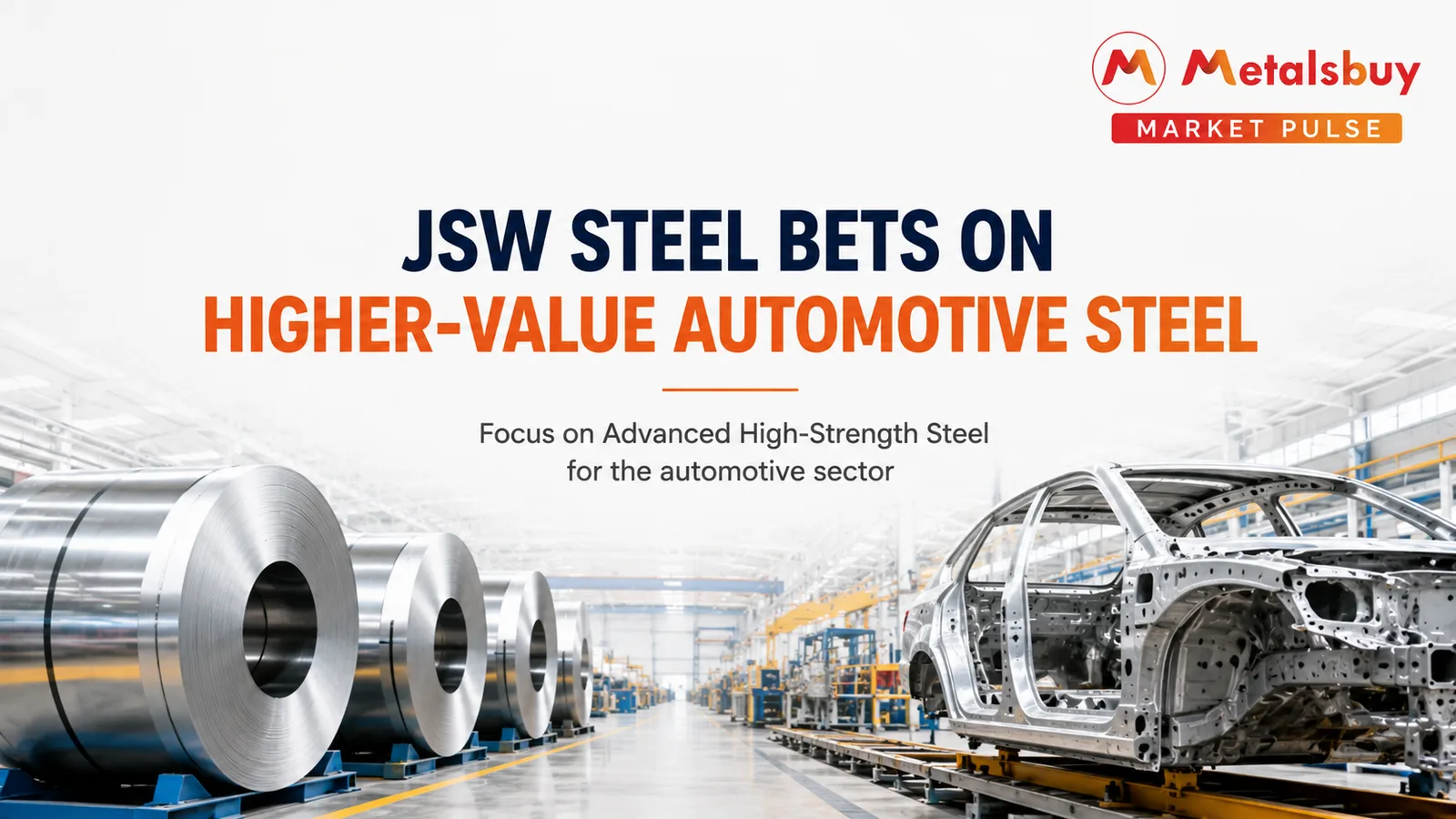
JSW Steel is adding another 500,000 tonnes of annual galvanising capacity at its Toranagallu plant in Karnataka. The company has selected ANDRITZ to supply the new continuous galvanising line, which is expected to start in 2028. The move is less about simply producing more steel and more about making steel for a segment where specifications are higher and margins can be better.
What is being added
The new line will have an annual capacity of around 500,000 tonnes and will produce galvanised steel, including Advanced High-Strength Steel (AHSS) for automotive applications.
Some of the key numbers are:
- 500,000 tonnes: annual production capacity
- 1,900 mm: maximum strip width
- 2.60 mm: maximum strip thickness
- 1,480 MPa: tensile strength of the high-strength grades
- 180 metres/minute: maximum processing speed
- 2028: planned start-up
The focus on AHSS is important. Car manufacturers are looking for steel that is lighter but still strong enough to improve safety and reduce vehicle weight. This is becoming even more relevant as automakers work on fuel efficiency and electric vehicles.
Why automotive steel matters
For a steel producer, moving towards specialised products can be more useful than simply adding standard capacity. Automotive steel has tighter requirements around strength, surface quality and consistency, which also makes it harder for every producer to compete in the segment.
JSW is already present in automotive and coated steel products. The new line will allow the company to increase its ability to supply higher-grade galvanised steel from its Toranagallu operations rather than relying only on conventional flat steel products.
India’s auto sector is creating the demand
India's automobile industry has been moving towards more advanced steel grades as vehicle makers increase localisation and introduce newer models. Electric vehicles are adding another layer to this trend because manufacturers are looking for lighter materials without compromising structural strength.
That gives steelmakers an opportunity to move up the value chain. Instead of competing mainly on volumes and basic steel prices, companies can focus on products designed for specific industries and applications.
JSW is expanding its value-added portfolio
The Toranagallu project is not an isolated capacity addition. JSW Steel has been investing in downstream facilities, including cold rolling and galvanising capacity, as it looks to increase its share of value-added steel products. Its existing Vijayanagar operations already include continuous galvanising and other processing facilities serving automotive, appliance and engineering customers.
The latest investment fits into that broader strategy. The company will not disclose the value of the ANDRITZ order, but the line's planned capacity gives an indication of the scale of the expansion.
What to watch
The interesting part will be how quickly this additional capacity gets absorbed once the line starts operating. Automotive steel requires customer approvals and consistent quality, so ramping up a new line is different from simply increasing production of conventional steel.
For JSW Steel, the bigger opportunity is to build a stronger position in India's automotive supply chain. As vehicle manufacturers demand lighter and stronger materials, specialised steel could become an increasingly important part of the Indian steel market.
The new galvanising line is therefore not just another capacity addition. It is a move towards selling more specialised steel and getting closer to the requirements of India's growing automobile industry.
Disclaimer: This article is for information and market discussion purposes only. It is based on publicly available information and should not be considered investment or trading advice.