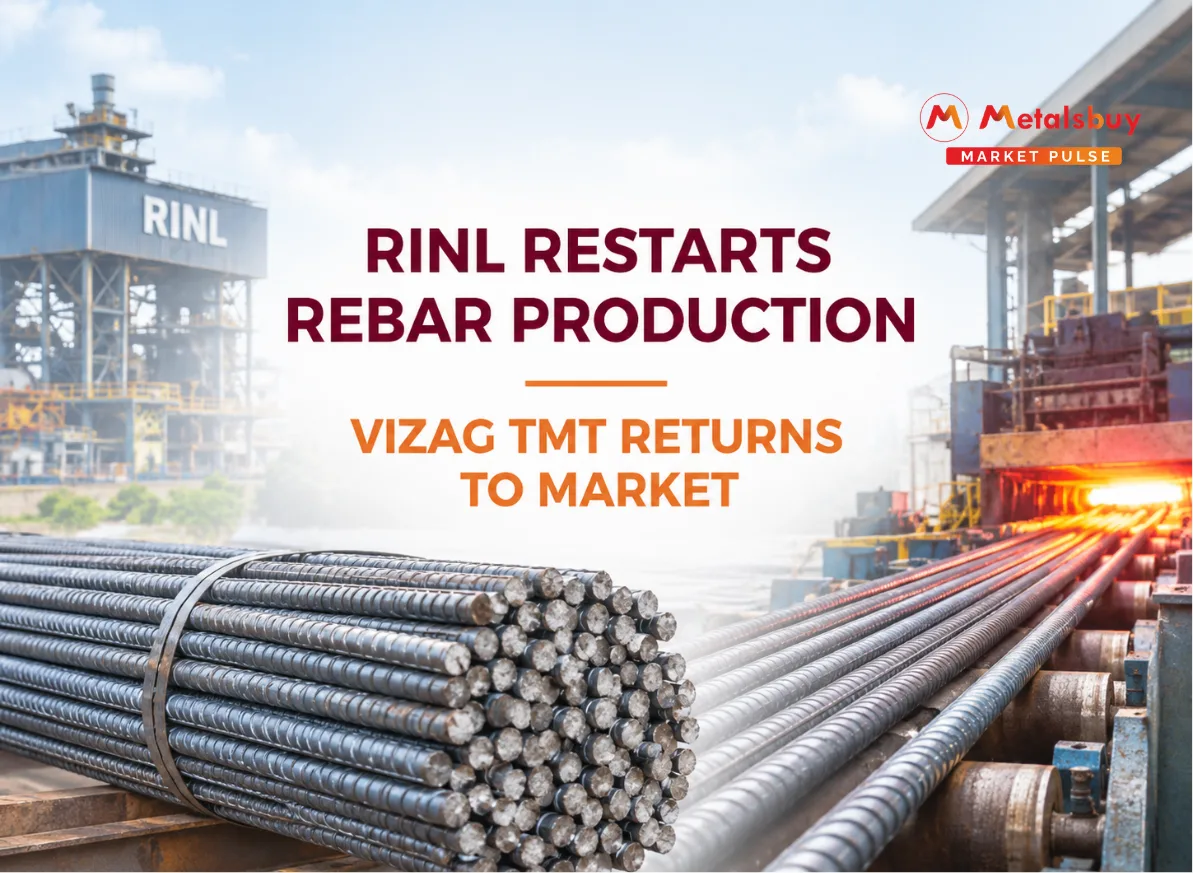
The Indian steel sector is witnessing a highly positive operational revival at one of its major coastal manufacturing hubs. State-owned steel producer Rashtriya Ispat Nigam Limited, which operates the massive Visakhapatnam Steel Plant, has officially resumed its rebar rolling operations after a multi-month hiatus. By successfully bringing its highly sought-after Thermo-Mechanically Treated rebars back into the open market starting mid-October 2026, the company is directly addressing the surging demand from the domestic construction sector. For the broader metals ecosystem and local stakeholders, this strategic resumption serves as a vital step toward restoring the ailing mill's long-term economic viability and strengthening the supply chain for national infrastructure projects.
Navigating operational hurdles to restore market presence
The return of the branded 'Vizag TMT' steel products to the commercial market marks the successful resolution of significant internal operational challenges. The continuous supply of these primary long products is the fundamental revenue engine for the coastal steelmaker. According to company officials, Rashtriya Ispat Nigam Limited was forced to completely halt its rebar rolling operations back in June 2026. This prolonged production pause was not driven by a lack of downstream market demand, but rather by the urgent necessity to conduct extensive, critical repair work across its primary coke oven batteries. Operating massive integrated blast furnaces requires a continuous, high-quality feed of metallurgical coke, and the structural integrity of the coke ovens is non-negotiable for safe and efficient smelting.
Following the successful completion of these complex backend repairs, the management moved swiftly to restart the downstream rolling mills in mid-October. The resumption of these specific operations has immediately augmented the open-market availability of the company's prime construction steel. The ability of the engineering and operational teams to navigate these technical hurdles and safely restart the mills highlights the underlying resilience of the public sector enterprise. The renewed production lines are now actively turning out Thermo-Mechanically Treated rebars in a wide variety of dimensions, ensuring that regional dealers and major construction firms once again have uninterrupted access to this trusted, high-grade structural material.
Capitalizing on the post monsoon construction boom
The timing of this production restart is exceptionally strategic, perfectly aligning with the shifting seasonal dynamics of the Indian construction and real estate sectors. Throughout the heavy monsoon months of July, August, and September, large-scale civil engineering projects naturally experience a massive deceleration in their execution speeds. However, as the weather clears in October, construction activities across the subcontinent violently accelerate. The central government is currently deploying multi-billion dollar capital expenditure budgets to modernize national highway networks, expand urban metro systems, and drive large-scale public housing initiatives. Concurrently, private real estate developers are ramping up residential and commercial projects to capitalize on the festive season demand.
Thermo-Mechanically Treated rebars form the absolute structural skeleton for all of these reinforced concrete projects due to their superior tensile strength, high ductility, and exceptional earthquake resistance. By pumping massive volumes of fresh rebar into the market right at the onset of this peak consumption window, Rashtriya Ispat Nigam Limited is positioning itself to capture highly lucrative, high-volume orders. The reintroduction of the company's products helps alleviate regional supply constraints, particularly in the southern and eastern industrial corridors, preventing localized price spikes and ensuring that major infrastructure projects remain securely on schedule.
Strengthening the financial resilience of the state owned mill
From a macroeconomic and corporate governance perspective, restarting the rebar production lines is the most critical component in the ongoing effort to secure the financial health of the Visakhapatnam Steel Plant. Rashtriya Ispat Nigam Limited has historically faced intense financial pressures, heavily exacerbated by its lack of captive iron ore and coal mines. Operating entirely on merchant raw materials requires the company to maintain highly active, continuous revenue streams to cover its elevated operational overheads and debt-servicing obligations. Because long products like TMT rebars constitute a massive, high-margin portion of the company's overall product portfolio, halting their production for nearly four months severely restricted cash flow generation.
The successful mid-October restart acts as a massive financial catalyst. By converting raw materials into finished, saleable construction steel, the company is rapidly unblocking its working capital and generating the liquid cash required to sustain daily operations and fund further plant modernizations. Furthermore, a highly active, producing plant sends a strong signal of confidence to financial institutions, secondary vendors, and the thousands of direct and indirect workers reliant on the massive industrial ecosystem in Andhra Pradesh. Ultimately, the successful revival of rebar production proves that this critical national asset retains the operational bandwidth to navigate severe technical challenges, returning to its rightful position as a reliable, high-volume supplier fueling India's ongoing economic expansion.