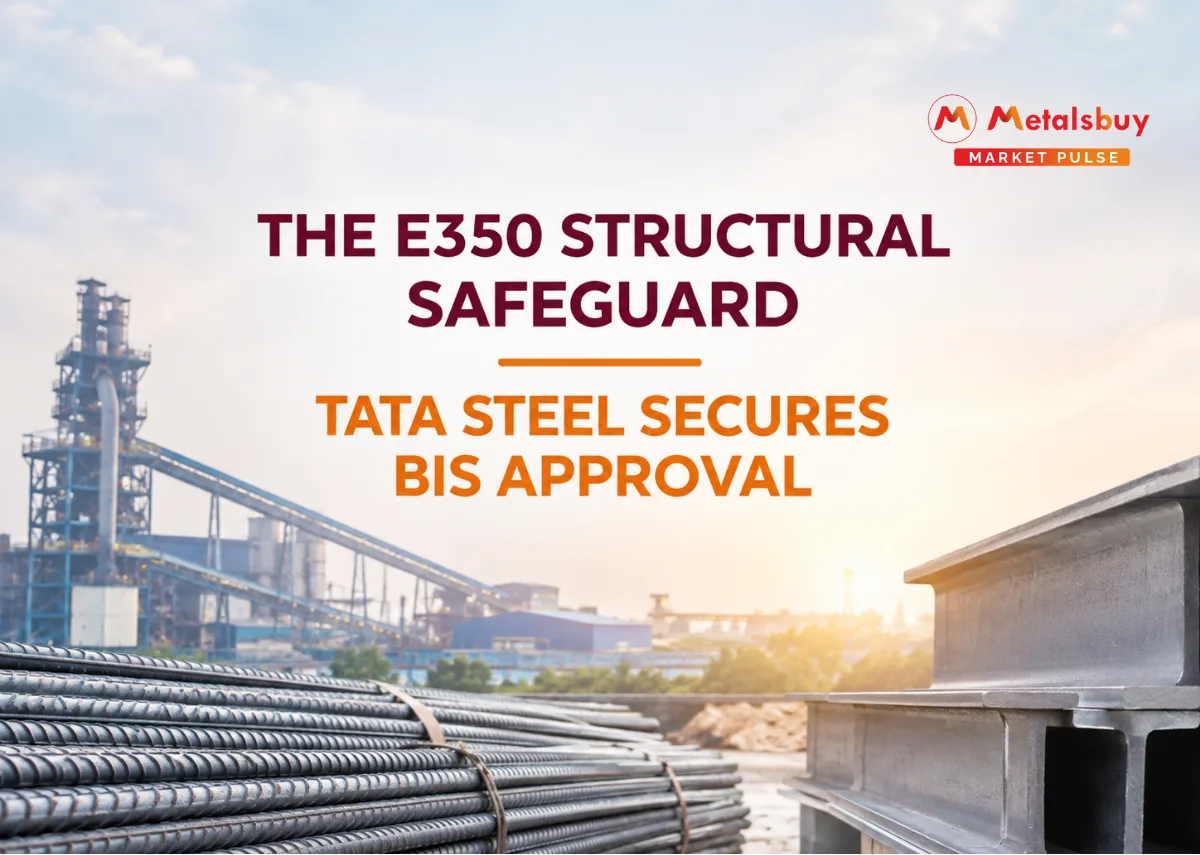
The Indian infrastructure and construction sector is receiving a major technological upgrade as domestic manufacturing giant Tata Steel introduces a specialized hot-rolled structural steel designed to withstand extreme thermal stress. This breakthrough material development promises to drastically improve the safety profile and structural longevity of industrial, commercial, and warehousing facilities across the nation.
The relentless pace of urban development and industrialization across India has brought building safety, particularly fire resilience, to the absolute forefront of structural engineering. Addressing this critical requirement, Tata Steel has officially launched an advanced, hot-rolled fire-resistant E350 structural steel grade. For the broader architectural and heavy construction ecosystem, this development signifies a massive leap forward in material science. By successfully integrating superior heat-withstanding capabilities directly into the foundational steel, the manufacturer is providing developers with a highly reliable structural defense mechanism that significantly delays building collapse during severe fire incidents, ultimately safeguarding human lives and high-value assets.
Engineering resilience through advanced microalloying
The unique selling proposition of this newly developed E350 grade steel lies entirely in its exceptional thermal endurance. Under normal circumstances, standard structural steel begins to rapidly lose its yield strength and load-bearing capacity when ambient temperatures exceed 400 degrees Celsius, often leading to sudden and catastrophic structural failures during a major building fire.
Tata Steel’s research and development division has successfully mitigated this vulnerability through complex microstructural engineering. The newly developed material utilizes a highly sophisticated alloy design that incorporates specific microalloying elements. This proprietary chemical composition actively stabilizes the steel's molecular structure under intense heat. As a result, the fire-resistant E350 steel is proven to retain an impressive two-thirds of its room-temperature yield strength even when exposed to scorching temperatures of 600 degrees Celsius for a continuous duration of up to three hours. This three-hour window of structural integrity is an absolute game-changer for emergency response teams, providing crucial extended time for building evacuation and firefighting operations before any risk of a structural cave-in.
Securing commercial viability with bis certification
Developing an advanced material in a laboratory is only the first step; ensuring its wide-scale adoption in public and private infrastructure requires strict regulatory validation. Recognizing this, Tata Steel has actively pursued and secured comprehensive domestic certification for its new product line.
The hot-rolled fire-resistant structural steel has officially received the Bureau of Indian Standards (BIS) certification under the IS 15103 regulatory framework. This specific certification is critical, as it formally places the product within India's established national standards for fire-resistant materials. For civil engineers, architects, and government procurement agencies, the BIS nod removes any compliance hurdles, allowing them to confidently specify the E350 grade in blueprints for upcoming mega-projects. By operating strictly within recognized national safety codes, the company ensures that its material can be seamlessly integrated into both highly regulated public infrastructure contracts and private commercial developments without facing bureaucratic bottlenecks.
Supporting the boom in pre engineered industrial structures
The physical application of this advanced steel is perfectly synchronized with the changing dynamics of the Indian construction market. The product is specifically engineered to be fabricated into structural hollow tubes, beams, and heavy sections, making it an ideal foundational material for the rapidly expanding pre-engineered building (PEB) sector.
As India's e-commerce, logistics, and manufacturing sectors experience explosive growth, there is a massive parallel demand for large-scale warehouses, distribution centers, and industrial factories. These modern facilities are typically characterized by vast, open floor areas and exceptionally long roof spans, which are traditionally highly vulnerable to rapid structural degradation during a fire. By deploying the fire-resistant E350 grade in the primary load-bearing columns and roof trusses of these pre-engineered buildings, developers can fundamentally alter the fire dynamics of the structure. While comprehensive fire safety still relies on active detection and sprinkler systems, integrating fire-resistant steel provides an invaluable layer of passive protection that drastically minimizes property damage and post-fire reconstruction costs.
Aligning with long term capacity and safety goals
From a broader corporate and macroeconomic perspective, the launch of this specialized material perfectly aligns with Tata Steel's strategy to move up the global value chain. The company, which boasts a massive annual crude steel capacity of 36 million tonnes, is actively pivoting to ensure a larger portion of its portfolio consists of high-margin, value-added products rather than standard commodity-grade steel.
By establishing a strong presence in the niche market of advanced safety materials, Tata Steel effectively insulates its operational margins from the severe pricing volatility that frequently impacts basic carbon steel products in the international seaborne market. Furthermore, this innovation reinforces the company's commitment to sustainable and resilient urban development. As the Indian government continues its multi-billion dollar capital expenditure on modernizing the nation's civic and industrial infrastructure, the availability of domestically produced, BIS-certified fire-resistant steel guarantees that the buildings of tomorrow will not only be constructed faster but will be fundamentally safer and more resilient for decades to come.