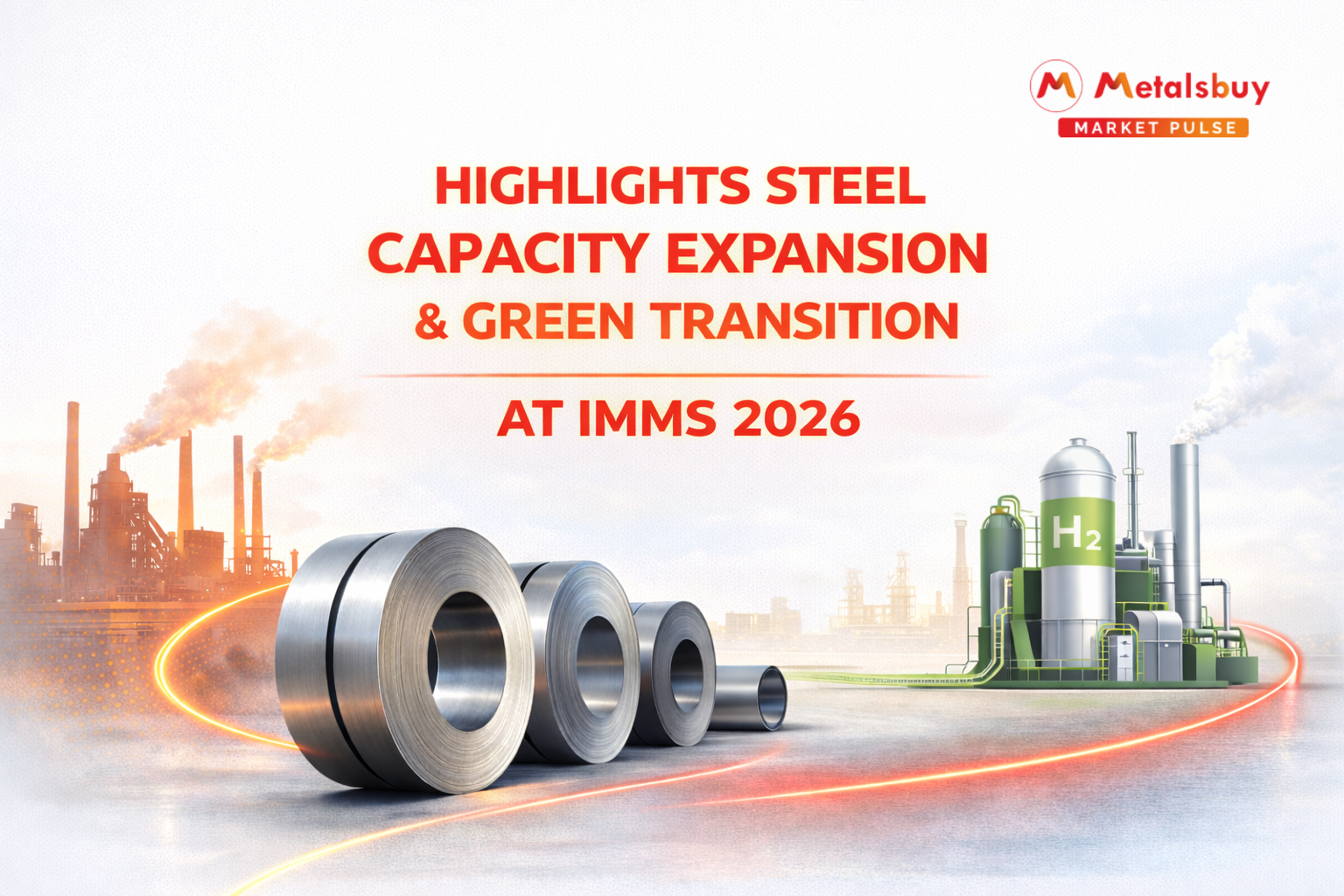
At the International Metals and Metallurgy Summit IMMS 2026, Steel Authority of India Limited SAIL outlined a comprehensive strategy focused on capacity expansion, modernization, and progressive decarbonization. The announcements signal a dual focus on strengthening domestic steel supply while aligning operations with long term sustainability goals.
The presentation reflects a broader structural shift in India’s steel industry where scale expansion and green transition are being pursued simultaneously rather than sequentially.
Capacity Expansion Backed by Higher Capital Allocation
SAIL confirmed a significant increase in capital expenditure for FY26, with planned investments of approximately ₹7,500 crore. This represents a substantial increase over the previous fiscal year and is primarily directed toward brownfield expansion, plant modernization, and productivity enhancement initiatives.
The expansion strategy focuses on:
-
Increasing crude steel and hot metal capacity across integrated plants
-
Upgrading rolling mills to improve product mix and value realization
-
Enhancing operational efficiency and reducing specific energy consumption
SAIL’s long term capacity roadmap aims to progressively move toward the mid 20 million tonne range through phased expansion across its key facilities. Brownfield expansion remains the preferred route, allowing incremental capacity addition with lower execution risk and better asset utilization.
Decarbonization Strategy Moves from Vision to Execution
At IMMS 2026, SAIL emphasized that sustainability is no longer a future aspiration but an operational priority.
The green steel transition framework includes:
-
Energy efficiency upgrades across reheating and rolling operations
-
Waste heat recovery systems to reduce fuel intensity
-
Increased use of renewable energy inputs
-
Feasibility studies for hydrogen based direct reduction processes
-
Evaluation of carbon capture and utilization pathways
Steel production contributes approximately 7 to 8 percent of global carbon emissions. For an integrated steel producer like SAIL, reducing carbon intensity while maintaining cost competitiveness is central to long term viability.
The company’s approach suggests a phased transition model where immediate emission reductions are achieved through operational optimization, while breakthrough technologies are introduced over the medium to long term.
Technology Partnerships and Modernization Initiatives
SAIL indicated that collaborations with global engineering and technology providers are being strengthened to accelerate modernization and sustainability initiatives.
Recent expansion packages across casting and rolling segments highlight the company’s intent to:
-
Improve yield and throughput
-
Enhance product quality consistency
-
Reduce energy intensity per tonne of steel
Such partnerships reduce technology risk and improve execution reliability during large scale transformation projects.
Implications for the Indian Steel Market
The announcements at IMMS 2026 carry broader implications for India’s steel ecosystem.
1. Supply Stability
Incremental capacity addition supports India’s growing steel demand, which continues to be driven by infrastructure development, construction, railways, defense, and capital expenditure programs. With India’s crude steel production already exceeding 130 million tonnes annually, expansion by a large public sector player enhances supply visibility.
2. Cost Competitiveness
Energy efficiency measures and modernization efforts help improve conversion costs and protect margins in a volatile raw material environment. Lower specific fuel consumption and improved operational discipline strengthen financial resilience.
3. Green Steel Readiness
As domestic and international buyers increasingly prioritize low carbon procurement, early adoption of green steel practices may offer competitive advantage. Government policies and ESG driven investment frameworks are gradually encouraging carbon transparency and emission benchmarking across the steel value chain. SAIL’s structured transition strategy positions it to participate meaningfully in emerging low carbon steel demand segments.
Execution Considerations
While the roadmap is constructive, successful implementation will depend on:
-
Timely project execution
-
Capital discipline
-
Availability of competitive renewable energy and hydrogen supply
-
Supportive policy environment
Brownfield expansion reduces execution complexity compared to greenfield projects, but disciplined management remains critical.
Market Perspective
SAIL’s presentation at IMMS 2026 reflects a balanced industrial strategy. The company is not pursuing aggressive expansion without sustainability alignment. Instead, it is integrating capacity growth with gradual emission intensity reduction.
For the broader market, this signals:
-
Continued confidence in India’s steel demand trajectory
-
Strengthening commitment toward cleaner steel production
-
Greater alignment between industrial growth and climate objectives
Conclusion
SAIL’s expansion and green transition roadmap presented at IMMS 2026 reinforces confidence in India’s steel sector. By combining higher capital allocation with structured decarbonization planning, the company is positioning itself for both scale and sustainability.
The strategy reflects stability, preparedness, and forward looking industrial planning, factors that support constructive long term sentiment for India’s steel ecosystem.