KEY HIGHLIGHTS
- Consolidated Net Profit: ₹227.85 crore, reflecting a strong 36.28% year-on-year growth.
- Total Sales Revenue: ₹1,374.78 crore, marking a robust 21.09% increase from the previous year.
- Standalone Net Profit: ₹161 crore, representing a steady 25% upward growth trajectory.
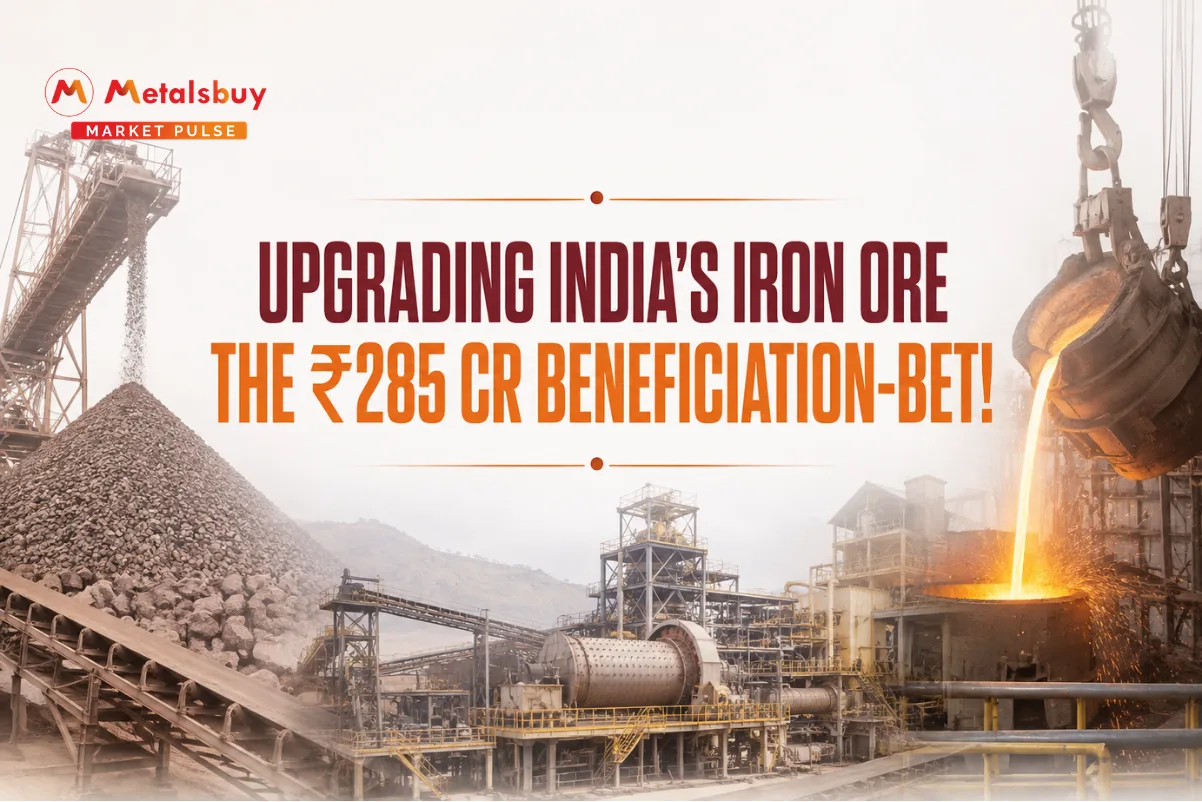
- Strategic Capex Allocation: ₹285 crore committed for a state-of-the-art iron ore beneficiation plant.
- Project Commissioning Timeline: Beneficiation facility slated for completion by the second quarter of FY28.
- Manganese Ore Sales: Delivered a remarkable 99% volume jump to 0.97 lakh tonnes.
- Iron Ore Production: Scaled up by 27% year-on-year to reach 13.61 lakh tonnes.
MARKET ANALYSIS
India’s prominent mining and steel manufacturing entity, Sandur Manganese & Iron Ores Limited, has delivered a stellar financial performance for the first quarter of the fiscal year 2026-27. Setting a robust pace for the financial year, the company not only recorded significant double-digit profit margins but also announced forward-looking capital expenditures aimed at long-term capacity building. The April-June quarter results reflect a highly favorable operating environment for the mining sector, backed by exceptional domestic resource absorption.
Sandur Manganese posted a consolidated net profit of ₹227.85 crore for the quarter ended June 30, 2026. This marks a substantial 36.28 percent increase compared to the ₹166.63 crore reported in the corresponding quarter of the previous fiscal year. This bottom-line expansion is directly supported by a 21.09 percent surge in total revenue from operations, which climbed to ₹1,374.78 crore against ₹1,135.38 crore year-on-year. On a standalone basis, the company exhibited a 25 percent upward trajectory in net profit, reaching ₹161 crore, while standalone revenue witnessed a 27.81 percent expansion to ₹540.31 crore.
The operational metrics behind these financial figures highlight the mining segment as the absolute growth engine for the enterprise. Manganese ore production experienced a 24 percent year-on-year expansion, hitting 1.50 lakh tonnes. The sales volume for manganese delivered an astounding 99 percent jump, reaching 0.97 lakh tonnes. Iron ore operations mirrored this success, with extraction growing 27 percent year-on-year to 13.61 lakh tonnes and sales volumes increasing 13 percent to 9.64 lakh tonnes.
Profitability was further insulated by improved average realisations across the board. Manganese ore saw a 15 percent sequential price improvement to ₹7,954 per tonne, and iron ore realisations climbed 9 percent to ₹3,095 per tonne. Financially, the company remains on incredibly solid footing with a conservative consolidated gross debt-to-equity ratio of 0.27 times. Standalone cash and cash equivalents stand at a healthy ₹534 crore, while the reporting period also saw a strong EBITDA realization of ₹358.23 crore. Strategically, the management rolled out the unified ‘Royal Sandur Group’ brand architecture, signaling an aggressive push toward diversified business avenues following the strategic integration of Arjas Steel.
WHAT IT MEANS FOR THE STEEL INDUSTRY
The exceptional financial health of upstream raw material suppliers like Sandur Manganese sends a highly positive signal throughout the entire Indian steel manufacturing value chain. The most critical takeaway for downstream producers is the company’s formal announcement of a massive ₹285 crore investment to construct a state-of-the-art iron ore beneficiation plant at its mining facilities.
Beneficiation is an essential processing step that upgrades lower-grade iron ore into a higher iron content product while efficiently removing unwanted impurities like alumina and silica. As Indian steel manufacturers increasingly prioritize operational efficiency and carbon footprint reduction, the demand for premium, beneficiated ore has skyrocketed. Feeding high-grade ore into blast furnaces directly reduces coke consumption, lowers slag generation, and significantly decreases greenhouse gas emissions, pushing the industry closer to its green steel mandates.
The company's proactive capacity expansion, scheduled for commissioning in the second quarter of the fiscal year 2027-28, ensures a stabilized, high-quality raw material pipeline for domestic steel mills. This capital injection demonstrates profound confidence in the long-term consumption narrative of Indian steel. It confirms that mining companies are actively aligning their output capabilities with the national target of achieving 300 million tonnes per annum of steel production capacity by 2030. Furthermore, the strategic expansion into downstream production points toward an industry-wide trend of consolidation. When raw material giants integrate forward into actual steelmaking, it streamlines supply chains, optimizes production costs, and ultimately fosters a more competitive pricing environment that benefits the end consumer.
MARKET OUTLOOK
Moving forward, the operational momentum established in the first quarter places the newly unified Royal Sandur Group in a highly advantageous position for the remainder of FY27. The consistent uptick in sequential realisations for both iron and manganese ores suggests that domestic industrial demand remains heavily insulated from broader global macroeconomic fluctuations.
The Indian government’s relentless push for infrastructure development, alongside robust activities in the automotive, shipbuilding, and construction sectors, guarantees sustained raw material consumption in the coming quarters. As the company transitions under its new brand identity, market analysts anticipate accelerated diversification efforts that will likely branch further into specialized steel grades and captive energy sectors to hedge operational costs.
While temporary volatilities in international commodity prices and global freight rates remain standard industry variables, Sandur Manganese is well-protected. The company's aggressive volume growth, pristine balance sheet backed by stable CRISIL and ICRA A+ credit ratings, and clear focus on value-added infrastructure create a formidable financial buffer. Investors and industry stakeholders can expect the company to maintain its upward growth trajectory. By leveraging its enhanced processing capabilities and recent strategic acquisitions, the enterprise is perfectly positioned to capture premium pricing margins in the near future. The broader sentiment remains overwhelmingly optimistic, spotlighting a resilient and dynamic mining sector fully equipped to underwrite India's rapidly expanding industrial revolution.