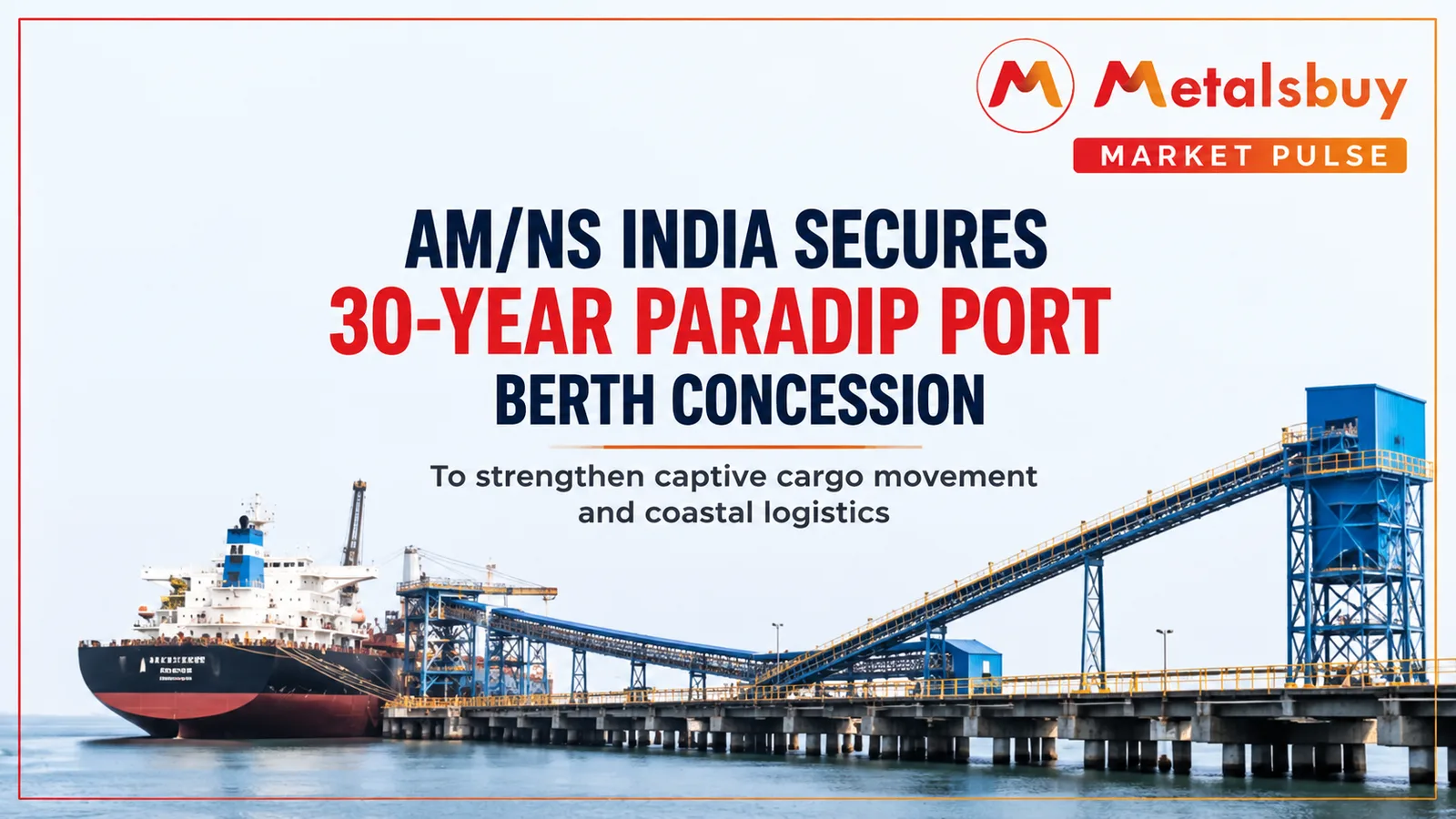
AM/NS India has secured a 30-year concession for the mechanisation and operation of the CQ-III berth at Paradip Port. The berth will be used on a captive basis by AMNS Paradip Logistics Pvt Ltd, a special-purpose vehicle linked to the steelmaker, primarily to move iron ore pellets through a dedicated logistics chain. The arrangement is a significant step for AM/NS India because it brings another part of its raw material movement under direct control.
1. A dedicated route from pellet plant to port
The biggest part of the project is not just the berth itself, but how the cargo will reach it. The plan involves a fully mechanised conveyor system connecting AM/NS India's pellet plant complex directly to the CQ-III berth. From there, pellets can be loaded onto ships for coastal movement, reducing the need for conventional road-based handling at different stages of the journey.
This kind of dedicated infrastructure matters for bulk commodities. Iron ore pellets move in large volumes, and every additional handling point adds time and cost. A direct conveyor-to-ship arrangement can make the movement more predictable while also reducing dependence on trucks for the port leg.
2. The cargo is headed towards Hazira
The berth will support the coastal movement of iron ore pellets from Odisha to AM/NS India's steelmaking operations in Hazira, Gujarat. Coastal shipping is already an established part of the company's logistics network, but the dedicated berth is expected to make the system more integrated.
The project is reportedly designed around a 10 million tonnes per annum fully mechanised cargo handling capacity. That gives an indication of the scale AM/NS India is planning for. For a steel producer operating facilities across different parts of the country, controlling how raw materials move between those locations can be almost as important as securing the raw material itself.
3. Why captive infrastructure makes sense
Steel companies spend heavily on mines, pellet plants and manufacturing facilities, but logistics often remains dependent on external infrastructure. A captive berth changes that equation to some extent. AM/NS India will have a dedicated facility designed around its own cargo requirements rather than relying entirely on common-user port infrastructure.
The advantage is not limited to cost. Better control over loading schedules and cargo movement can reduce bottlenecks, particularly when volumes increase. For a company moving millions of tonnes of bulk material every year, even small improvements in turnaround time can make a meaningful difference over the long run.
4. A 30-year bet on coastal logistics
The 30-year concession shows that this is not being treated as a short-term logistics solution. AM/NS India is building infrastructure around a supply chain that it expects to use for decades. Paradip's location on the east coast and its proximity to Odisha's mineral belt make it a natural point for moving bulk cargo towards steel plants on India's western coast.
There is also an environmental angle to the project. Moving large volumes by conveyor and coastal shipping can reduce dependence on road transport. AM/NS India has positioned the project as part of a more efficient and environmentally sustainable cargo movement system.
5. The bigger picture is supply-chain control
The latest concession is another example of steelmakers looking beyond the factory gate. Producing steel efficiently depends on a long chain involving mines, processing plants, railways, ports and shipping. Any disruption in that chain can eventually affect production costs.
For AM/NS India, the Paradip berth adds one more controlled link between its Odisha operations and Hazira. The project may not add a single tonne of steelmaking capacity, but it could make the movement of a critical raw material more efficient. And in a business where logistics costs can be substantial, that can be just as strategically important as adding a new furnace.
Disclaimer: This article is based on publicly available information and is intended for general industry and market discussion only. It does not constitute investment, trading or financial advice.