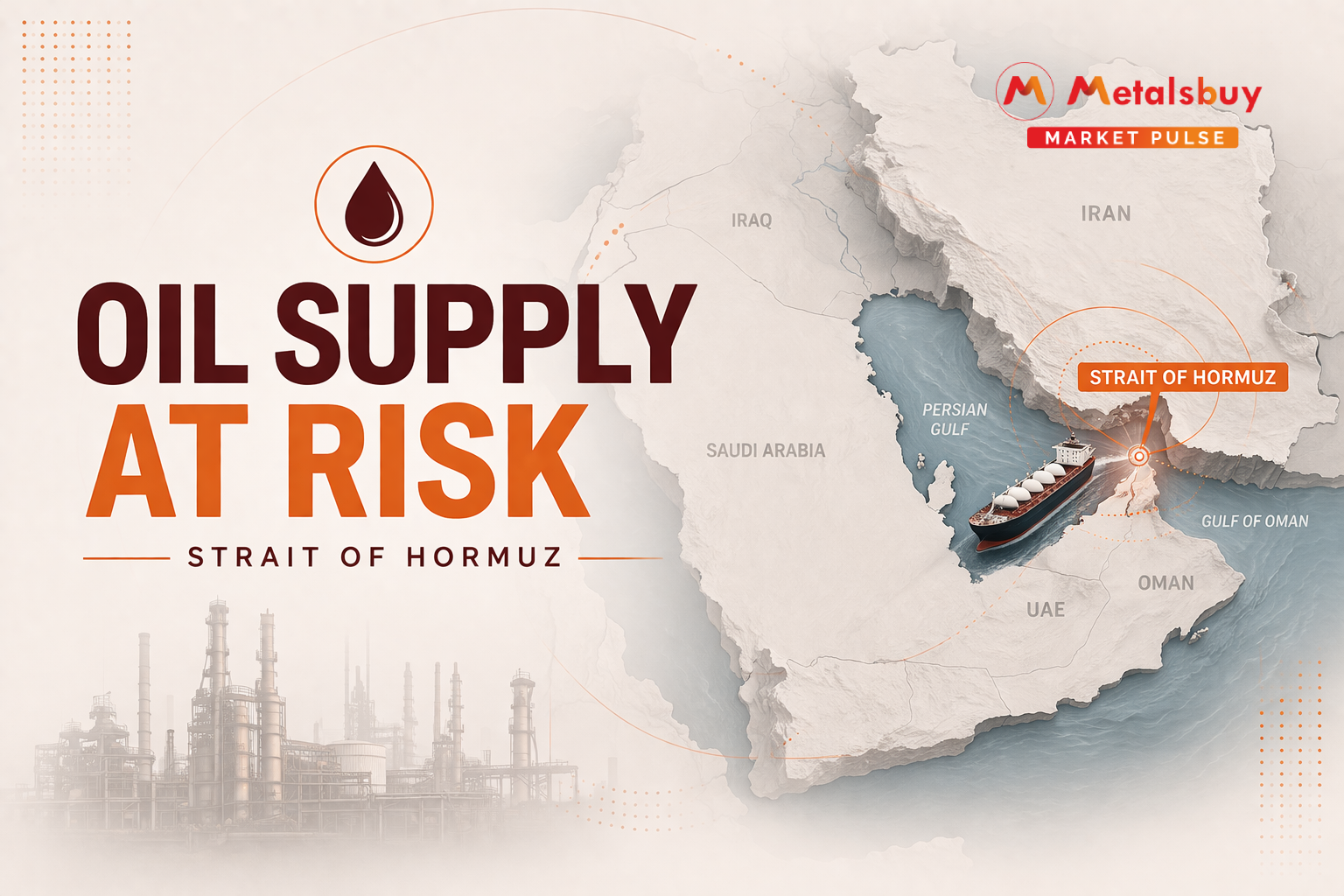
Key Highlights:
- Rising geopolitical tensions near the Strait of Hormuz disrupt oil movement
- Brent crude moves above $90/bbl (approx.), gaining ~3–5% in recent sessions
- Nearly 20% of global oil supply passes through the Strait of Hormuz
- Increased freight, insurance, and risk premiums on oil shipments
- Concerns over global supply chain disruptions and inflationary pressure
- Impact likely across energy, metals, and manufacturing sectors
Geopolitical Tensions Trigger Fresh Volatility in Global Oil Markets
Global oil markets have entered a phase of renewed volatility following escalating disruptions around the Strait of Hormuz, one of the world’s most critical oil transit chokepoints. The latest developments, as reported by Reuters, have led to a sharp uptick in crude oil prices, reflecting heightened concerns over supply security and logistical bottlenecks. With nearly one-fifth of the world’s oil passing through this narrow maritime corridor connecting the Persian Gulf to global markets, even minor disruptions can trigger disproportionate reactions across commodity markets.
Recent incidents involving vessel movements, security alerts, and heightened military presence in the region have contributed to a surge in risk perception among traders and shipping companies. As a result, freight rates and insurance premiums for oil tankers transiting through the Strait have risen significantly, adding to the overall landed cost of crude. This has translated into immediate upward pressure on benchmark crude prices, with Brent crude reportedly gaining between 3% and 5% in recent trading sessions.
The implications of these developments extend far beyond the oil market. Energy costs play a foundational role in industrial production, and any sustained increase in crude prices is likely to cascade across multiple sectors. For steel and metals industries in particular, higher energy costs directly impact production economics, influencing everything from raw material processing to logistics. In countries like India, which rely heavily on imported crude oil, such price movements can also widen trade deficits and exert pressure on currency stability.
From a supply chain perspective, the Strait of Hormuz remains a critical artery not only for oil but also for liquefied natural gas (LNG) shipments. Disruptions in this region can therefore affect both fuel availability and pricing across global markets. Industries dependent on gas-based processes, including certain segments of steel production, may face additional cost pressures if LNG supplies are constrained or rerouted.
Market participants are also closely monitoring the potential for escalation. Any prolonged disruption could lead to strategic stockpiling by major economies, further tightening available supply in the spot market. At the same time, producers outside the Gulf region may attempt to capitalize on higher prices by increasing output, though such adjustments typically lag behind immediate market reactions.
Another critical dimension is the impact on inflation. Rising oil prices tend to feed directly into transportation and manufacturing costs, which in turn influence consumer prices. Central banks may face renewed challenges in managing inflationary pressures, particularly in economies that are still navigating post-pandemic recovery dynamics. This creates a complex macroeconomic environment where energy security, inflation control, and industrial growth become deeply interconnected.
For commodity markets, including metals and mining, the ripple effects are already visible. Increased fuel costs can elevate mining expenses, transportation charges, and overall supply chain costs, potentially leading to upward pressure on commodity prices. Steel producers, in particular, may need to recalibrate their pricing strategies to maintain margins in the face of rising input costs.
In conclusion, the recent surge in oil prices driven by disruptions in the Strait of Hormuz underscores the fragile nature of global energy supply chains. While the immediate impact is being felt in crude markets, the broader implications span across industries and geographies. As geopolitical uncertainties persist, market participants will need to remain vigilant, adapting strategies to navigate a landscape increasingly defined by volatility and interconnected risks.