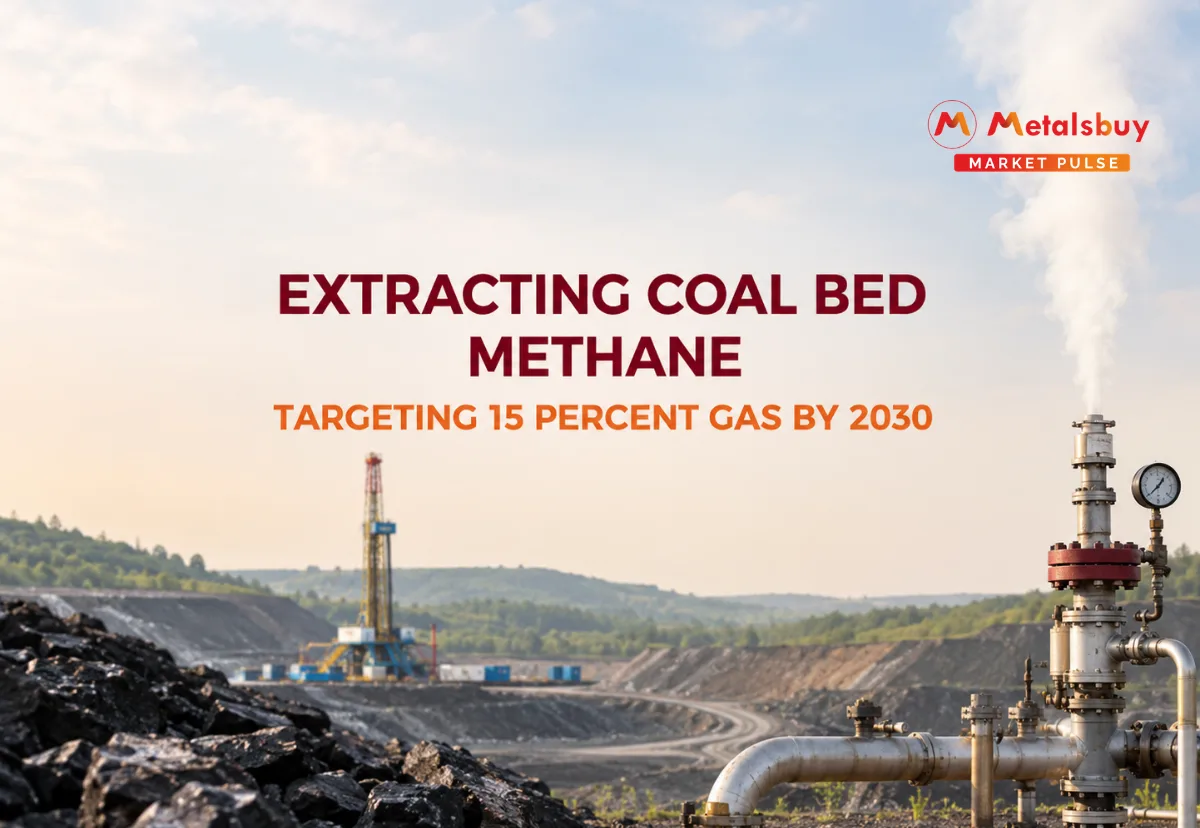
India’s journey towards absolute energy self-reliance has achieved another highly strategic milestone this week. State-owned Maharatna enterprise Oil India Limited has officially executed a major exploration contract for a new Coal Bed Methane block located in the mineral-rich Singrauli district of Madhya Pradesh. Spanning an expansive 272 square kilometers, this newly acquired block represents a massive push by the government and domestic energy producers to monetize unconventional hydrocarbon resources. By aggressively tapping into these clean-burning alternative fuels, India is proactively building a robust domestic gas ecosystem, actively reducing its vulnerability to volatile international energy markets and expensive foreign imports.
Unlocking clean energy potential from central indian coal seams
The acquisition of the Singrauli block is a highly calculated geographical and geological play by Oil India Limited. The Singrauli region is already globally recognized for housing some of the thickest and most productive coal seams in the country, traditionally serving as the absolute backbone for regional thermal power generation.
However, extracting Coal Bed Methane shifts the focus from burning solid fossil fuels to capturing the pure natural gas trapped within the coal matrix itself. During the natural coalification process, massive volumes of methane are generated and stored under immense pressure within the pores and fractures of the coal seams. By drilling highly specialized extraction wells and systematically pumping out the groundwater to reduce the hydrostatic pressure, the trapped methane gas is released and safely captured at the surface.
This specific 272 square kilometer block in Singrauli is estimated to hold substantial recoverable reserves. Extracting this gas provides a double-edged benefit for the industrial sector. Firstly, it provides a high-quality, clean-burning fuel that can be easily fed into the national gas grid. Secondly, capturing this methane before any future commercial coal mining takes place drastically improves mine safety by removing explosive gases, while preventing the methane—a potent greenhouse gas—from escaping naturally into the atmosphere.
Accelerating the national shift toward a gas based economy
From a macroeconomic perspective, this exploration contract is perfectly synchronized with the central government's aggressive energy transition mandates. The Ministry of Petroleum and Natural Gas is currently executing a comprehensive roadmap to transform India into a gas-based economy.
Currently, natural gas accounts for roughly 6 to 6.5 percent of India's primary energy mix. The government has set a firm, ambitious target to elevate this share to 15 percent by the year 2030. Achieving this massive jump requires a multi-pronged approach, as the nation currently imports approximately 50 percent of its natural gas requirements in the form of expensive, seaborne Liquefied Natural Gas. Relying so heavily on international markets exposes domestic industries, city gas distribution networks, and fertilizer plants to severe price shocks triggered by geopolitical conflicts or sudden supply chain bottlenecks.
By accelerating the exploration and commercialization of domestic Coal Bed Methane blocks like the one in Singrauli, Oil India is directly addressing this structural deficit. Every standard cubic meter of methane extracted from domestic soil acts as a direct substitute for imported fuel, conserving billions in foreign exchange reserves and providing highly predictable, stabilized energy pricing for domestic manufacturing industries.
Driving regional economic growth and infrastructural development
The physical execution of this exploration contract will also act as a massive economic catalyst for the state of Madhya Pradesh. Developing a 272 square kilometer hydrocarbon block requires an immense deployment of capital, heavy machinery, and specialized human resources.
During the initial exploration and appraisal phases, Oil India will invest heavily in conducting advanced seismic surveys, core drilling, and reservoir testing across the Singrauli district. This heavy industrial activity will naturally generate hundreds of direct and indirect employment opportunities for the local population. Furthermore, successful commercialization of the block will necessitate the construction of dedicated gas gathering stations, water treatment facilities, and high-pressure pipeline networks to evacuate the gas to the nearest national grid connection point. This localized infrastructure boom will provide a steady flow of high-value contracts to regional engineering firms, logistics providers, and heavy equipment operators, significantly elevating commercial activity in and around the mining belt.
Diversifying corporate assets for long term industrial resilience
For Oil India Limited, securing the Singrauli contract represents a vital step in diversifying its corporate portfolio. While the company has historically dominated traditional oil and natural gas production in the northeastern regions of Assam and Arunachal Pradesh, expanding its footprint into central India and unconventional assets guarantees long-term operational resilience.
As mature oilfields naturally face declining production curves over time, energy companies must continually replenish their reserves through aggressive exploration. By adding high-potential Coal Bed Methane assets to its portfolio, Oil India ensures that its production baseline remains growing and highly profitable for decades to come. As the company prepares to deploy its technical teams and drilling rigs to the Singrauli block, the domestic energy sector will be watching closely. A successful, high-yield extraction program here will undoubtedly serve as a powerful proof of concept, encouraging further investments into India’s vast, untapped unconventional energy reserves.