The state-owned mining giant has effectively shattered its own historical performance benchmarks during a traditionally challenging operational window, ensuring that the nation's thermal power plants remain incredibly well-stocked ahead of the peak winter season. The Indian energy and manufacturing sectors are receiving a massive operational boost as the country's primary fuel supplier demonstrates unprecedented execution capabilities. Coal India Limited has officially recorded its highest-ever monthly coal supplies and production figures for October in the ongoing 2026-27 financial year. Achieving these staggering volumetric milestones is particularly impressive given the severe external challenges the company faced, including unseasonal heavy rainfall, widespread festive holidays, and the logistical disruptions caused by a recent coastal cyclone. By completely neutralizing these seasonal bottlenecks and pushing its extraction machinery to absolute maximum limits, the Maharatna enterprise is providing a highly robust, secure energy foundation for the domestic economy as it accelerates into the busy third quarter.
Driving unprecedented volume growth across domestic supply chains
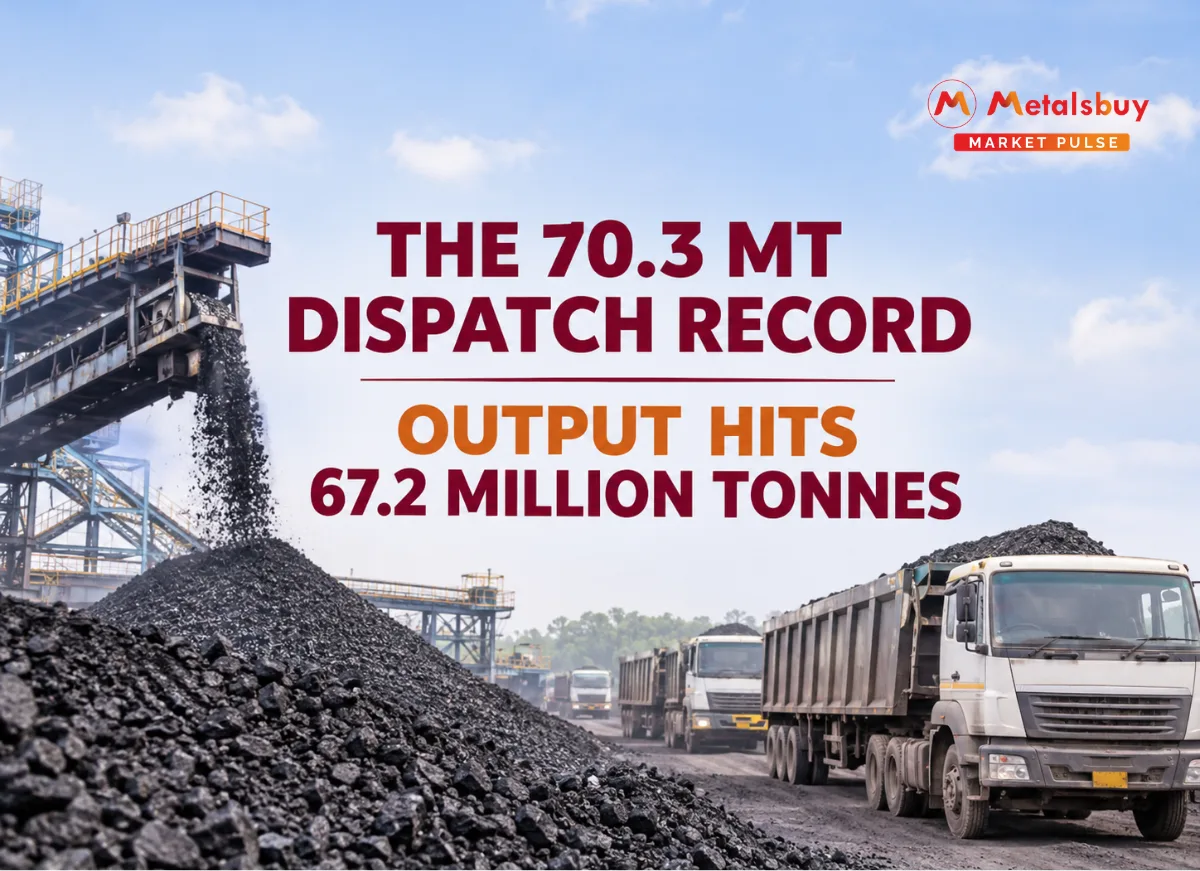
The sheer scale of the logistical evacuation executed by the mining major highlights a mature and highly optimized raw material distribution network. The most defining takeaway from the company's recent operational disclosure is the historic breach of the 70 million tonne dispatch barrier. For the first time in its corporate history, Coal India Limited saw its monthly coal supplies cross this massive threshold, reaching exactly 70.3 million metric tonnes during October. This figure represents an exceptional 19 percent year-on-year growth compared to the 59.2 million tonnes supplied in October of the previous financial year.
To put the magnitude of this achievement into proper perspective, the company's previous all-time monthly supply record stood at 69.4 million tonnes, which was achieved in March 2026. Typically, the month of March marks the absolute peak performance window for any Indian public sector enterprise as they rush to close out the fiscal year. Surpassing a peak March record during the transitional month of October is an incredibly rare industrial feat. This massive dispatch volume was heavily supported by stellar performances from regional subsidiaries. Mahanadi Coalfields Limited, a vital subsidiary of the parent group, crossed the 20 million tonne monthly supply mark for the very first time in October, acting as the primary anchor for this landmark corporate achievement.
Securing baseload electricity with record power sector dispatches
By synchronizing its extraction rates perfectly with the Indian Railways, the company ensured that domestic power utilities received a continuous and high-volume influx of fuel. The primary objective of ramping up these domestic supplies is to safeguard the national electricity grid against any localized power deficits. The company’s targeted dispatches to the power sector crossed the 57 million tonne mark for the first time ever, settling at an impressive 57.1 million tonnes for October. This is a massive 19 percent jump from the 48 million tonnes supplied to power utilities in the same month last year, completely eclipsing the previous sectoral high of 56.5 million tonnes recorded in May 2024.
Moving this sheer volume of bulk cargo required flawless coordination with the national transport network. The company achieved another historic milestone in railway coal evacuation by recording an average power-sector rake loading of 310 rakes per day throughout the month. This represents the highest-ever monthly average rake loading in the company’s history, surpassing the previous record of 302.8 rakes per day set in March 2025. By maintaining this rapid and highly mechanized evacuation pace, Coal India ensured that coastal and inland thermal power plants could quickly rebuild their critical buffer stocks. This proactive logistical management completely eliminates the anxiety of fuel shortages, guaranteeing that heavy manufacturing hubs and urban centers will have round-the-clock access to baseload electricity.
Ramping up pithead extraction to neutralize seasonal bottlenecks
The ability to extract massive volumes of raw material despite severe weather disruptions proves the underlying resilience and technological superiority of the domestic mining ecosystem. Fulfilling record-breaking dispatch orders is physically impossible without a parallel surge in raw material extraction at the mine face. Coal India answered this demand by pushing its October coal production to a brand new high of 67.2 million metric tonnes. This aggressive extraction rate easily surpassed the previous October benchmark of 62.47 million tonnes set in 2024, and reflects a sharp 19 percent acceleration over the 56.38 million tonnes mined in October of the last fiscal year.
Achieving a 67.2 million tonne output during a month heavily impacted by the Puja festivities and unseasonal cyclonic rainfall demonstrates exceptional shop-floor discipline. The company actively utilized high-capacity mechanized water pumping systems to clear flooded open-cast benches and deployed advanced autonomous drilling rigs to accelerate the uncovering of fresh coal seams.
From a broader macroeconomic perspective, this synchronized growth across production, supply, and overburden removal is the ultimate green flag for the Indian industrial sector. As the domestic steel, cement, and automotive industries ramp up their operations for the winter manufacturing peak, they require absolute certainty in their energy supply chain. By setting these historic operational benchmarks in October, Coal India has firmly proven its commitment to supporting India's energy security, building an incredibly strong and financially lucrative foundation for the remaining months of the financial year.