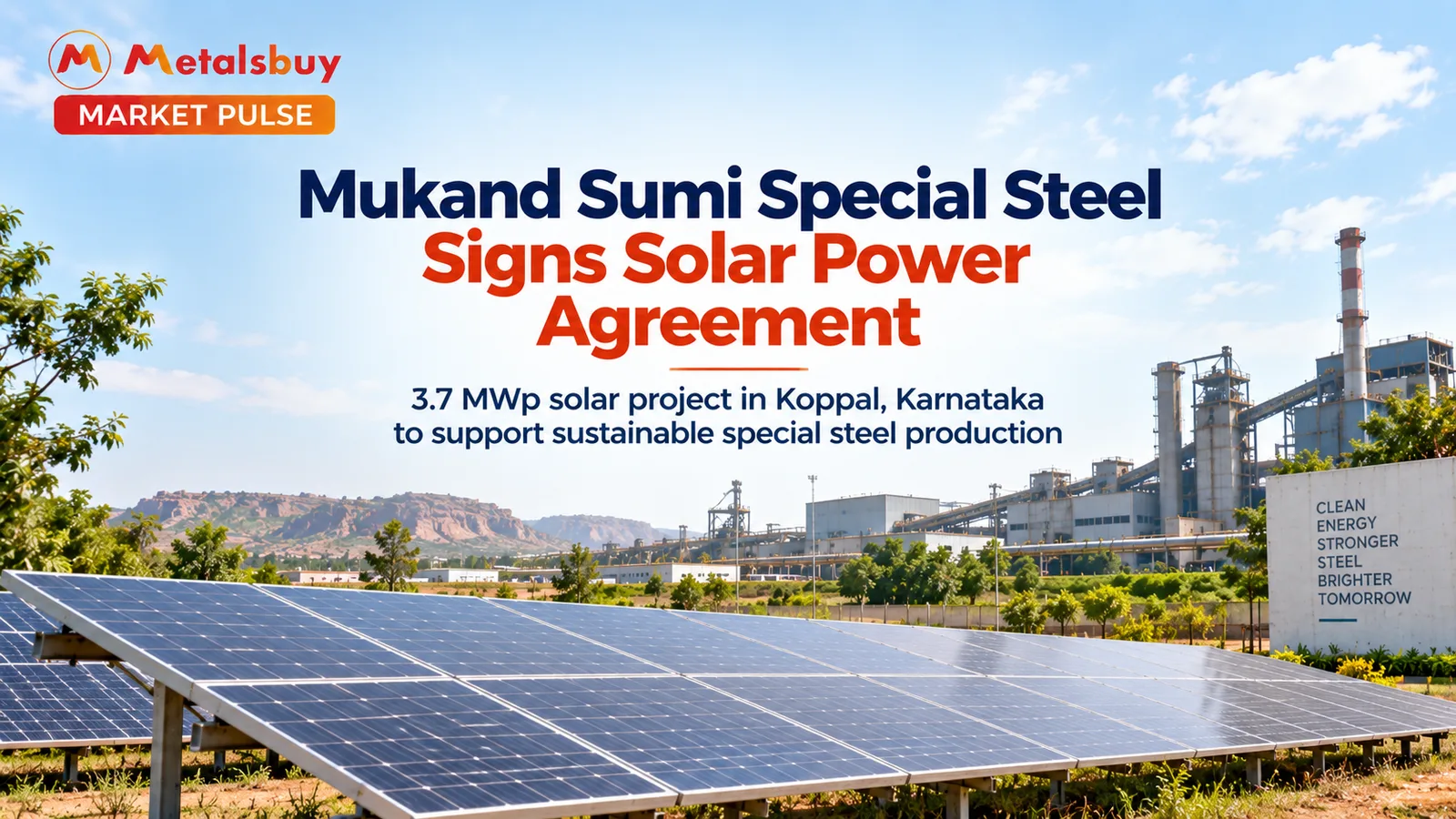
Mukand Sumi Special Steel Limited (MSSSL) has signed a power purchase agreement with Roofsol Energy Private Limited for the development of a 3.7 MWp solar power project in Koppal, Karnataka. The project will be developed under an OPEX model, allowing MSSSL to access solar power without directly owning and operating the generation asset. The agreement is aimed at increasing the use of renewable energy in the company's manufacturing operations. The development was announced on 8 September 2026.
MSSSL is a manufacturer of special and alloy steel products, catering to automotive and industrial engineering applications in India and overseas. The solar project is another step towards bringing renewable energy into the energy mix of its steel operations. While the project itself is relatively modest in size, it fits into the wider effort by steel and manufacturing companies to reduce their dependence on conventional power sources.
A 3.7 MWp project under the OPEX model
The agreement involves a 3.7 MWp solar project at Koppal, where MSSSL has its manufacturing operations. Roofsol Energy will develop the project under its OPEX-based model. Under this structure, the customer procures power from the solar project rather than making the full upfront investment required to build and own the plant.
The OPEX model has become increasingly common among industrial consumers looking to add renewable power without committing capital to solar assets. Roofsol's business model includes long-term power purchase arrangements, where it develops and operates projects while supplying electricity to the customer at an agreed tariff. The structure allows manufacturers to focus on their core operations while accessing renewable energy through a separate power developer.
Part of a larger renewable energy push
The latest project is not MSSSL's first move towards renewable energy. Its parent company, Mukand Limited, had earlier signed an agreement for a 23.89 MWp group captive solar project to support its steel plant operations in Karnataka. That project was also positioned around meeting energy requirements and making steel production processes greener.
The new 3.7 MWp project adds to this broader direction, although it is a separate arrangement involving MSSSL and Roofsol Energy. The company has also outlined larger expansion plans in Karnataka, including a greenfield special steel project. According to details reported earlier this month, the proposed new facility is expected to have significant renewable energy integration as part of its operating model.
Renewable power and steel manufacturing
Steelmaking is an energy-intensive process, and electricity costs remain an important part of manufacturing economics, particularly for special steel producers operating multiple processing and downstream facilities. Renewable energy cannot replace every energy input used in steel production, but solar and other clean power sources can contribute to reducing dependence on conventional grid electricity for eligible operations.
For companies, the shift is therefore not only linked to sustainability targets. Long-term renewable power arrangements can also provide greater visibility on electricity costs. The extent of the actual savings or emissions reduction from this particular project has not been disclosed by the companies.
Roofsol expands its presence in the steel sector
For Roofsol Energy, the agreement strengthens its presence in India's commercial and industrial solar segment. The company said this is its fifth solar project with a steel manufacturer during the year. Its focus has been on developing projects through OPEX and power purchase models for industrial customers across different sectors.
The commercial and industrial segment has become an important market for solar developers as manufacturers look for alternatives to conventional power procurement. Unlike utility-scale projects that sell electricity into the broader grid, these arrangements are structured around the specific requirements of an industrial customer. This allows companies to add renewable power without necessarily developing internal expertise in solar project execution.
Special steel capacity is also expanding
The solar agreement comes at a time when MSSSL is also looking at expanding its manufacturing footprint. The company recently announced plans for a greenfield special steel project in Karnataka, with an investment of more than ₹2,300 crore. The proposed facility is intended to manufacture high-grade special steel for sectors including automotive, railways, energy, oil and gas, and bearings.
The expansion plans make energy sourcing an increasingly relevant part of the company's long-term strategy. As manufacturing capacity grows, companies will need to secure reliable power while also managing energy costs and environmental commitments. Renewable projects, whether owned directly or accessed through power purchase agreements, are becoming one part of that planning.
A small project, but part of a wider shift
The 3.7 MWp project is not among the largest renewable energy investments announced by India's steel industry. But it reflects a wider trend where steel and metal companies are gradually adding solar power through captive, group captive and OPEX-based arrangements. Different companies are taking different routes depending on their energy requirements and capital allocation strategies.
For MSSSL, the immediate development is straightforward: the company has partnered with Roofsol Energy to bring a 3.7 MWp solar project into its operations in Karnataka. The agreement does not include a publicly disclosed commissioning timeline, investment value or expected annual power generation. Those details may emerge as the project moves forward.
The bigger picture is the growing connection between steel manufacturing and renewable energy procurement. As Indian steelmakers expand capacity and face increasing pressure to improve the sustainability of their operations, power sourcing is becoming part of the larger manufacturing strategy rather than simply an operational requirement. The MSSSL-Roofsol agreement is another example of that shift.