Key Numbers
-
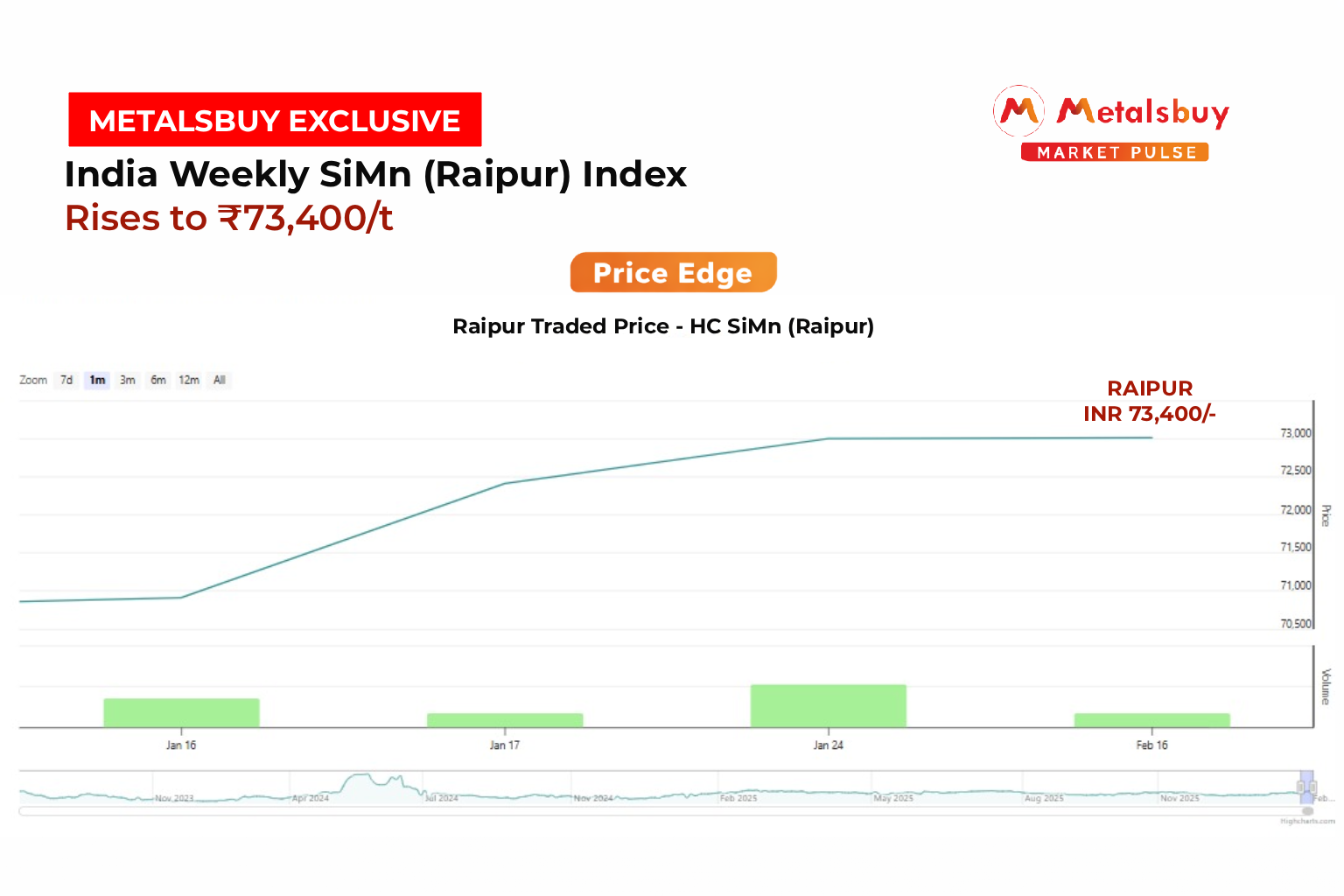
Metalsbuy Weekly SiMn (60-14) Raipur Index: ₹73,400/t
-
Previous Week: ₹72,800/t
-
Weekly Change: +₹600/t
-
Exw SiMn (60/14) Raigarh prices: ₹72,700/t
-
Previous Week Raigarh: ₹72,200/t
-
MOIL manganese ore price revision: ~2% increase in March 2026
-
Gabon–China Mn ore freight: $46–47/t vs $41–42/t earlier
-
Billet price (Mandi Gobindgarh): ₹44,200/t vs ₹43,600/t pre-Holi
Market Analysis
The Metalsbuy Weekly SiMn (Raipur) Index recorded an upward movement this week, rising to ₹73,400 per tonne, compared with ₹72,800/t recorded last week.
Similarly, the Exw SiMn (60/14) Raigarh market has also shown a firm trend, with current offers around ₹72,700/t, compared with ₹72,200/t recorded in the previous week, reflecting a similar cost-driven price movement across key manganese alloy hubs in central India.
The increase reflects a gradual strengthening in the domestic manganese alloy market, driven primarily by rising raw material costs and improving steel market sentiment.
A key factor influencing the price movement is the recent manganese ore price hike announced by MOIL, India’s largest manganese ore producer. The revision has increased input costs for ferro alloy producers, particularly for producers operating in the central India ferro alloy belt around Raipur.
Imported manganese ore prices have also firmed up due to tightening supply conditions and logistical challenges. Freight rates for Gabon–China bulk manganese ore shipments have increased to around $46–47 per tonne, compared with $41–42/t earlier, reflecting higher fuel costs and tighter vessel availability.
At the same time, global logistics risks continue to influence commodity markets. Rising insurance premiums, freight costs, and geopolitical uncertainties are adding cost pressure across the manganese alloy supply chain.
Another factor affecting exporters is market exposure to certain regions, including Iran, which accounts for a portion of India’s manganese alloy export trade. Any disruptions in trade flows or payment channels could impact export dynamics.
Macroeconomic factors are also contributing to the cost environment. A depreciating rupee, along with higher crude oil, energy, and transportation costs, has increased operational expenses for alloy producers.
On the demand side, early signs of recovery in the steel sector are supporting the alloy market. Billet prices in Mandi Gobindgarh have increased to approximately ₹44,200/t, compared with around ₹43,600/t prior to the Holi holidays. Similar upward movements are being observed in other regional steel markets across India.
Since silico manganese is a key deoxidising alloy used in steelmaking, strengthening steel prices tend to provide indirect support to the SiMn market.
Industry Impact
The recent price movement suggests that the manganese alloy market is entering a cost-push cycle, where rising raw material and logistics costs are influencing finished alloy prices.
For the industry, the current market dynamics could lead to:
-
Firm domestic SiMn prices in the near term
-
Higher export offer levels from Indian alloy producers
-
Increased cost pressure due to ore and freight escalation
-
Greater volatility in the manganese alloy supply chain
India remains one of the largest global producers and exporters of silico manganese, with Raipur emerging as a key production hub due to its proximity to raw material supply chains and steel consumers.
With ore prices strengthening and steel markets showing signs of recovery, the Metalsbuy Weekly SiMn (Raipur) Index will remain a key indicator for tracking price movements in India’s manganese alloy market.