Jindal Steel Sohar has achieved a significant operational milestone by setting its highest-ever monthly liquid steel production, reinforcing its position as one of the most efficient electric arc furnace based steelmakers in the Middle East.
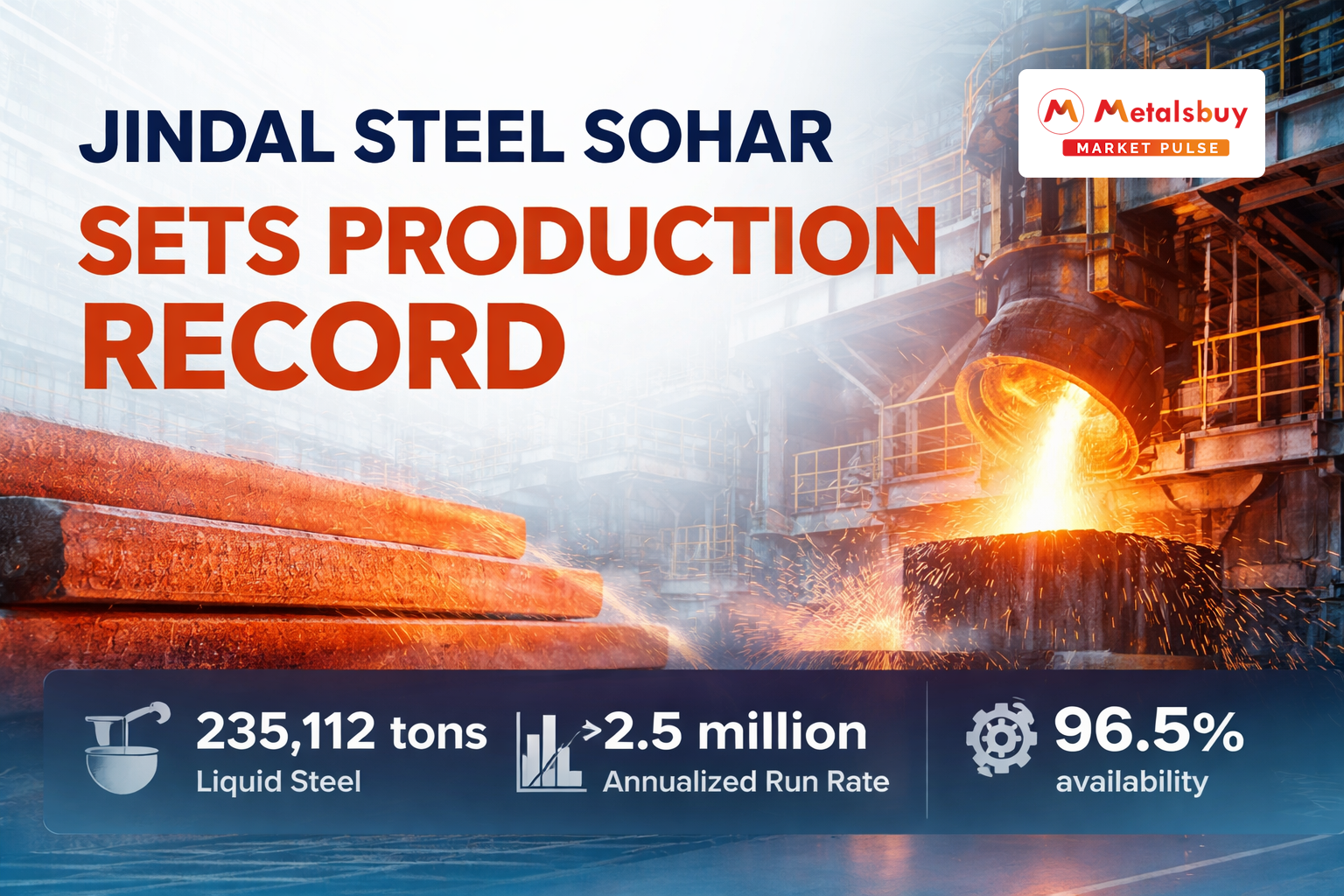
The Oman-based facility recorded 235,112 metric tonnes of liquid steel production in a single month, marking a new benchmark since the plant’s commissioning. This performance translates into an annualised steelmaking run rate exceeding 2.5 million tonnes, underlining the plant’s sustained operational stability and efficiency gains.
Strong performance driven by process optimisation
The record output was achieved following a series of targeted technological and process upgrades at the meltshop. Central to this improvement was the enhancement of the 220-ton electric arc furnace, supported by advanced adaptive process control systems. These upgrades have enabled tighter control over melting cycles, reduced tap-to-tap times, and improved overall furnace stability.
As a result, the electric arc furnace delivered a productivity rate of around 324 tonnes per hour, placing it among the higher-performing EAFs of similar scale globally. Importantly, these productivity gains were achieved without compromising energy efficiency.
Energy efficiency and availability at the core
Energy consumption remains one of the most critical cost drivers for EAF-based steelmaking. During the record-setting month, Jindal Steel Sohar reported specific electricity consumption of approximately 493 kWh per tonne of liquid steel, reflecting efficient power utilisation and stable furnace operations.
Operational reliability also played a key role in achieving this milestone. Post-upgrade, the meltshop has been operating with equipment availability close to 96.5 percent, including planned maintenance shutdowns. High availability has allowed the plant to sustain longer production campaigns and minimise unplanned disruptions.
Optimised raw material mix supports higher throughput
Another contributor to the improved performance has been the optimisation of the metallic charge mix. The furnace operations are supported by a balanced combination of hot direct reduced iron, cold DRI, and hot briquetted iron, enabling consistent metallurgical quality while maintaining high melting rates.
The higher share of hot DRI in the charge has also helped reduce overall energy requirements per tonne, supporting both cost efficiency and environmental performance.
Strategic implications for regional steel markets
The record monthly output strengthens Jindal Steel Sohar’s role as a key supplier of billets and long steel products in the Gulf region. Higher and more consistent steel production enhances supply reliability for downstream rolling mills and regional construction markets.
From a strategic standpoint, the milestone demonstrates the scalability of EAF-based steelmaking when supported by advanced automation, reliable raw material supply, and disciplined maintenance practices. It also aligns with the broader industry shift toward lower-carbon steel production routes compared to traditional blast furnace operations.
Key production metrics at a glance
| Parameter | Performance |
|---|---|
| Monthly liquid steel production | 235,112 metric tonnes |
| Annualised steelmaking run rate | Above 2.5 million tonnes |
| Electric arc furnace size | 220 tonnes |
| Furnace productivity | ~324 tonnes per hour |
| Specific electricity consumption | ~493 kWh per tonne |
| Equipment availability | ~96.5 percent |
| Primary metallic charge | Hot DRI, cold DRI, HBI |
Outlook
Jindal Steel Sohar’s record-setting performance highlights the growing competitiveness of modern EAF facilities in the Middle East. If sustained, these operating levels could further strengthen the plant’s cost position and market presence, while supporting the group’s long-term strategy focused on efficiency, scale, and cleaner steel production.
The coming months will be closely watched to assess whether this performance can be consistently replicated and how it translates into downstream volumes and regional market dynamics.