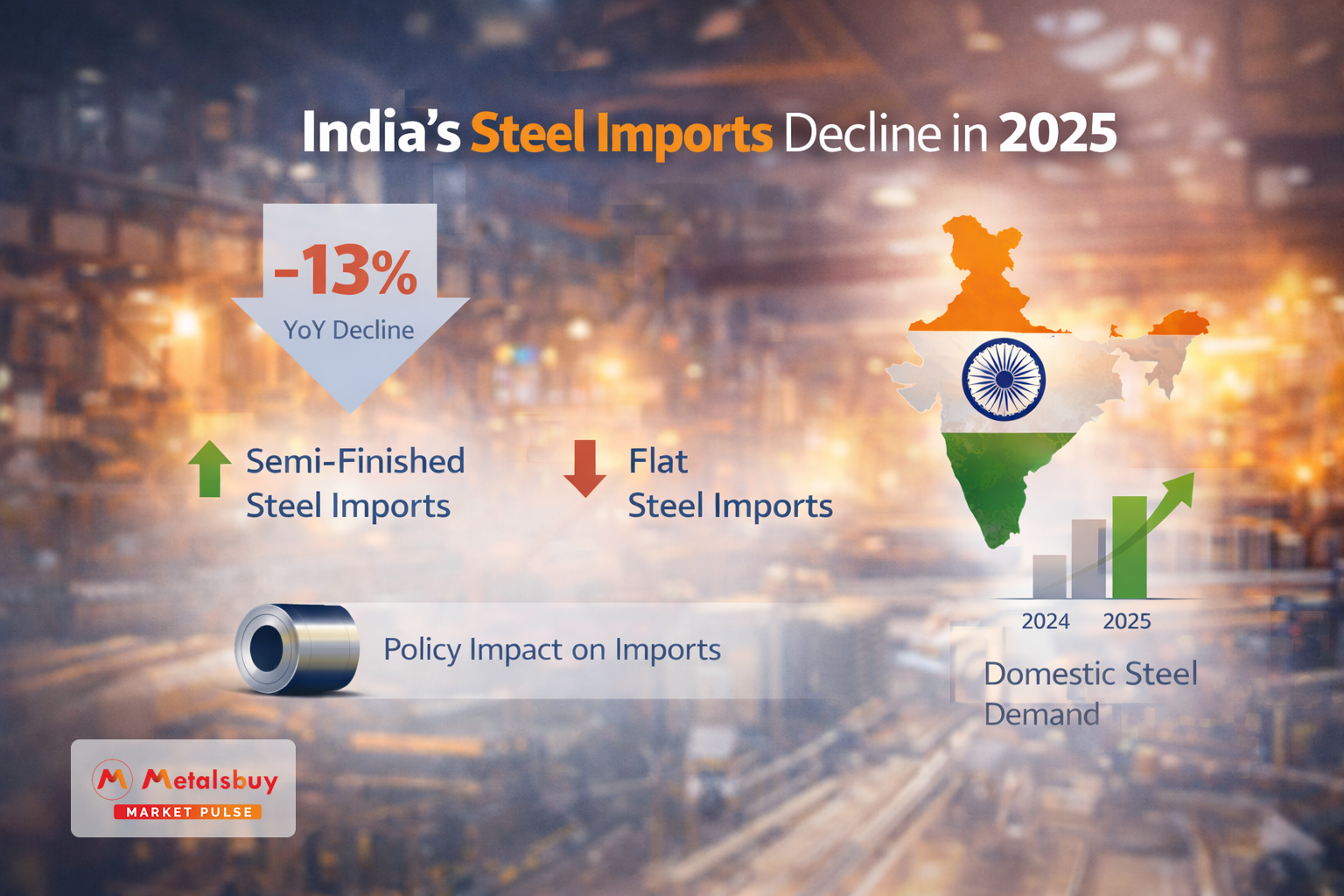
India’s steel imports declined by approximately 13 percent year-on-year in calendar year 2025, underscoring the effectiveness of recent policy interventions and highlighting improving competitiveness within the domestic steel industry. The moderation in inbound shipments reflects a deliberate rebalancing of the market rather than any weakness in underlying demand.
Policy Support Strengthens Domestic Supply Chain
The decline in imports is largely attributed to the implementation and continuation of safeguard duties on selected steel products, which helped address price distortions caused by low-priced overseas material. These measures created a more level playing field for Indian producers, encouraging buyers to increasingly source from domestic mills.
By reducing excessive dependence on imports, the policy framework has supported better capacity utilisation, pricing stability, and margin protection for Indian steelmakers. Importantly, the safeguards were applied selectively, ensuring that domestic availability remained sufficient for downstream industries.
Shift Toward Value-Added Domestic Production
While imports of finished flat steel products saw a notable decline during the year, imports of semi-finished steel recorded an increase, indicating a strategic shift. Indian producers are increasingly bringing in intermediate material for further processing within the country, reinforcing domestic value addition rather than relying on finished imports.
This trend supports India’s broader manufacturing objectives by keeping downstream processing, employment, and economic value within the country.
Changing Trade Dynamics
India’s steel import basket also reflected changing sourcing patterns, with shipments from traditional exporting countries moderating during the year. This diversification signals more disciplined procurement strategies by Indian buyers and reduced exposure to volatile global pricing cycles.
At the same time, India continues to engage with global suppliers where necessary to ensure raw material security and supply chain flexibility, particularly for grades not widely produced domestically.
Demand Fundamentals Remain Intact
The decline in steel imports should not be viewed as a contraction in market demand. Domestic steel consumption continues to be supported by infrastructure development, construction activity, and manufacturing growth, providing a strong demand base for locally produced steel.
Government-led capital expenditure, urban development projects, and steady growth in automotive and engineering segments continue to underpin long-term steel demand in India.
Outlook: A More Balanced and Resilient Market
Overall, the reduction in steel imports during CY2025 reflects a healthier and more balanced steel market in India. Policy clarity, improving domestic competitiveness, and sustained demand fundamentals are aligning to create a supportive environment for Indian steel producers.
Looking ahead, the current trend is expected to:
- Encourage further domestic investment and capacity optimisation
- Support stable pricing and margin visibility
- Strengthen India’s position as a self-reliant and globally competitive steel producer
India’s steel sector appears well-positioned to navigate global volatility while continuing to play a central role in the country’s industrial and infrastructure growth story.