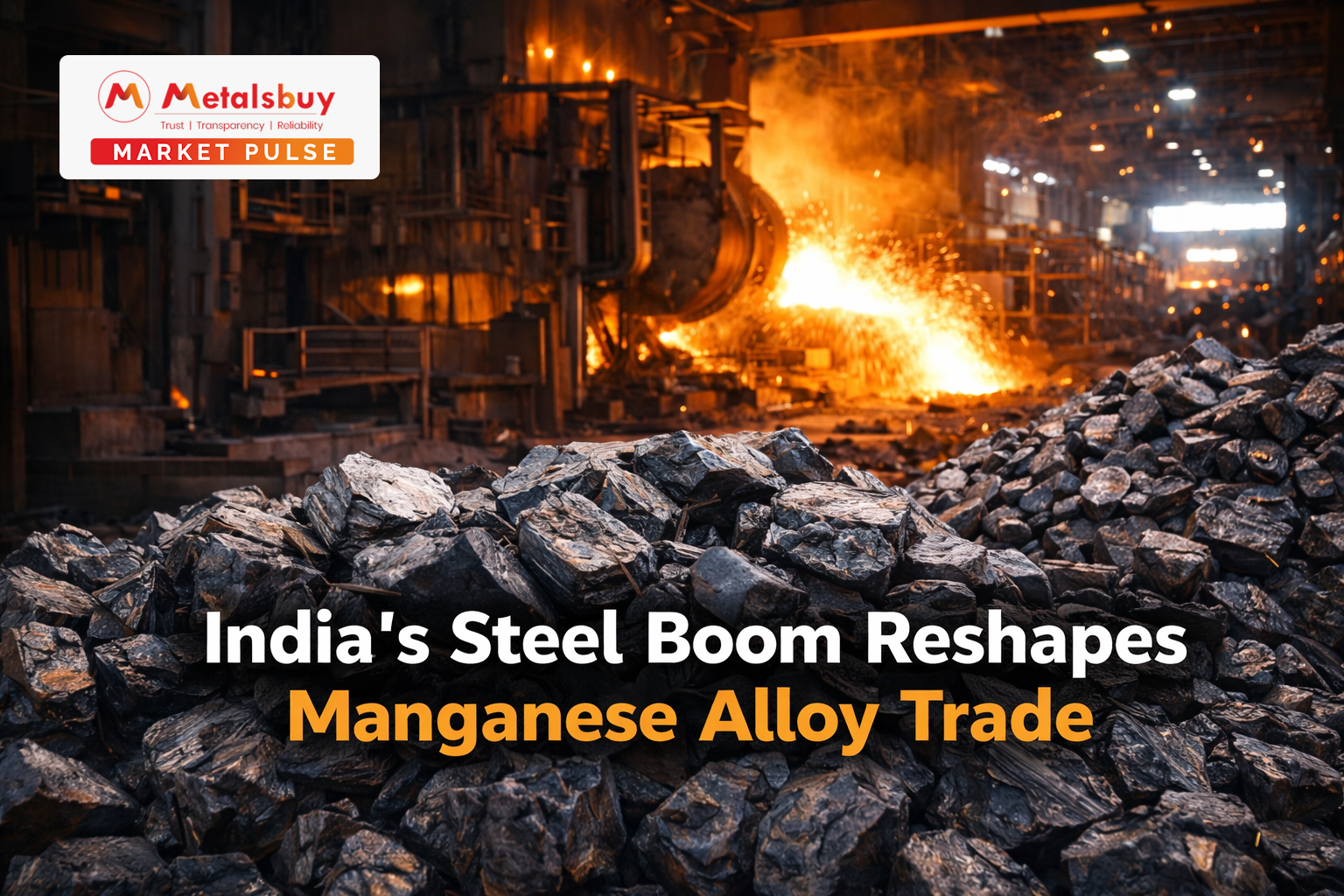
Indian manganese alloy producers emerged as key beneficiaries during the 2026 annual contract negotiations with US steel mills, securing improved pricing and volumes. However, market participants indicate that this success could represent a cyclical high point, as India’s rapidly expanding domestic steel industry begins to absorb a larger share of alloy output.
India has firmly established itself as the world’s second-largest steel producer, overtaking Japan, with installed crude steel capacity reaching around 200 million tonnes per year as of April 2025. The government has set an ambitious target of 300 million tonnes per year by 2030, supported by continued investment in blast furnaces, electric arc furnaces, and a growing emphasis on green steel production.
As domestic steel output scales up, demand for critical inputs such as manganese alloys is expected to rise steadily within the country. Industry participants note that Indian ferroalloy producers are increasingly inclined to prioritise domestic sales, citing logistical convenience, policy alignment, and stronger demand visibility at home.
“Domestic sales are becoming structurally more attractive for Indian alloy producers,” a market analyst said, adding that export markets now face additional challenges. Rising compliance costs, tightening environmental regulations in Western markets, and higher freight volatility are making exports less competitive relative to local sales.
Market sources suggest that while Indian manganese alloys will continue to reach the US and European markets, future shipments are likely to be priced at a premium to offset regulatory and carbon-related costs. Over time, India’s role in global manganese alloy trade may shift from a volume-driven exporter to a more selective supplier focused on higher-margin opportunities.
The evolving dynamic reflects a broader structural change in global ferroalloy flows, as India’s expanding steel ecosystem increasingly competes with export markets for alloy availability.
Metalsbuy Outlook
Metalsbuy expects India’s manganese alloy market to become increasingly domestically oriented over the medium term, driven by sustained steel capacity additions and policy support for value-chain integration. While exports to the US and Europe will continue, volumes are likely to be more opportunistic rather than structural, with pricing linked closely to carbon compliance costs and green steel premiums.
For global buyers, this shift could tighten availability during periods of strong Indian steel production, increasing reliance on alternative suppliers or premium-priced Indian material. For Indian producers, the strategic focus is expected to move toward securing long-term domestic contracts, optimising cost structures, and aligning alloy production with green steel requirements.
Overall, India’s growing steel ambition is set to redefine manganese alloy trade flows, positioning the country as a demand-led market rather than a purely export-driven supplier.