Key Numbers
- Iron Ore Production (Q1 FY27): 6.05 Million Tonnes
- Year-on-Year Growth: 53%
- FY27 Iron Ore Production Target: 26 Million Tonnes
- Banded Hematite Quartzite (BHQ) Mined: 5.89 Million Tonnes
- DRI Production: 182,460 Tonnes (+131% YoY)
- Pellet Production: 1.69 Million Tonnes
- Pellet Capacity: 8 Million Tonnes Per Year
Market Analysis
LMEL Maintains Strong Growth Momentum in the New Financial Year
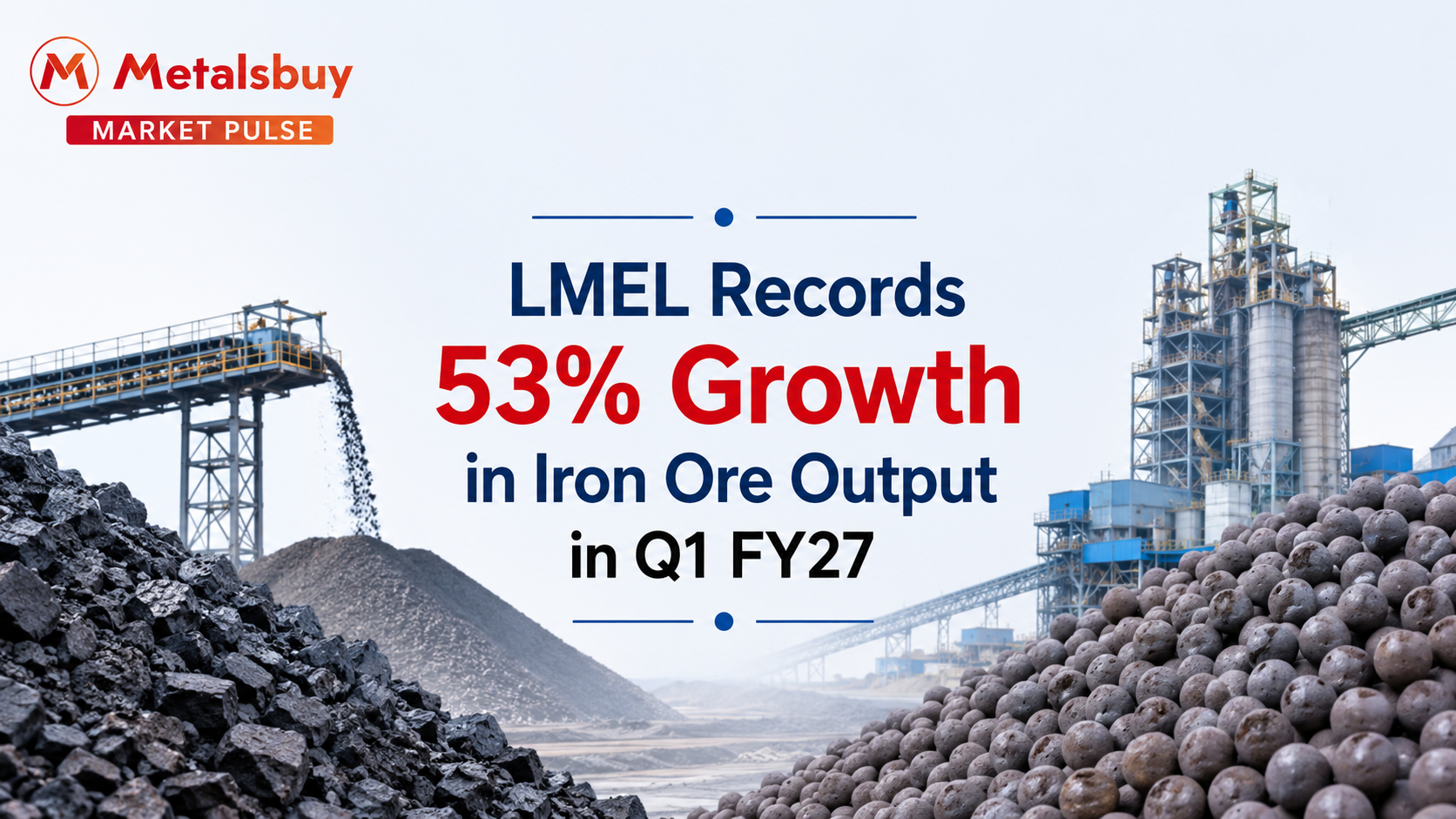
Lloyds Metals and Energy Limited (LMEL) has started FY2026-27 on a strong note, reporting iron ore production of 6.05 million tonnes during the April-June quarter, representing a robust 53 percent year-on-year increase. The company stated that the performance remains in line with its ambitious target of producing 26 million tonnes of iron ore during the current financial year, highlighting continued operational strength at its Surjagarh mining complex in Maharashtra. The latest production update reinforces LMEL's emergence as one of India's fastest-growing integrated mining companies at a time when domestic demand for iron ore continues to remain healthy. Higher mining activity, improved operational efficiency and previous infrastructure investments have enabled the company to significantly scale up production over the past two years. The performance also reflects India's broader efforts to strengthen the availability of domestic raw materials to support long-term steel capacity expansion.
Expansion Strategy Continues to Deliver Operational Benefits
The company's latest production figures demonstrate that its long-term investments in mining infrastructure, logistics integration and downstream processing are beginning to generate meaningful operational benefits. LMEL has steadily expanded production after receiving enhanced environmental clearances and investing in mining equipment, slurry pipeline infrastructure and pellet manufacturing facilities. These investments have helped improve mine productivity while reducing logistical bottlenecks that traditionally constrained iron ore evacuation. The company has also focused on building an integrated mining-to-value-added-products business model instead of remaining solely a merchant iron ore supplier. This strategy not only improves operational efficiency but also allows greater value capture across the steel raw material supply chain.
Downstream Operations Witness Significant Capacity Ramp-Up
Beyond mining, LMEL reported strong growth across its downstream businesses, reflecting the benefits of recent capacity additions. Direct Reduced Iron (DRI) production reached 182,460 tonnes, registering an impressive 131 percent increase compared with the corresponding period last year after commissioning additional kilns that are now operating at full capacity. Pellet production also stood at 1.69 million tonnes, supported by the commissioning of the company's second pellet plant, which has doubled its installed pellet manufacturing capacity to 8 million tonnes annually. The integrated structure enables the company to convert a larger proportion of mined ore into higher-value products, improving operational flexibility while reducing dependence on external raw material markets. The expansion also strengthens LMEL's position as an important supplier of pellets and DRI to India's growing secondary steel sector.
BHQ Processing Opens Additional Long-Term Value Opportunity
An important highlight of the quarterly update is the production of 5.89 million tonnes of Banded Hematite Quartzite (BHQ) during the quarter. Although BHQ is not immediately included in primary iron ore production figures, the material represents a significant future resource that the company intends to process once its beneficiation plants become operational. Beneficiation will allow lower-grade material to be upgraded into usable iron ore concentrate suitable for pellet manufacturing and steelmaking applications. This strategy reflects a growing industry trend of improving resource utilisation while reducing mining waste through advanced mineral processing technologies. As beneficiation facilities are commissioned, LMEL could unlock additional production without proportionately increasing mining activity, improving both resource efficiency and long-term profitability.
Strong Domestic Demand Continues to Support Iron Ore Producers
India's iron ore industry continues to benefit from expanding domestic steel production, infrastructure development and rising investments across manufacturing sectors. The government's long-term objective of increasing national steelmaking capacity to 300 million tonnes has significantly strengthened demand for reliable domestic iron ore supplies. Companies with integrated mining operations and downstream processing capabilities are expected to remain well positioned as steel producers increasingly seek stable raw material availability. At the same time, large-scale investments in pelletisation and DRI production are gradually shifting the industry towards greater value addition instead of simply exporting raw materials. This structural transformation supports both industrial growth and improved competitiveness for India's steel sector over the long term.
LMEL Positioned for Another Year of Capacity Expansion
Following record production during FY2025-26, LMEL has entered the current financial year with a clear roadmap for further expansion across mining and downstream operations. The company's guidance of 26 million tonnes of iron ore production indicates confidence in its operational capabilities despite seasonal challenges that typically affect mining during the monsoon period. Continued investments in beneficiation, pellet production and DRI manufacturing are expected to further strengthen integration across its business. Industry observers will closely monitor the commissioning of additional processing facilities and the company's progress towards achieving its annual production targets. If execution remains on track, LMEL is likely to further consolidate its position among India's leading integrated mining and steel raw material companies.
Industry Impact
LMEL's strong quarterly performance reflects the growing importance of integrated mining and downstream processing within India's steel value chain. Higher domestic iron ore availability, coupled with increased pellet and DRI production, supports the country's long-term objective of expanding steelmaking capacity while reducing dependence on imported raw materials. Continued investments by integrated miners are also expected to improve supply stability for secondary steel producers and strengthen India's overall raw material security.
Outlook
With production growth remaining ahead of industry averages and downstream facilities continuing to ramp up, LMEL appears well positioned to achieve its FY27 production targets. The successful commissioning of beneficiation plants and continued expansion of value-added operations could further improve operational efficiency while enhancing profitability. As India's steel demand continues to grow alongside infrastructure and manufacturing investments, integrated mining companies like LMEL are expected to play an increasingly important role in ensuring sustainable raw material availability.
Disclaimer: This analysis is based on publicly available company disclosures and independently verified industry reports. Production figures are provisional and remain subject to subsequent regulatory disclosures and operational updates.