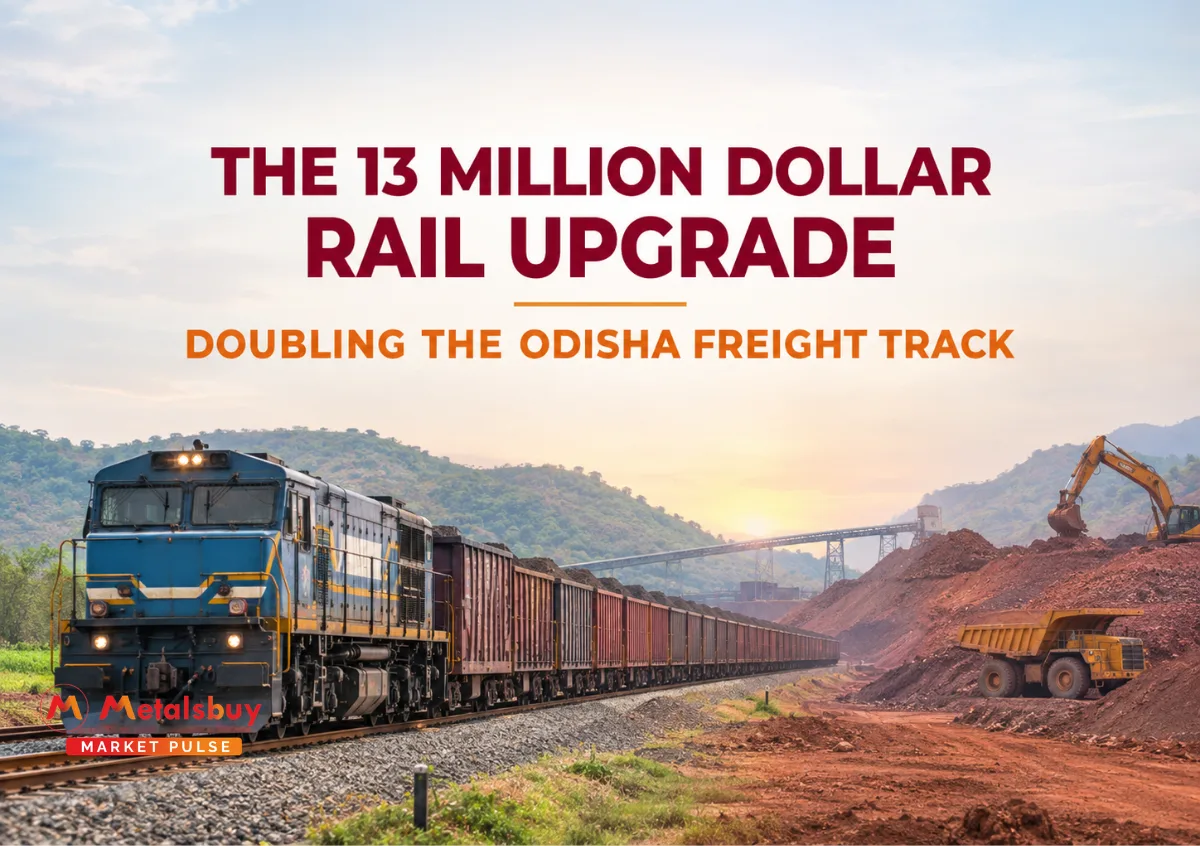
India’s domestic steel supply chain is set to receive a massive logistical upgrade. To support the rapid expansion of the country's primary steelmaking capacity, Indian Railways has officially approved a strategic $13 million investment designed to drastically enhance freight evacuation from one of the nation's most critical mineral belts. This capital deployment will focus on doubling the railway track capacity in the iron ore-rich state of Odisha, directly addressing chronic transportation bottlenecks and ensuring a much faster, more reliable flow of raw materials to major steel plants and coastal export hubs.
Resolving logistical bottlenecks in the eastern steel belt
The core of this new infrastructure initiative centers on the Barbil-Bolanikhandan railway line, a vital logistical artery located deep within the mineral-heavy Keonjhar district of Odisha. For years, this specific stretch of track has operated as a critical, yet highly congested, single-line corridor.
Currently, the single-track Barbil-Bolanikhandan line handles an estimated 9 million metric tonnes of iron ore freight annually. This massive volume primarily consists of high-grade iron ore lumps, fines, and agglomerated pellets extracted from major regional assets, including the Steel Authority of India Limited's (SAIL) massive Bolani captive mines. Furthermore, the route serves as the primary evacuation channel for several large-scale private merchant miners operating dedicated railway sidings in the area, such as Rungta Mines, Khatau, and Narbheram. As these mining conglomerates aggressively scale up their extraction rates to meet the soaring domestic demand for steel, the existing single-track infrastructure simply lacks the bandwidth to process the increased traffic, leading to frequent loading delays and severe freight congestion.
Doubling track capacity to secure raw material feeds
To eliminate these supply chain hurdles, the approved $13 million investment will fully fund the track doubling of the Barbil-Bolanikhandan route. According to official statements from Indian Railways, this infrastructure upgrade will effectively double the corridor's carrying capacity.
Once the second track is fully commissioned, the route will be capable of handling an additional 8.9 million metric tonnes of iron ore freight per year. This massive 100 percent increase in logistical bandwidth is a game-changer for the regional mining ecosystem. It ensures that trains can move simultaneously in both directions, drastically reducing the turnaround time for empty freight rakes returning to the pitheads. For the massive integrated steel plants located in neighboring states like Jharkhand and Chhattisgarh, this means a faster, much more predictable delivery schedule for vital raw materials. When blast furnaces receive uninterrupted feeds of high-quality ore, mills can maintain optimal thermal efficiencies and protect their operational profit margins.
Supporting the national steel expansion roadmap
From a macroeconomic perspective, this targeted railway investment is perfectly synchronized with the broader ambitions of the Indian manufacturing sector. The central government’s National Steel Policy has set a highly aggressive target of achieving 300 million tonnes of annual crude steel production capacity by the end of the decade.
To feed a domestic steel industry of that magnitude, the extraction and transportation of iron ore must scale up proportionately. Odisha, which currently produces well over half of India's total iron ore output, is the absolute anchor for this national expansion. If the ore cannot be moved efficiently from the mines in Odisha to the steel mills, the entire 300 million tonne capacity target is placed at risk. By proactively addressing these potential capacity constraints today, Indian Railways is ensuring that the backend logistics are robust enough to support the future wave of multi-billion dollar greenfield and brownfield steel mega-projects currently under construction across the country.
A strategic boost for port connectivity and exports
Beyond serving domestic steelmakers, the track doubling project also holds immense strategic value for India's maritime trade network. The Barbil-Bolanikhandan corridor is a critical feeder line connecting the inland mining hubs directly to major eastern seaports, particularly Paradip and Haldia.
Efficient rail connectivity to these deep-water ports is essential for the seamless export of iron ore pellets and the coastal movement of raw materials to steel plants located in western and southern India. By accelerating the movement of cargo from the mines to the ships, the upgraded railway line will significantly reduce demurrage charges for exporters and lower the overall landed cost of raw materials for coastal manufacturers. Ultimately, this $13 million investment proves that upgrading core transport infrastructure is the most effective way to guarantee the long-term global competitiveness of India's booming metals and mining sector.