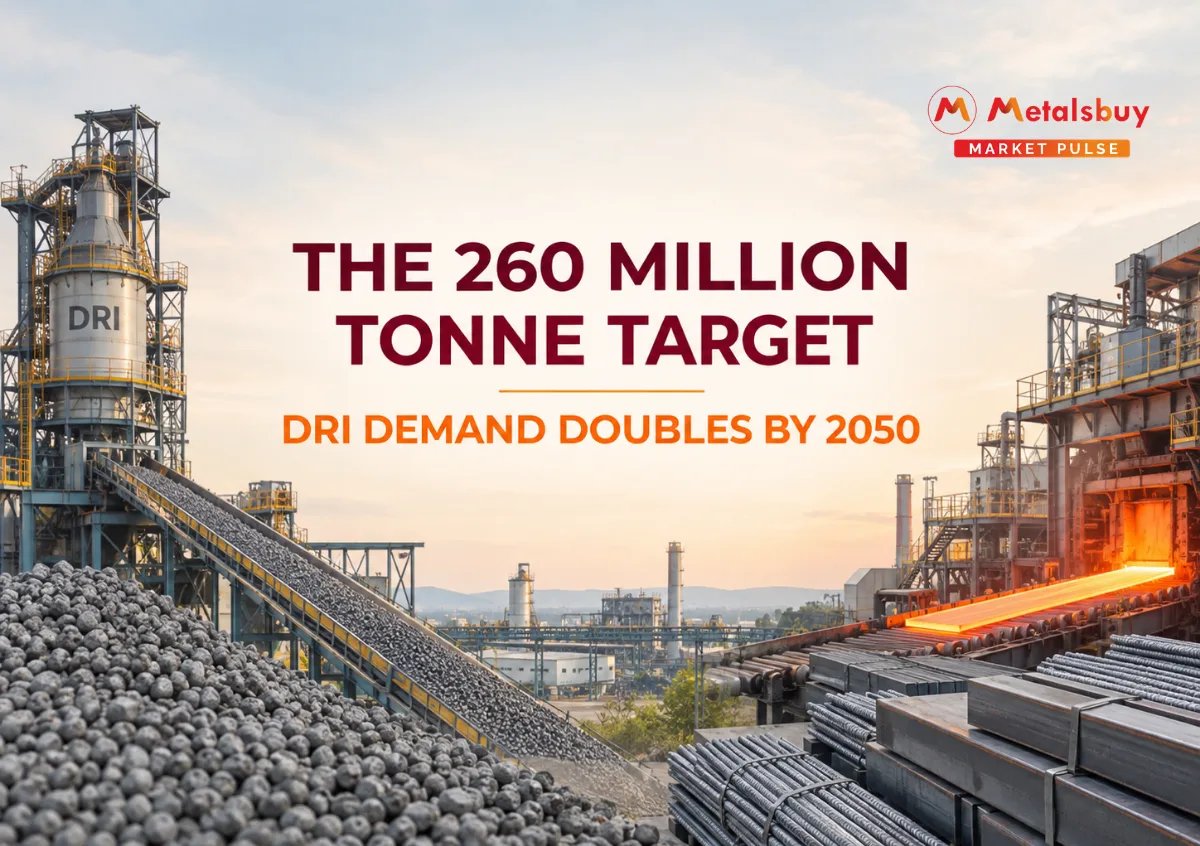
The international steel industry is standing on the precipice of a major metallurgical transformation, driven by an accelerating global push toward low-carbon manufacturing. According to the latest strategic industry forecasts from Midrex Technologies, worldwide demand for direct reduced iron is projected to surge to an impressive 260 million tonnes by the year 2035. Looking further ahead, this demand is expected to nearly double, reaching a staggering 500 million tonnes by 2050. This massive upward trajectory highlights a fundamental shift in how the world's leading steelmakers are managing their raw material supply chains, moving away from traditional, carbon-intensive blast furnaces and firmly embracing cleaner, more flexible electric arc furnace technologies.
Electric arc furnace expansion fuels raw material requirements
The primary catalyst driving this unprecedented demand for direct reduced iron is the rapid, global proliferation of electric arc furnace (EAF) capacity. Industry projections indicate that between 2024 and 2035, global steel production utilizing EAF technology will increase by approximately 370 million tonnes. Concurrently, the expansion of traditional blast furnace capacity will become highly localized, strictly limited to rapidly developing infrastructure hubs in India and Southeast Asia.
As mature economies aggressively scale up their EAF operations, they are encountering a severe, structural shortage of high-quality, prime ferrous scrap. In this evolving market, direct reduced iron is no longer viewed merely as an optional substitute for scrap metal, but rather as an absolutely critical complementary feedstock. Blending high-purity direct reduced iron with available scrap enables steelmakers to effectively dilute residual elements, ensuring the successful production of higher-grade, premium steel products required for the automotive and aerospace sectors. Without a reliable supply of this specialized iron, mills operating modern EAFs simply cannot meet the strict quality thresholds demanded by advanced downstream manufacturers.
Widening geographical divide between producers and consumers
As the consumption of this raw material accelerates, the global supply chain is expected to experience a significant geographical divide. A distinct separation is emerging between the regions producing direct reduced iron and those consuming it. Mature, import-dependent markets across Europe, Japan, and parts of Asia are actively transitioning to EAFs to meet strict climate goals but lack the cheap energy required to process the raw materials domestically.
Consequently, these regions will rely heavily on external imports, driving a massive spike in global demand for hot-briquetted iron (HBI)—a compacted, safely transportable form of direct reduced iron. In contrast, massive production hubs will consolidate in regions blessed with abundant natural gas reserves, immense renewable energy potential, and favorable logistics. The Americas and the Middle East and North Africa (MENA) region are perfectly positioned to become the world’s dominant export hubs for these metallics. This shift is already materializing through major capital investments. For example, Midrex recently secured a landmark contract with US Steel to construct a processing plant with a 2.5 million tonne annual capacity at the Big River Steel Works in Arkansas, with production scheduled to commence by 2029.
Overcoming strategic hurdles to achieve long term industry goals
While the 260 million tonne target by 2035 presents a massive commercial opportunity, the industry must proactively navigate several strategic hurdles to realize this growth. The most pressing challenge is securing a reliable, high-volume supply of direct-reduction grade iron ore pellets, which require a much higher iron content than standard blast furnace grades.
Furthermore, the transition to entirely green steelmaking relies heavily on the evolving economics of renewable energy and green hydrogen. Currently, natural gas serves as the primary reductant in these plants, but the ultimate industry goal is to seamlessly transition these facilities to run on 100 percent hydrogen as commercial-scale electrolyzers become financially viable. Despite ongoing challenges regarding capital access and global trade frictions, the overarching sentiment within the metallurgical sector remains highly positive. By securing raw material supply lines and investing heavily in next-generation ironmaking infrastructure today, the global steel industry is successfully laying the groundwork for a highly resilient, profitable, and low-carbon manufacturing ecosystem for the decades to come.