KEY UPDATES
• Customs duty removed on high-grade manganese ore imports
• Applicable to ore containing 46% manganese and above
• Notification issued on 9 June 2026
• Covered under HS Code 26020010
• India imported approximately 6.5 million tonnes of manganese ore in CY2025
• Major beneficiaries include ferro manganese and silico manganese producers
• Expected outcome: Improved raw material availability and enhanced industry competitiveness
MARKET ANALYSIS
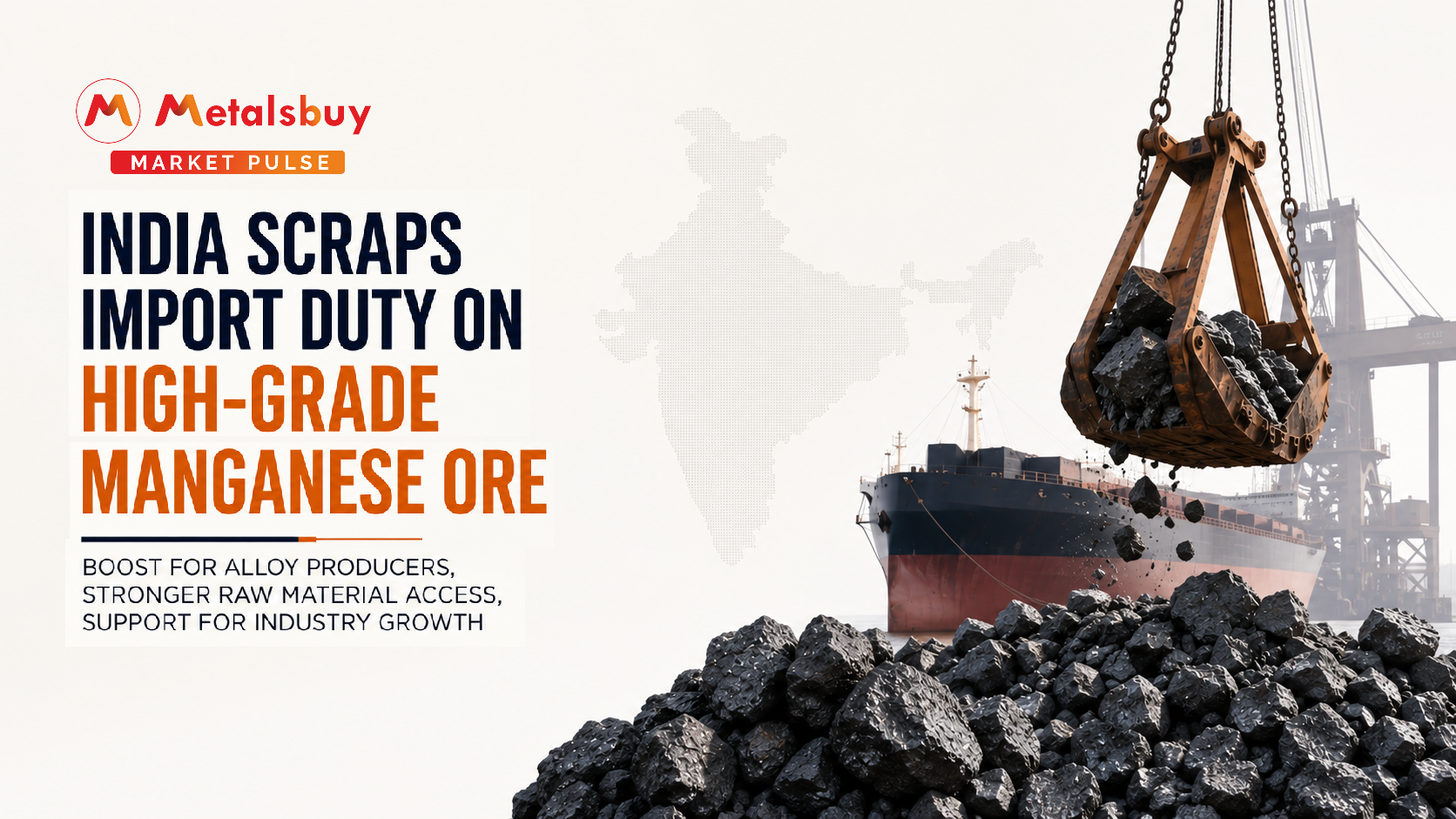
India has removed customs duty on imports of high-grade manganese ore containing 46% manganese and above, a move that is expected to provide significant relief to the country's ferroalloy and steel industries. The decision was announced through a Ministry of Finance notification dated June 9, 2026. Industry participants view the measure as a strategic step towards ensuring adequate availability of quality raw materials for alloy manufacturing while supporting the broader growth ambitions of India's steel sector.
Manganese remains one of the most critical inputs in steelmaking. It is primarily used for the production of ferro manganese and silico manganese alloys, both of which play an essential role in enhancing steel strength, hardness, and durability. As India's steel production continues to expand, demand for quality manganese ore has also increased steadily.
Although India possesses substantial manganese ore reserves, domestic production often falls short of meeting the quality requirements of alloy manufacturers. High-grade ore with manganese content above 46% is particularly important for efficient alloy production, leading many producers to rely on imported material from countries such as South Africa, Gabon, and Australia. The removal of customs duty is expected to reduce the landed cost of imported high-grade ore and improve procurement flexibility for alloy manufacturers.
Why High-Grade Ore Matters
For ferroalloy producers, ore quality directly impacts operational efficiency and production economics. High-grade manganese ore typically offers:
• Better alloy recovery rates
• Lower energy consumption during smelting
• Improved furnace productivity
• Reduced slag generation
• Greater consistency in alloy quality
These factors can significantly influence manufacturing costs and profitability, particularly in a competitive market environment where margins often remain under pressure. By facilitating easier access to premium-grade raw material, the government is addressing a key industry concern that has persisted for several years.
Positive Outlook for Ferroalloy Producers
The duty exemption is expected to strengthen India's ferroalloy sector, which serves both domestic steelmakers and export markets. Industry participants anticipate several benefits:
• Lower raw material procurement costs
• Improved operating efficiencies
• Enhanced export competitiveness
• Greater flexibility in sourcing decisions
• Potential improvement in plant utilization rates
The move also aligns with India's long-term objective of strengthening its manufacturing ecosystem while maintaining competitiveness in global metal markets.
Impact on Domestic Manganese Miners
While the policy is expected to benefit alloy producers, domestic miners may face increased competition from imported high-grade ore. Producers operating in premium-grade segments could experience pricing pressure as imported material becomes more cost-effective. However, the impact is likely to remain concentrated within higher-grade categories since the duty exemption specifically applies to ore containing 46% manganese and above.
The extent of the impact will depend on global manganese ore prices, freight rates, and procurement strategies adopted by alloy manufacturers in the coming months.
INDUSTRY IMPACT
The government's decision to remove customs duty on high-grade manganese ore imports highlights a clear policy focus on supporting downstream manufacturing and ensuring reliable access to critical raw materials. For ferroalloy producers, the measure could improve cost competitiveness and operational efficiency. For steelmakers, it may contribute to a more stable and cost-effective alloy supply chain.
At a broader level, the policy reinforces India's efforts to strengthen its industrial ecosystem by balancing raw material security with manufacturing growth objectives. As the country's steel sector continues its expansion trajectory, access to premium-grade manganese ore will remain a critical factor influencing alloy production, steel quality, and overall industry competitiveness. The latest duty exemption is therefore expected to play an important role in supporting India's long-term growth ambitions across the metals and mining value chain.