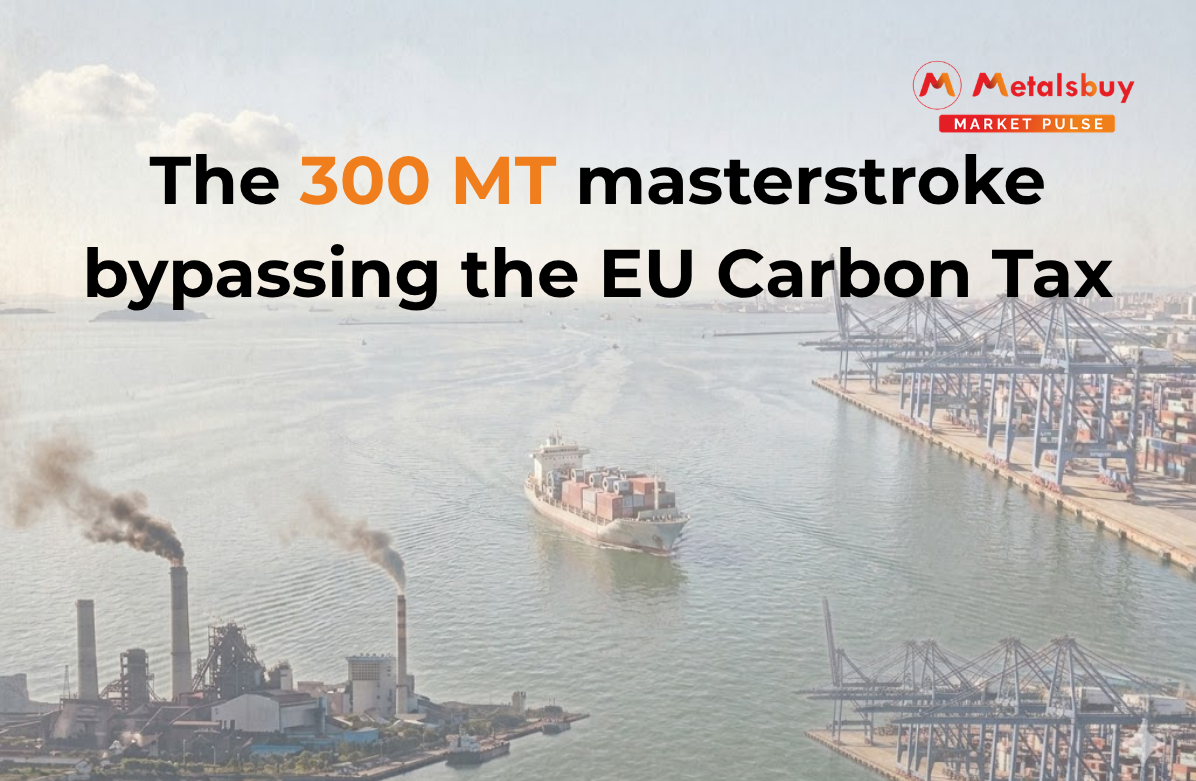
As the world’s second-largest crude steel producer, India is actively restructuring its global supply chains to support unprecedented domestic growth. Closing out 2024 with a robust production volume of 149.4 million tonnes, the country is now chasing a monumental target of 300 million tonnes by 2030. To fuel this expansion, New Delhi will launch high-stakes negotiations with Argentina, Indonesia, and Oman at the upcoming Bharat Steel 2026 summit. This initiative is a calculated geopolitical maneuver designed to secure critical steelmaking raw materials, navigate stringent European carbon taxes, and insulate the domestic industry from Middle Eastern energy shocks.
The Global Chessboard and the Race for Resource Security
India’s economic engine is running at full throttle, driven by aggressive infrastructure spending and rapid urbanization. Achieving the government's ambitious 300 million tonne capacity goal by the end of the decade will require an estimated $156 billion in domestic investments. However, building massive new furnaces is only half the battle; feeding them requires an uninterrupted flow of raw materials.
To guarantee this, the Indian government is initiating strategic dialogues with key global resource hubs. Scheduled to commence next month at Bharat Steel 2026—touted as the nation’s largest international steel summit—these talks mark a definitive shift in how the Indian heavy industry approaches supply chain resilience. Instead of relying purely on volatile open markets, India is pivoting toward direct, state-backed international alliances. By locking in dedicated supply corridors from the mine to the finished metal, New Delhi is ensuring that its infrastructure boom remains entirely within its control.
The Catalyst Behind the Urgent Expansion
The urgency driving these international negotiations stems from massive domestic expansion colliding with global turbulence. Recent industry data projections highlight a sharp increase in raw material dependency. India’s metallurgical coal imports are projected to surge by 9% year-on-year, hitting 83 million tonnes for the 2025-2026 fiscal year, with dedicated coking coal accounting for 63 million tonnes of that total. Simultaneously, iron ore imports are touching a seven-year high, expected to close the fiscal year between 12 and 14 million tonnes—more than double the figures from the previous year.
This massive spike in demand is driven by the voracious appetite of expanding domestic heavyweights. For instance, JSW Group recently committed a staggering ₹1 lakh crore (roughly $11.6 billion) to establish a 25 million tonne greenfield plant in Maharashtra, while AM/NS India is aggressively expanding its footprint in Andhra Pradesh.
At the same time, the industry is navigating severe external headwinds. Heightened geopolitical tensions in West Asia have triggered localized natural gas shortages, posing operational risks to both primary producers and secondary tier mills. By stepping in to secure raw materials directly from stable international partners, the government aims to offset these energy-related margin pressures with highly predictable base material costs.
The Resource Triad Bringing Balance to the Supply Chain
To understand the mechanics of this diplomatic push, it is essential to look at the specific assets each partner country provides. The government has carefully selected these three nations to fill critical gaps in the Indian manufacturing ecosystem.
- Oman (The Iron Anchor): Alongside Brazil, with whom India deepened mining ties earlier this year, Oman stands as a primary structural pillar for India's base steel production. Oman provides a geographically convenient stream of high-grade iron ore. Securing long-term volume commitments from Muscat ensures that India’s rapidly multiplying blast furnaces will operate at peak capacity.
- Indonesia (The Stainless Engine): As the undisputed global leader in nickel ore reserves, Indonesia is the key to India’s value-added specialty steel ambitions. Indian stainless steel manufacturing relies heavily on imported ferronickel. By tightening trade relations with Jakarta, India ensures a steady flow of this crucial non-ferrous input, keeping its specialty sector globally competitive.
- Argentina (The Green Transition Bridge): Argentina currently ranks as the world’s fourth-largest lithium producer. The upcoming talks aim to secure lithium and other critical minerals specifically for the state-run mining giant NMDC. This provides India with a direct pipeline to the materials essential for electric vehicle batteries and renewable energy storage, effectively bridging the gap between legacy heavy industry and the clean energy transition.
The Unique Selling Proposition of Avoiding the EU CBAM Tax
Perhaps the most compelling strategic angle of these international pacts is how they fit into India’s broader export strategy. Historically, Europe has been a highly lucrative destination for Indian metal goods. However, the impending rollout of the European Union’s Carbon Border Adjustment Mechanism (CBAM) threatens to penalize traditional steel imports with heavy tariffs.
Instead of absorbing these costs or throttling production, India is utilizing its newly secured raw materials to pivot. By locking in cost-efficient coal and ore from nations like Oman and Indonesia, Indian steelmakers can maintain highly competitive pricing profiles. This allows them to aggressively expand their export footprint into emerging, high-growth markets across Asia and the Middle East, successfully sidestepping the European carbon tax penalty while maintaining exceptional volume growth.
Future Outlook for a Bulletproof Ecosystem
The narrative surrounding the Indian steel sector remains overwhelmingly positive. While geopolitical gas shortages and shifting global trade rules undoubtedly present hurdles, the proactive steps being taken ahead of Bharat Steel 2026 demonstrate a highly mature, forward-thinking industrial base.
By actively pursuing strategic sourcing agreements with Argentina, Indonesia, and Oman, India is doing far more than simply importing rocks and coal. It is actively building a bulletproof manufacturing ecosystem. This data-driven strategy not only guarantees that multi-billion-dollar domestic mega-projects will meet their deadlines but also firmly positions India as a dominant, self-sufficient force in the global metals market for decades to come.