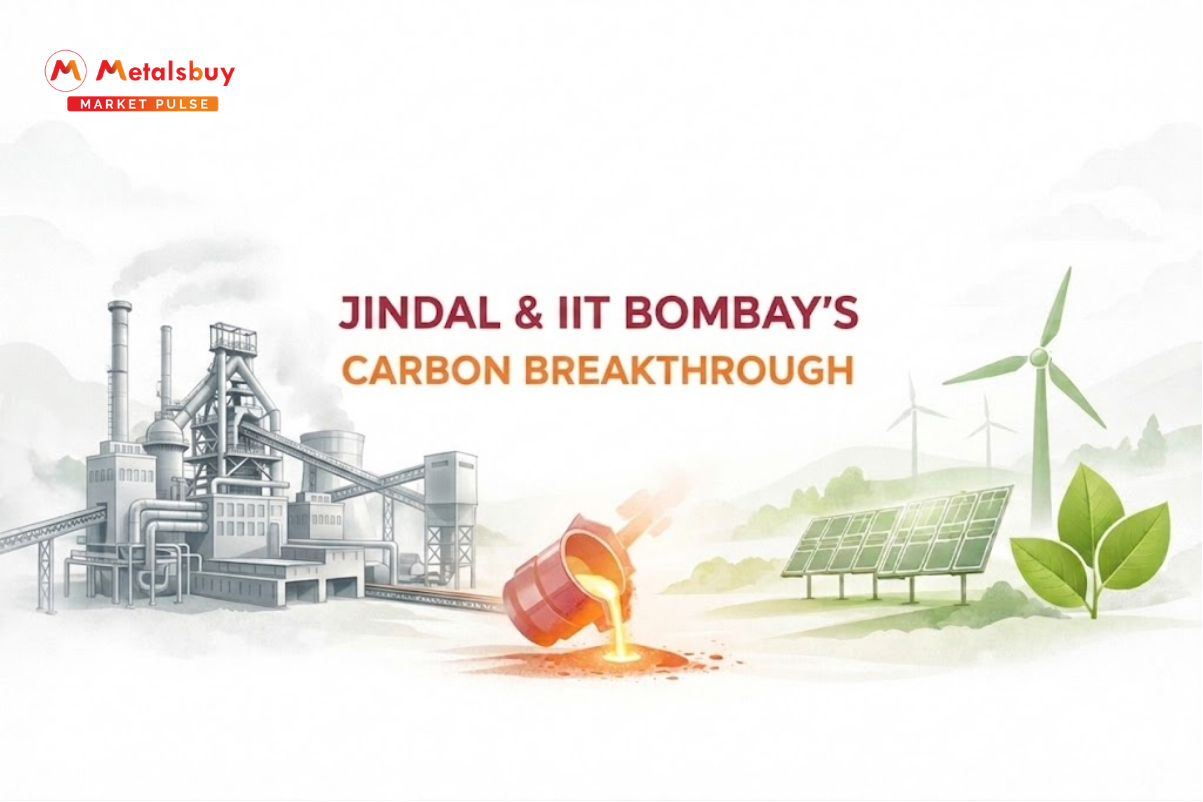
The traditional narrative surrounding heavy manufacturing often casts the steel industry as an unavoidable climate burden. However, a profound paradigm shift is currently unfolding within the Indian subcontinent. Jindal Steel Ltd. has forged a strategic, multifaceted alliance with the Indian Institute of Technology Bombay and the Ministry of Steel to pilot a breakthrough carbon recycling technology. By effectively turning a severe environmental liability into a vital production resource, this collaboration is rewriting the economic and ecological fundamentals of domestic metallurgy.
The Innovation Mechanics and Ambient Electrocatalysis
To grasp the magnitude of this development, it is essential to understand the chemical dependencies of modern steelmaking. The Indian industry relies heavily on Direct Reduced Iron, commonly known as sponge iron, a process requiring massive volumes of coal to strip oxygen from iron ore. Conventional methods generate syngas—a necessary reducing agent composed of carbon monoxide and hydrogen—by burning fossil fuels at extreme temperatures ranging from 400 to 750 degrees Celsius. This traditional route is highly energy-intensive and releases vast amounts of carbon dioxide into the atmosphere.
The newly advanced framework spearheaded by the National Centre of Excellence in Carbon Capture and Utilisation at IIT Bombay completely disrupts this reliance. The research team has patented an energy-efficient electrochemical process that captures industrial carbon dioxide exhaust and converts it back into usable carbon monoxide. What makes this specific innovation revolutionary is its operating environment. Unlike legacy systems, this electrocatalytic conversion proceeds at ambient temperatures of 25 to 40 degrees Celsius in the presence of water. By powering this low-temperature reaction with renewable energy sources, the facility effectively closes the loop, trapping carbon in a continuous cycle of industrial utility while drastically reducing the need for virgin fossil fuels.
The Growth Mandate vs The Emission Reality
The timing of this technological leap aligns perfectly with a critical juncture in India’s economic trajectory. The nation's industrial momentum is surging, with crude steel output surpassing 152 million tonnes in the recent fiscal year, firmly cementing India as the world’s second-largest producer. Driven by an aggressive push for urban infrastructure, the government has charted a massive expansion roadmap, targeting a production capacity of 300 million tonnes by 2030. Achieving this scale will require an estimated capital injection of 156 billion dollars over the next six years.
Yet, this rapid capacity expansion presents an existential environmental challenge. The domestic steel sector currently accounts for roughly 12 percent of India’s total greenhouse gas emissions. Because of a heavy reliance on coal-based direct reduced iron and blast furnaces, the national average emission intensity sits at roughly 2.55 to 2.6 tonnes of carbon dioxide per tonne of crude steel. This figure sits noticeably higher than the global average of 1.92 tonnes, placing intense pressure on manufacturers to find scalable decarbonisation pathways that do not derail production targets.
Shielding Margins and Securing Raw Materials
Beyond environmental stewardship, there is a distinct economic upside to the carbon recycling initiative. India currently imports approximately 85 to 90 percent of its coking coal requirements. Recent market data indicates that total metallurgical coal imports surged past 83 million tonnes annually, exposing the domestic steel sector to severe global price volatility, supply chain disruptions, and shifting geopolitical currents.
By generating their own carbon monoxide through exhaust recycling, steelmakers can significantly reduce their dependence on imported coal. Injecting recycled syngas back into the furnace acts as a direct substitute for fresh carbon reductants, allowing companies to aggressively trim their import bills, ensure long-term raw material security, and stabilize operating margins against global market shocks.
Navigating Global Trade Barriers
The commercial urgency of adopting such green technologies is being accelerated by shifting international trade frameworks. As the European Union prepares for the full implementation of its Carbon Border Adjustment Mechanism in January 2026, the cost of high-emission manufacturing is about to surge. Under this new regime, every shipment of Indian steel entering the European market will attract a strict carbon levy based on its emission intensity.
Market analysts project that without verified low-carbon production processes, Indian exporters could be forced to slash prices by 15 to 22 percent just to absorb the tax burden and remain competitive. Furthermore, unverified shipments could face prohibitive default penalties ranging from 65 to over 250 euros per tonne, threatening to effectively price laggards out of premium international markets. Early adoption of true green steel technologies, such as the ambient carbon conversion process being scaled by Jindal Steel, provides a robust defensive moat against these impending trade barriers.
Scaling the Sustainable Vision
The most formidable barrier in climate technology is the treacherous gap between a successful academic proof-of-concept and commercial viability at a massive industrial scale. The true power of this initiative lies in its tripartite structure. The active involvement of the Ministry of Steel ensures that the innovation is backed by necessary regulatory foresight and capital, while IIT Bombay provides the intellectual rigor, and Jindal Steel delivers the operational testing ground.
Ultimately, this pioneering pathway illustrates a mature, balanced approach to heavy industrial growth. It proves that with the right collaborative framework and technological investment, aggressive economic expansion does not have to come at the expense of the environment. By driving innovations that actively recycle emissions and reduce reliance on imported coal, India is positioning itself not just as a volume leader, but as a strategic architect of the global low-carbon steel revolution.