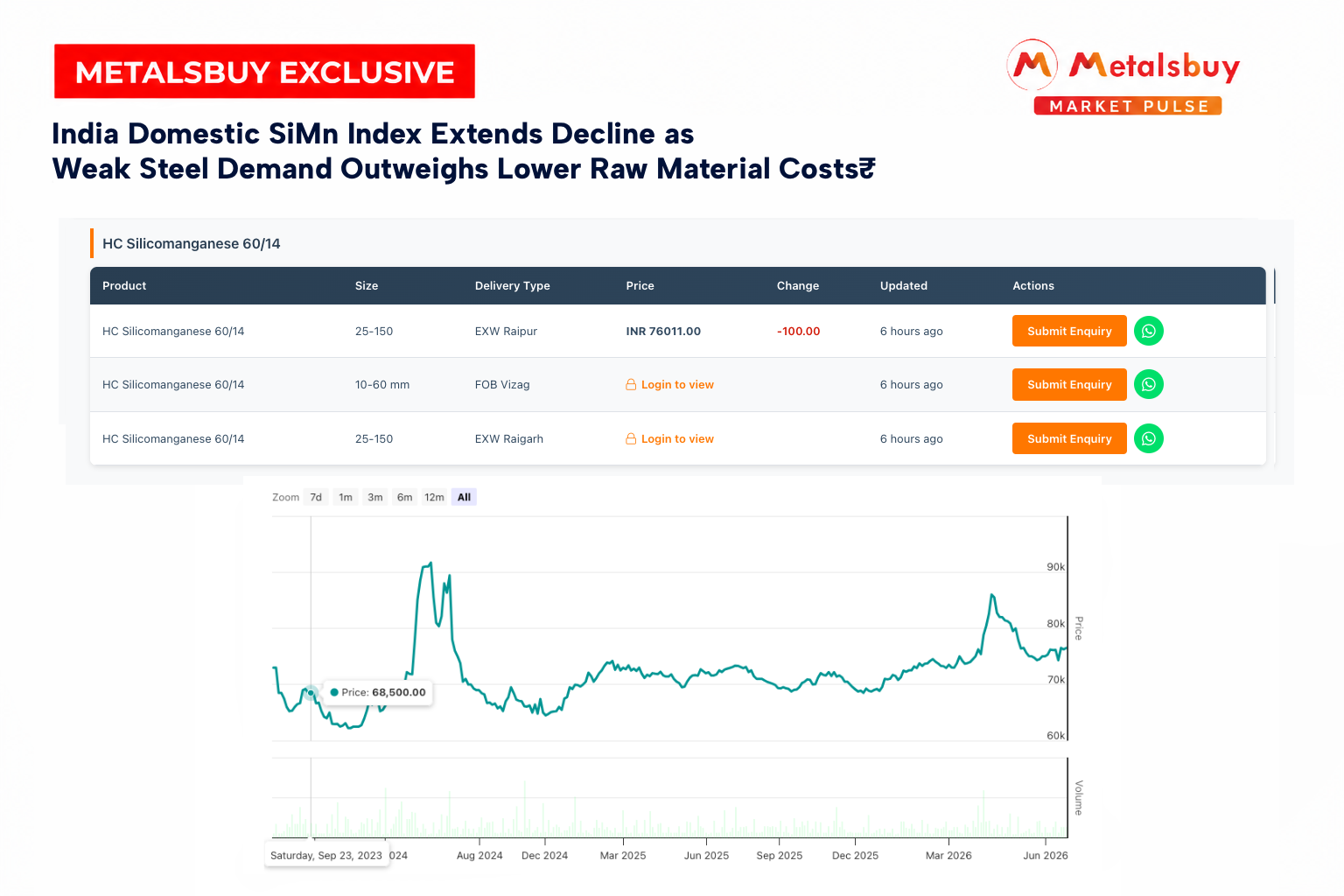
Key Highlight
- ExW Raigarh Index: ₹75,700/PMT
Market Insight
The India Domestic SiMn 60/14 Index witnessed a modest correction during the week, with the ExW Raipur index declining to ₹76,000 per metric tonne, while the ExW Raigarh index softened to ₹75,700 per metric tonne. The decline reflects a cautious domestic market where demand from steel producers remained subdued despite easing raw material costs. Trading activity across major producing clusters remained limited as buyers largely preferred to procure only against immediate requirements rather than build inventories. Although producers attempted to maintain price stability, weaker order inflows prevented the market from sustaining last week's levels. Market participants continue to describe the current environment as balanced but lacking the demand momentum required to support any meaningful price recovery.
Steel Demand Weakens with Onset of Monsoon
The arrival of heavy monsoon rains across several parts of India has started impacting construction activity, infrastructure execution and steel consumption. Steel mills have consequently slowed procurement of ferro alloys, resulting in softer buying interest for silico manganese. Secondary steel producers, who constitute a major consumer base for SiMn, have largely adopted a cautious purchasing strategy amid slower finished steel movement. Seasonal demand weakness is a common feature during this period, but the current slowdown has been more visible because infrastructure activity has also moderated in several regions. Unless steel demand improves after the monsoon, ferro alloy producers may continue to experience pressure on fresh bookings.
Lower Raw Material Prices Offer Cost Relief
One of the notable developments during the week was the downward revision in manganese ore prices by MOIL, which announced a 5 percent reduction across most grades for July deliveries. The price cut, along with easing trends in certain other raw materials, has reduced production costs for ferro alloy manufacturers to some extent. Under normal market conditions, lower input costs could support higher operating margins or stimulate additional buying activity. However, the present market remains demand-driven rather than cost-driven, limiting the immediate positive impact of cheaper raw materials. As a result, the benefit of lower ore prices has largely been offset by weak alloy demand and cautious procurement by consumers.
Logistics Challenges Continue to Restrict Market Movement
Despite softer demand, logistics remained an important concern during the week. Market participants reported continued container shortages, while freight rates for export cargoes remained elevated compared to recent months. Higher logistics costs and limited container availability have affected dispatch schedules for several producers, particularly those catering to export markets. Transportation disruptions caused by seasonal rains have also impacted the movement of finished material in certain regions. These logistical constraints have prevented a smoother flow of material even though overall market demand remains moderate.
Export Market Remains Under Pressure
The international market offered limited support during the week. While the US dollar strengthened, which would normally improve export realisations for Indian producers, overseas buying interest remained weak. Export enquiries continued to be selective, with buyers in several key markets remaining cautious because of subdued steel demand and competitive global alloy supply. Consequently, the stronger dollar has not translated into improved export bookings. Producers continue to monitor overseas markets closely, but export demand alone is currently insufficient to offset the weakness in domestic consumption.
Market Sentiment Remains Cautiously Balanced
Overall market sentiment remained cautious throughout the week. Producers are benefiting from lower raw material costs but are simultaneously facing slower domestic demand, weak export orders and persistent logistics challenges. Most transactions are being concluded only against confirmed requirements, while speculative buying remains limited. The correction in prices has been relatively modest, indicating that producers are attempting to protect market stability despite softer fundamentals. Going forward, the direction of the domestic SiMn market will largely depend on improvements in steel demand after the monsoon season and any recovery in export enquiries.
Industry Impact
The latest decline in domestic SiMn prices highlights the continued influence of seasonal demand weakness on India's ferro alloy market. Although lower manganese ore prices have eased production costs, weaker steel demand and subdued export activity have prevented producers from fully benefiting from the cost advantage. Logistics constraints, including container shortages and elevated freight rates, continue to add operational challenges for alloy manufacturers. The market is therefore expected to remain largely demand-driven over the near term.
Outlook
The domestic SiMn market is expected to remain range-bound over the coming weeks. Lower raw material costs may help producers maintain operational stability, but any meaningful recovery in alloy prices will require stronger demand from domestic steelmakers and an improvement in export bookings. Market participants will also closely monitor logistics conditions, freight rates and post-monsoon construction activity, all of which are expected to influence buying sentiment during the second quarter. Until these factors improve, prices are likely to remain under mild pressure with limited upward momentum.